logo

Politics
Diplomacy Legislation War On Terror EU Affairs Elections News Analysis
TÜRKİYE
Istanbul Education Investigations Minorities Expat Corner Diaspora
World
Mid-East Europe Americas Asia Pacific Africa Syrian Crisis Islamophobia
Business
Automotive Economy Energy Finance Tourism Tech Defense Transportation News Analysis
Lifestyle
Health Environment Travel Food Fashion Science Religion History Feature Expat Corner
Arts
Cinema Music Events Portrait Reviews Performing Arts
Sports
Football Basketball Motorsports Tennis
Opinion
Columns Op-Ed Reader's Corner Editorial
PHOTO GALLERY
JOBS ABOUT US RSS PRIVACY CONTACT US
© Turkuvaz Haberleşme ve Yayıncılık 2026

Daily Sabah - Latest & Breaking News from Turkey | Istanbul

  • Politics
    • Diplomacy
    • Legislation
    • War On Terror
    • EU Affairs
    • Elections
    • News Analysis
  • TÜRKİYE
    • Istanbul
    • Education
    • Investigations
    • Minorities
    • Expat Corner
    • Diaspora
  • World
    • Mid-East
    • Europe
    • Americas
    • Asia Pacific
    • Africa
    • Syrian Crisis
    • Islamophobia
  • Business
    • Automotive
    • Economy
    • Energy
    • Finance
    • Tourism
    • Tech
    • Defense
    • Transportation
    • News Analysis
  • Lifestyle
    • Health
    • Environment
    • Travel
    • Food
    • Fashion
    • Science
    • Religion
    • History
    • Feature
    • Expat Corner
  • Arts
    • Cinema
    • Music
    • Events
    • Portrait
    • Reviews
    • Performing Arts
  • Sports
    • Football
    • Basketball
    • Motorsports
    • Tennis
  • Gallery
  • Opinion
    • Columns
    • Op-Ed
    • Reader's Corner
    • Editorial
  • TV
  • Life
  • Health
  • Environment
  • Travel
  • Food
  • Fashion
  • Science
  • Religion
  • History
  • Feature
  • Expat Corner

'Thing' may awaken: Climate change risks Arctic 'virus spillover'

by Agence France-Presse - AFP

TOKYO Oct 19, 2022 - 9:00 am GMT+3
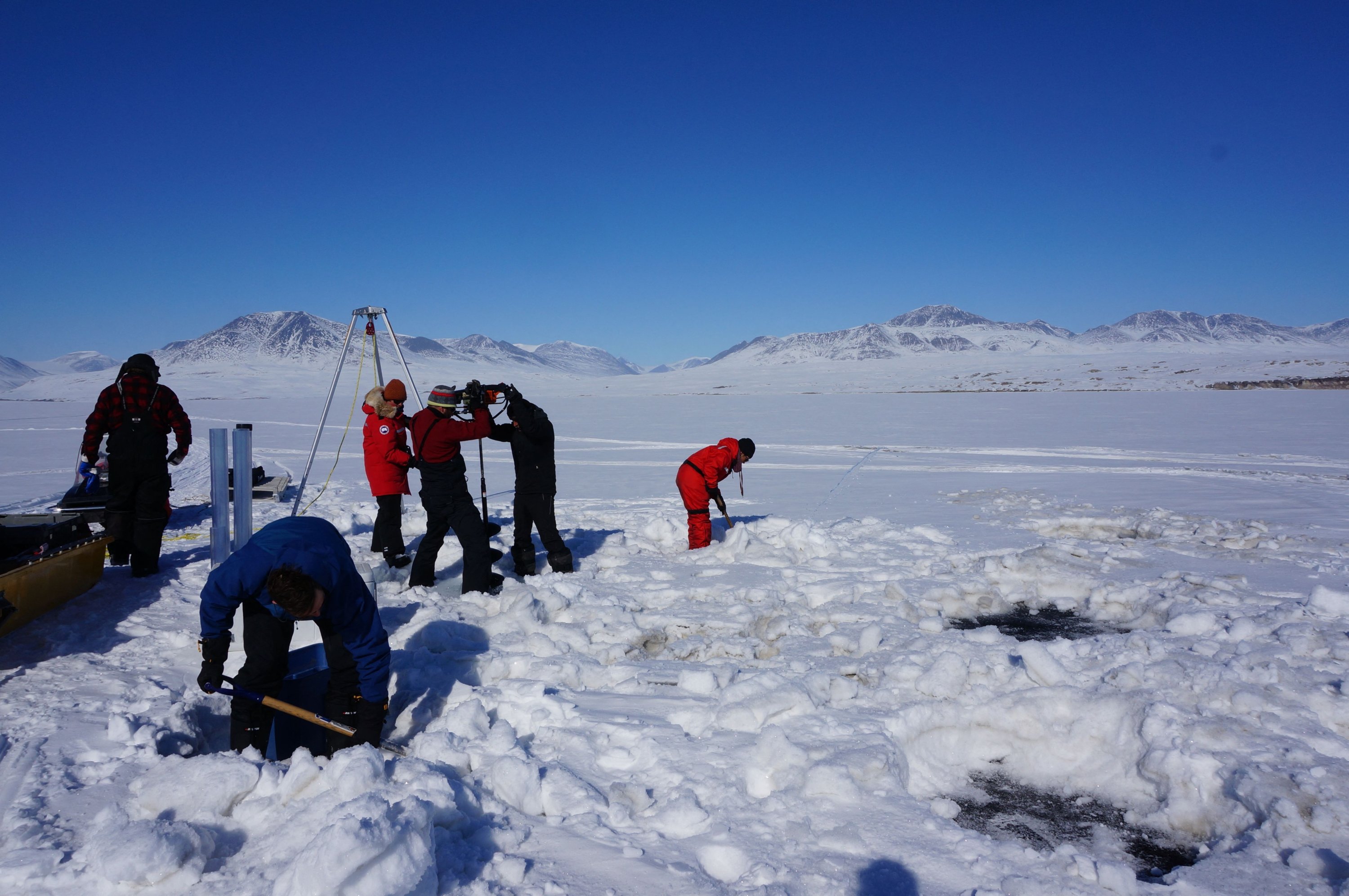
Researchers drill holes to collect sediment to investigate how climate change might increase the risk of "viral spillover," at Lake Hazen, Nunavut, May 29, 2017. (AFP Photo)
by Agence France-Presse - AFP Oct 19, 2022 9:00 am

The Arctic houses many viruses not present on other continents, with the least of our worries being "The Thing." Apart from pop-culture viruses, a warming climate could bring real viruses in the Arctic into contact with new environments and hosts, increasing the risk of "viral spillover," according to research published Wednesday.

Viruses need hosts like humans, animals, plants or fungi to replicate and spread, and occasionally they can jump to a new one that lacks immunity, as seen during the COVID-19 pandemic.

Scientists in Canada wanted to investigate how climate change might affect spillover risk by examining samples from the Arctic landscape of Lake Hazen.

It is the largest lake in the world entirely north of the Arctic Circle, and "was truly unlike any other place I've been," researcher Graham Colby, now a medical student at University of Toronto, told Agence France-Presse (AFP).

The team sampled soil that becomes a riverbed for melted glacier water in the summer, as well as the lakebed itself – which required clearing snow and drilling through 2 meters (6.5 feet) of ice, even in May when the research was carried out.

They used ropes and a snowmobile to lift the lake sediment through almost 300 meters (980 feet) of water, and samples were then sequenced for DNA and RNA, the genetic blueprints and messengers of life.

"This enabled us to know what viruses are in a given environment, and what potential hosts are also present," said Stephane Aris-Brosou, an associate professor in the University of Ottawa's biology department, who led the work.

But to find out how likely they were to jump hosts, the team needed to examine the equivalent of each virus and host's family tree.

"Basically what we tried to do is measure how similar these trees are," said Audree Lemieux, first author of the research.

Similar genealogies suggest a virus has evolved along with its host, but differences suggest spillover.

And if a virus has jumped hosts once, it is more likely to do so again.

'Very unpredictable'

The analysis found pronounced differences between viruses and hosts in the lakebed, "which is directly correlated to the risk of spillover," said Aris-Brosou.

The difference was less stark in the riverbeds, which the researchers theorize is because water erodes the topsoil, removing organisms and limiting interactions between viruses and potential new hosts.

Those instead wash into the lake, which has seen "dramatic change" in recent years, the study says, as increased water from melting glaciers deposits more sediment.

"That's going to bring together hosts and viruses that would not normally encounter each other," Lemieux said.

The authors of the research, published in the Proceedings of the Royal Society B: Biological Sciences journal, caution they are neither forecasting an actual spillover nor a pandemic.

"The likelihood of dramatic events remains very low," Lemieux said.

They also warn more work is needed to clarify how big the difference between viruses and hosts needs to be to create serious spillover risk.

But they argue that warming weather could increase risks further if new potential hosts move into previously inhospitable regions.

"It could be anything from ticks to mosquitoes to certain animals, to bacteria and viruses themselves," said Lemieux.

"It's really unpredictable ... and the effect of spillover itself is very unpredictable, it can range from benign to an actual pandemic."

The team wants more research and surveillance work in the region to understand the risks.

"Obviously we've seen in the past two years what the effects of spillover can be," said Lemieux.

shortlink copied
Last Update: Oct 19, 2022 11:17 am
KEYWORDS
climate change climate crisis virus arctic
The Daily Sabah Newsletter
Keep up to date with what’s happening in Turkey, it’s region and the world.
You can unsubscribe at any time. By signing up you are agreeing to our Terms of Use and Privacy Policy. This site is protected by reCAPTCHA and the Google Privacy Policy and Terms of Service apply.
No Image
3,000-year-old lost golden city unearthed in Egypt
PHOTOGALLERY
  • POLITICS
  • Diplomacy
  • Legislation
  • War On Terror
  • EU Affairs
  • News Analysis
  • TÜRKİYE
  • Istanbul
  • Education
  • Investigations
  • Minorities
  • Diaspora
  • World
  • Mid-East
  • Europe
  • Americas
  • Asia Pacific
  • Africa
  • Syrian Crisis
  • İslamophobia
  • Business
  • Automotive
  • Economy
  • Energy
  • Finance
  • Tourism
  • Tech
  • Defense
  • Transportation
  • News Analysis
  • Lifestyle
  • Health
  • Environment
  • Travel
  • Food
  • Fashion
  • Science
  • Religion
  • History
  • Feature
  • Expat Corner
  • Arts
  • Cinema
  • Music
  • Events
  • Portrait
  • Performing Arts
  • Reviews
  • Sports
  • Football
  • Basketball
  • Motorsports
  • Tennis
  • Opinion
  • Columns
  • Op-Ed
  • Reader's Corner
  • Editorial
  • Photo gallery
  • DS TV
  • Jobs
  • privacy
  • about us
  • contact us
  • RSS
© Turkuvaz Haberleşme ve Yayıncılık 2021