Daily Sabah logo

Politics
Diplomacy Legislation War On Terror EU Affairs Elections News Analysis
TÜRKİYE
Istanbul Education Investigations Minorities Expat Corner Diaspora
World
Mid-East Europe Americas Asia Pacific Africa Syrian Crisis Islamophobia
Business
Automotive Economy Energy Finance Tourism Tech Defense Transportation News Analysis
Lifestyle
Health Environment Travel Food Fashion Science Religion History Feature Expat Corner
Arts
Cinema Music Events Portrait Reviews Performing Arts
Sports
Football Basketball Motorsports Tennis
Opinion
Columns Op-Ed Reader's Corner Editorial
PHOTO GALLERY
JOBS ABOUT US RSS PRIVACY CONTACT US
© Turkuvaz Haberleşme ve Yayıncılık 2025

Daily Sabah - Latest & Breaking News from Turkey | Istanbul

  • Politics
    • Diplomacy
    • Legislation
    • War On Terror
    • EU Affairs
    • Elections
    • News Analysis
  • TÜRKİYE
    • Istanbul
    • Education
    • Investigations
    • Minorities
    • Expat Corner
    • Diaspora
  • World
    • Mid-East
    • Europe
    • Americas
    • Asia Pacific
    • Africa
    • Syrian Crisis
    • Islamophobia
  • Business
    • Automotive
    • Economy
    • Energy
    • Finance
    • Tourism
    • Tech
    • Defense
    • Transportation
    • News Analysis
  • Lifestyle
    • Health
    • Environment
    • Travel
    • Food
    • Fashion
    • Science
    • Religion
    • History
    • Feature
    • Expat Corner
  • Arts
    • Cinema
    • Music
    • Events
    • Portrait
    • Reviews
    • Performing Arts
  • Sports
    • Football
    • Basketball
    • Motorsports
    • Tennis
  • Gallery
  • Opinion
    • Columns
    • Op-Ed
    • Reader's Corner
    • Editorial
  • TV
  • Life
  • Health
  • Environment
  • Travel
  • Food
  • Fashion
  • Science
  • Religion
  • History
  • Feature
  • Expat Corner

Water scarcity: World's dams to lose 1/4 storage capacity by 2050

by Reuters

SHANGHAI, China Jan 12, 2023 - 1:57 pm GMT+3
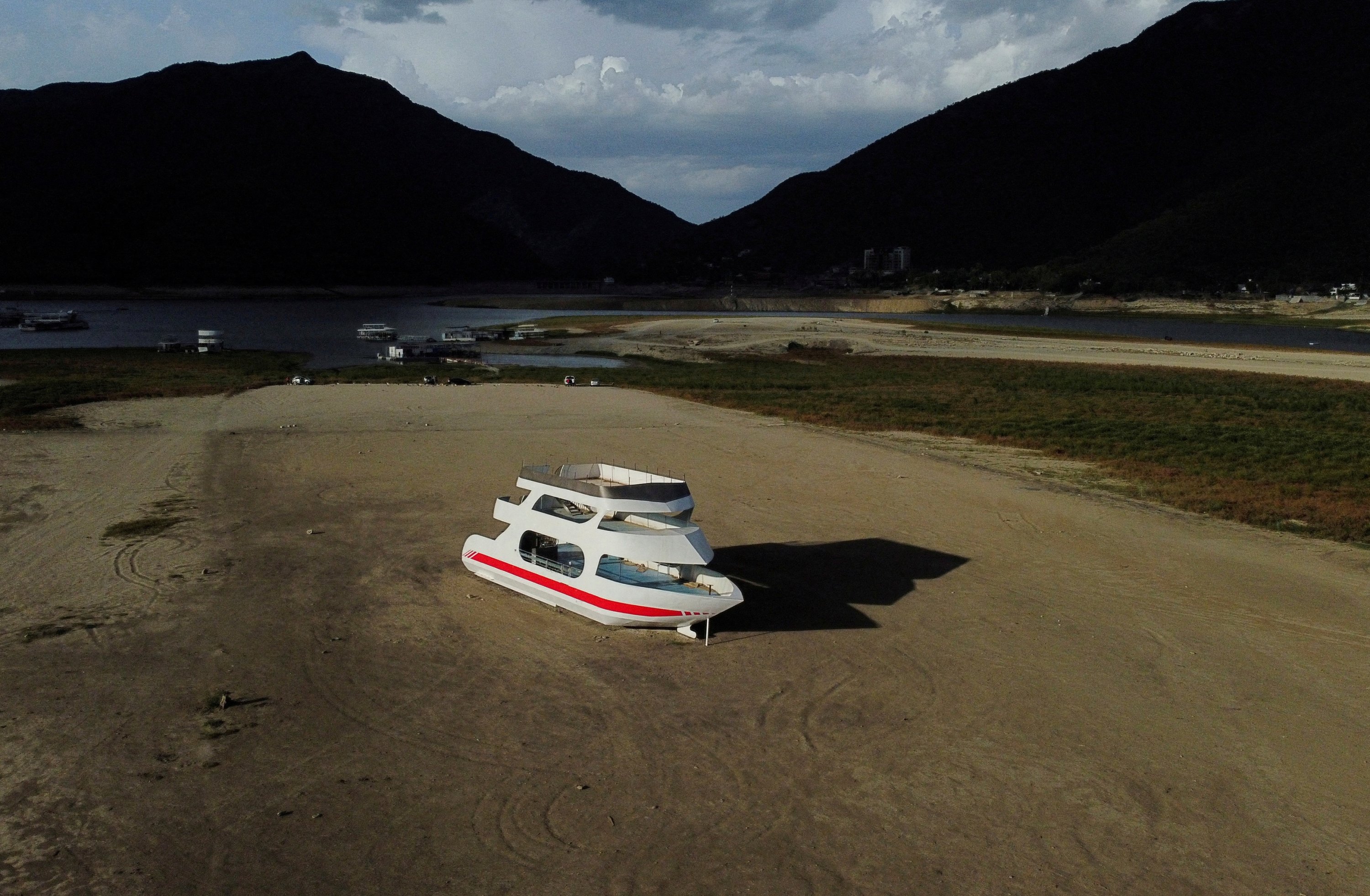
An aerial view shows a boat stranded on the La Boca dam due to a drought in northern Mexico, in Santiago, Mexico, Aug. 8, 2022. (Reuters Photo)
by Reuters Jan 12, 2023 1:57 pm

Worldwide dam capacity is expected to drop trillions of cubic meters as nearly 50,000 large dams around the globe could lose more than a quarter of their storage capacity by 2050 as a result of sedimentation buildups, eroding global water and energy security, according to United Nations research on Wednesday.

Dam capacity is expected to drop from 6 trillion cubic meters (cu m) to 4.655 trillion cu m by 2050, and action must be taken to address the problem and protect vital storage infrastructure, the U.N. University said.

Silt accumulates in reservoirs as a result of the disruption of natural water flows. It can cause damage to hydroelectric turbines and cut power generation.

Impeding sediment flows along a river can also make upstream regions more prone to flooding and erode downstream habitats.

The U.N. study looked at data from more than 47,000 dams in 150 countries and said 16% of original capacity had already been lost. It said the United States is facing losses of 34% by 2050, with Brazil estimated to lose 23%, India 26% and China 20%.

Critics have long warned that the long-term social and environmental costs of giant dams far outweigh their benefits.

Vladimir Smakhtin, director of the U.N. University's Institute for Water, Environment and Health, and one of the study's authors, said dam building worldwide had already declined significantly, with around 50 a year now being built, compared to 1,000 in the middle of the last century.

"I would argue that the question we should now be asking is what are the alternatives to dams – including in generating power – considering that they are being phased out," he said.

China continues to dam major rivers, with hydropower a key part of its plans to cut fossil fuel use and control greenhouse gas emissions, but projects like the Three Gorges – the world's biggest hydroelectric facility – have been socially and environmentally disruptive.

Dams built by China on the Mekong river have also disrupted the flow of sediment into downstream countries, transforming the landscape and jeopardizing the livelihoods of millions of farmers, according to Reuters research last year.

  • shortlink copied
  • Last Update: Jan 12, 2023 4:57 pm
    KEYWORDS
    water crisis water supply dams climate change climate crisis global warming
    The Daily Sabah Newsletter
    Keep up to date with what’s happening in Turkey, it’s region and the world.
    You can unsubscribe at any time. By signing up you are agreeing to our Terms of Use and Privacy Policy. This site is protected by reCAPTCHA and the Google Privacy Policy and Terms of Service apply.
    No Image
    Iconic surrealist, modern art to be sold at Christie's London auction
    PHOTOGALLERY
    • POLITICS
    • Diplomacy
    • Legislation
    • War On Terror
    • EU Affairs
    • News Analysis
    • TÜRKİYE
    • Istanbul
    • Education
    • Investigations
    • Minorities
    • Diaspora
    • World
    • Mid-East
    • Europe
    • Americas
    • Asia Pacific
    • Africa
    • Syrian Crisis
    • İslamophobia
    • Business
    • Automotive
    • Economy
    • Energy
    • Finance
    • Tourism
    • Tech
    • Defense
    • Transportation
    • News Analysis
    • Lifestyle
    • Health
    • Environment
    • Travel
    • Food
    • Fashion
    • Science
    • Religion
    • History
    • Feature
    • Expat Corner
    • Arts
    • Cinema
    • Music
    • Events
    • Portrait
    • Performing Arts
    • Reviews
    • Sports
    • Football
    • Basketball
    • Motorsports
    • Tennis
    • Opinion
    • Columns
    • Op-Ed
    • Reader's Corner
    • Editorial
    • Photo gallery
    • DS TV
    • Jobs
    • privacy
    • about us
    • contact us
    • RSS
    © Turkuvaz Haberleşme ve Yayıncılık 2021