Daily Sabah logo

Politics
Diplomacy Legislation War On Terror EU Affairs Elections News Analysis
TÜRKİYE
Istanbul Education Investigations Minorities Expat Corner Diaspora
World
Mid-East Europe Americas Asia Pacific Africa Syrian Crisis Islamophobia
Business
Automotive Economy Energy Finance Tourism Tech Defense Transportation News Analysis
Lifestyle
Health Environment Travel Food Fashion Science Religion History Feature Expat Corner
Arts
Cinema Music Events Portrait Reviews Performing Arts
Sports
Football Basketball Motorsports Tennis
Opinion
Columns Op-Ed Reader's Corner Editorial
PHOTO GALLERY
JOBS ABOUT US RSS PRIVACY CONTACT US
© Turkuvaz Haberleşme ve Yayıncılık 2025

Daily Sabah - Latest & Breaking News from Turkey | Istanbul

  • Politics
    • Diplomacy
    • Legislation
    • War On Terror
    • EU Affairs
    • Elections
    • News Analysis
  • TÜRKİYE
    • Istanbul
    • Education
    • Investigations
    • Minorities
    • Expat Corner
    • Diaspora
  • World
    • Mid-East
    • Europe
    • Americas
    • Asia Pacific
    • Africa
    • Syrian Crisis
    • Islamophobia
  • Business
    • Automotive
    • Economy
    • Energy
    • Finance
    • Tourism
    • Tech
    • Defense
    • Transportation
    • News Analysis
  • Lifestyle
    • Health
    • Environment
    • Travel
    • Food
    • Fashion
    • Science
    • Religion
    • History
    • Feature
    • Expat Corner
  • Arts
    • Cinema
    • Music
    • Events
    • Portrait
    • Reviews
    • Performing Arts
  • Sports
    • Football
    • Basketball
    • Motorsports
    • Tennis
  • Gallery
  • Opinion
    • Columns
    • Op-Ed
    • Reader's Corner
    • Editorial
  • TV
  • Life
  • Health
  • Environment
  • Travel
  • Food
  • Fashion
  • Science
  • Religion
  • History
  • Feature
  • Expat Corner

Worst case scenario: Over 80% of world's glaciers to vanish by 2100

by Agence France-Presse - AFP

WASHINGTON Jan 06, 2023 - 11:45 am GMT+3
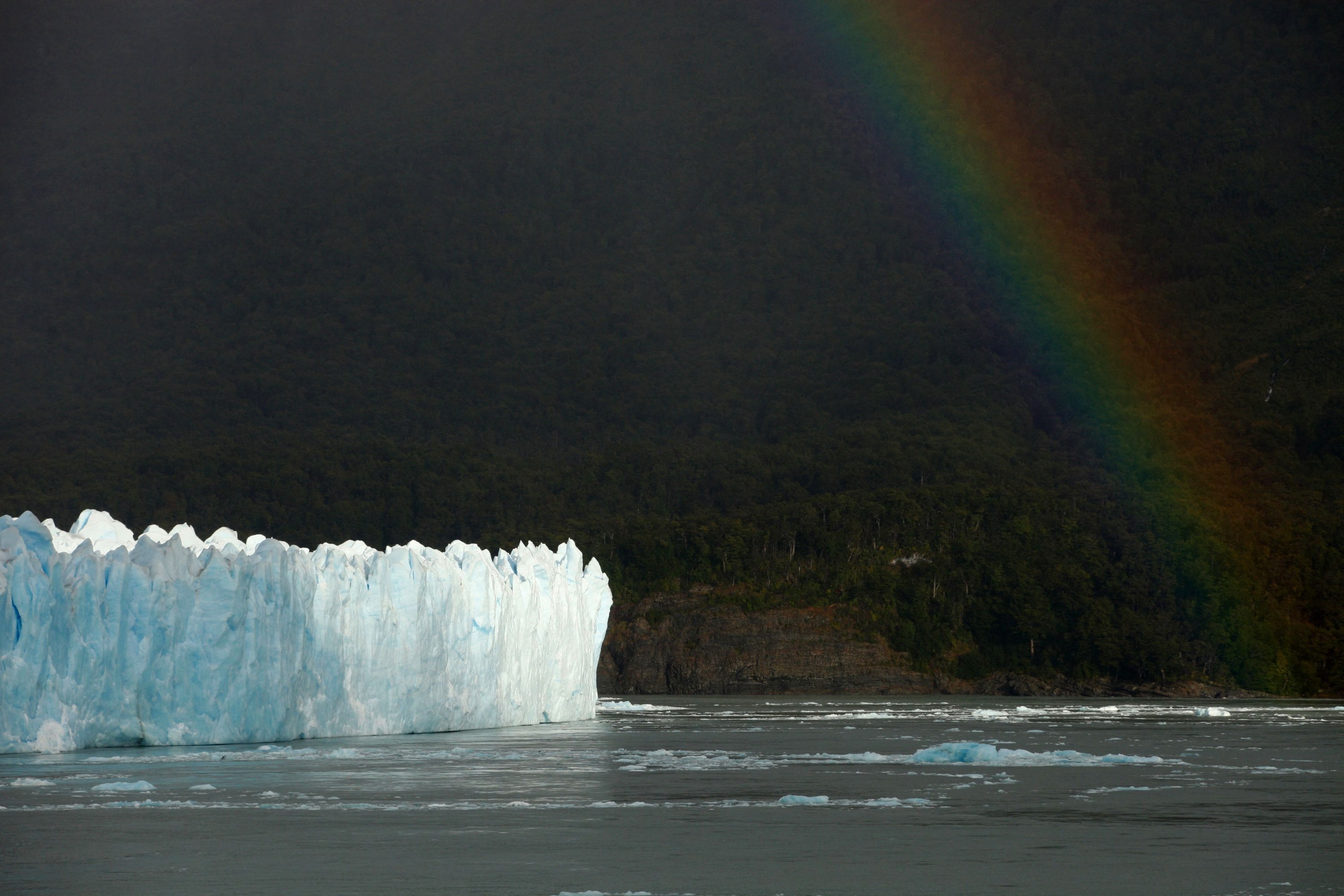
A rainbow appears over the Perito Moreno Glacier at Parque Nacional Los Glaciares near El Calafate, in Santa Cruz, Argentina, March 12, 2018. (AFP Photo)
by Agence France-Presse - AFP Jan 06, 2023 11:45 am

The world's glaciers are shrinking and disappearing faster than scientists thought, with half of the Earth's glaciers, notably smaller ones, destined to disappear by the end of the century and if current climate change trends are left unaltered that number could rise to over 80% of them, according to a new study.

The findings, published in the journal Science on Thursday, provide the most comprehensive look so far at the future of the world's 215,000 glaciers.

The authors emphasized the importance of restricting greenhouse gas emissions to limit the consequences from glacier melt such as sea level rise and depletion of water resources.

To help orient policymakers, the study looked at the impact of four scenarios on glaciers, where global mean temperature change is 1.5 degrees Celsius (2.7 degrees Fahrenheit), 2.0 degrees Celsius, 3.0 degrees Celsius and 4.0 degrees Celsius.

"Every degree increase produces more melt and loss," said Regine Hock of the University of Oslo and University of Alaska Fairbanks, a co-author of the study.

"But that also means if you reduce the temperature increase, you can also reduce that mass loss," Hock told Agence France-Presse (AFP). "So in that sense, there is also a little bit of hope."

Even if global temperature rise is limited to 1.5 degrees Celsius above pre-industrial levels – the most ambitious goal of the Paris Agreement – the researchers estimated that 49% of the world's glaciers would vanish by the year 2100.

That would represent about 26% of the world's glacier mass because the smallest glaciers would be those first impacted.

The global mean temperature is currently estimated to be increasing by 2.7 degrees Celsius which would cause a near-complete loss of glaciers in Central Europe, Western Canada and the continental United States and New Zealand.

"Regions with relatively little ice like the European Alps, the Caucasus, the Andes, or the western United States, they lose almost all the ice by the end of the century almost no matter what the emission scenario is," Hock said. "So those glaciers, they're more or less doomed."

Under the worst-case scenario – a global temperature rise of 4.0 degrees Celsius – giant glaciers such as those in Alaska would be more affected and 83% of glaciers would disappear by the end of the century.

Glacier loss would also exacerbate sea level rise.

"The glaciers that we are studying are only one percent of all ice on Earth," said Hock, "much less than the Greenland ice sheet and the Antarctic ice sheet. But they have contributed to sea level rise almost just as much as Greenland and Antarctic ice sheet together in the last three decades," she said.

Warming of 1.5 degrees Celsius would lead to an increase in average sea levels of nine centimeters while temperatures 4.0 degrees Celsius higher would cause 15 centimeters (5.9 inches) of sea level rise.

"It doesn't sound very much, nine centimeters up to 15 centimeters," Hock said, "but it's not global sea level that is that much of a concern. It's mostly associated storm surges," she said, which have the potential to cause "a lot more damage."

The disappearance of glaciers will also impact water resources because they provide fresh water for some two billion people.

"The glaciers compensate for losing water in summer when it's not raining much and it's hot," Hock said.

The study's projections, which are more pessimistic than those of United Nations climate experts, were reached through observations of the mass of each glacier through the decades and computer simulations.

Despite the alarming findings, Hock said "it is possible to reduce the mass loss by human action. If it happens is of course a different question," she said. "If that happens is of course up to the policymakers."


  • shortlink copied
  • Last Update: Jan 06, 2023 1:27 pm
    KEYWORDS
    climate change climate crisis global warming glaciers melting glaciers rising waters rising temperatures
    The Daily Sabah Newsletter
    Keep up to date with what’s happening in Turkey, it’s region and the world.
    You can unsubscribe at any time. By signing up you are agreeing to our Terms of Use and Privacy Policy. This site is protected by reCAPTCHA and the Google Privacy Policy and Terms of Service apply.
    No Image
    Ancient Mar Musa monastery welcomes visitors amid Syria's new era
    PHOTOGALLERY
    • POLITICS
    • Diplomacy
    • Legislation
    • War On Terror
    • EU Affairs
    • News Analysis
    • TÜRKİYE
    • Istanbul
    • Education
    • Investigations
    • Minorities
    • Diaspora
    • World
    • Mid-East
    • Europe
    • Americas
    • Asia Pacific
    • Africa
    • Syrian Crisis
    • İslamophobia
    • Business
    • Automotive
    • Economy
    • Energy
    • Finance
    • Tourism
    • Tech
    • Defense
    • Transportation
    • News Analysis
    • Lifestyle
    • Health
    • Environment
    • Travel
    • Food
    • Fashion
    • Science
    • Religion
    • History
    • Feature
    • Expat Corner
    • Arts
    • Cinema
    • Music
    • Events
    • Portrait
    • Performing Arts
    • Reviews
    • Sports
    • Football
    • Basketball
    • Motorsports
    • Tennis
    • Opinion
    • Columns
    • Op-Ed
    • Reader's Corner
    • Editorial
    • Photo gallery
    • DS TV
    • Jobs
    • privacy
    • about us
    • contact us
    • RSS
    © Turkuvaz Haberleşme ve Yayıncılık 2021