Daily Sabah logo

Politics
Diplomacy Legislation War On Terror EU Affairs Elections News Analysis
TÜRKİYE
Istanbul Education Investigations Minorities Expat Corner Diaspora
World
Mid-East Europe Americas Asia Pacific Africa Syrian Crisis Islamophobia
Business
Automotive Economy Energy Finance Tourism Tech Defense Transportation News Analysis
Lifestyle
Health Environment Travel Food Fashion Science Religion History Feature Expat Corner
Arts
Cinema Music Events Portrait Reviews Performing Arts
Sports
Football Basketball Motorsports Tennis
Opinion
Columns Op-Ed Reader's Corner Editorial
PHOTO GALLERY
JOBS ABOUT US RSS PRIVACY CONTACT US
© Turkuvaz Haberleşme ve Yayıncılık 2025

Daily Sabah - Latest & Breaking News from Turkey | Istanbul

  • Politics
    • Diplomacy
    • Legislation
    • War On Terror
    • EU Affairs
    • Elections
    • News Analysis
  • TÜRKİYE
    • Istanbul
    • Education
    • Investigations
    • Minorities
    • Expat Corner
    • Diaspora
  • World
    • Mid-East
    • Europe
    • Americas
    • Asia Pacific
    • Africa
    • Syrian Crisis
    • Islamophobia
  • Business
    • Automotive
    • Economy
    • Energy
    • Finance
    • Tourism
    • Tech
    • Defense
    • Transportation
    • News Analysis
  • Lifestyle
    • Health
    • Environment
    • Travel
    • Food
    • Fashion
    • Science
    • Religion
    • History
    • Feature
    • Expat Corner
  • Arts
    • Cinema
    • Music
    • Events
    • Portrait
    • Reviews
    • Performing Arts
  • Sports
    • Football
    • Basketball
    • Motorsports
    • Tennis
  • Gallery
  • Opinion
    • Columns
    • Op-Ed
    • Reader's Corner
    • Editorial
  • TV
  • Life
  • Health
  • Environment
  • Travel
  • Food
  • Fashion
  • Science
  • Religion
  • History
  • Feature
  • Expat Corner

Families stream their elephants in Thailand to survive

by Reuters

SURIN, Thailand Sep 09, 2022 - 3:28 pm GMT+3
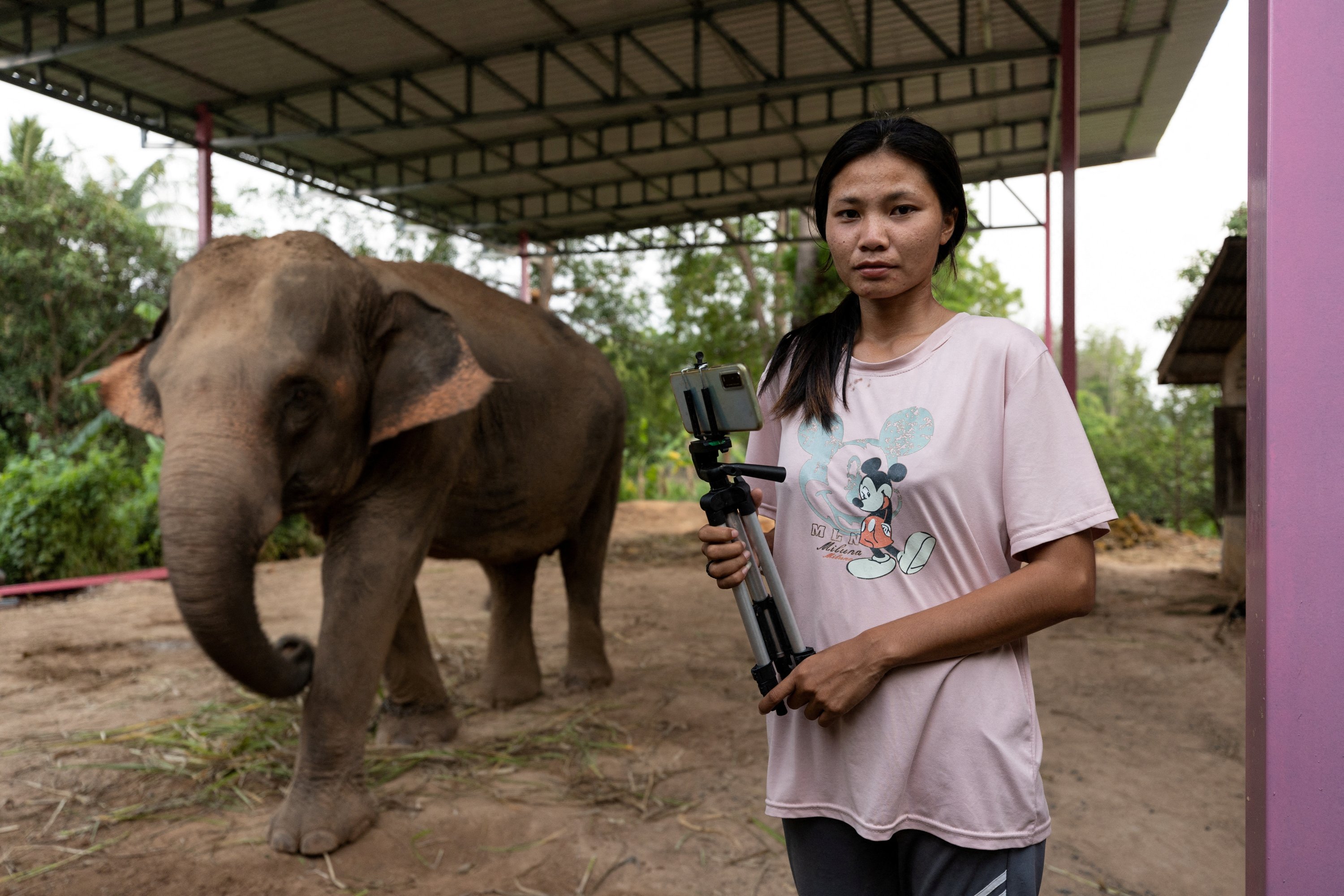
Elephant owner Siriporn Sapmak, 23, poses while holding her gear used for social media live-streaming outside her house, at Ban Ta Klang village in Surin, Thailand, April 6, 2022. (Reuters Photo)
by Reuters Sep 09, 2022 3:28 pm

Living in the northeastern village of Ban Ta Klang in Thailand, Siriporn Sapmak does a livestream of her two elephants on social media everyday to raise money to survive.

The 23-year old, who has been taking care of elephants since she was in school, points her phone to the animals as she feeds them bananas and they walk around the back of her family home.

It is a new – and insecure – source of income for the family, which before the pandemic earned money by doing elephant shows in the Thai city of Pattaya. They top up their earnings by selling fruit.

Like thousands of other elephant owners around the country, the Sapmak family had to return to their home village as the pandemic decimated elephant camps and foreign tourism ground to a virtual halt. Only 400,000 foreign tourists arrived in Thailand last year compared with nearly 40 million in 2019.
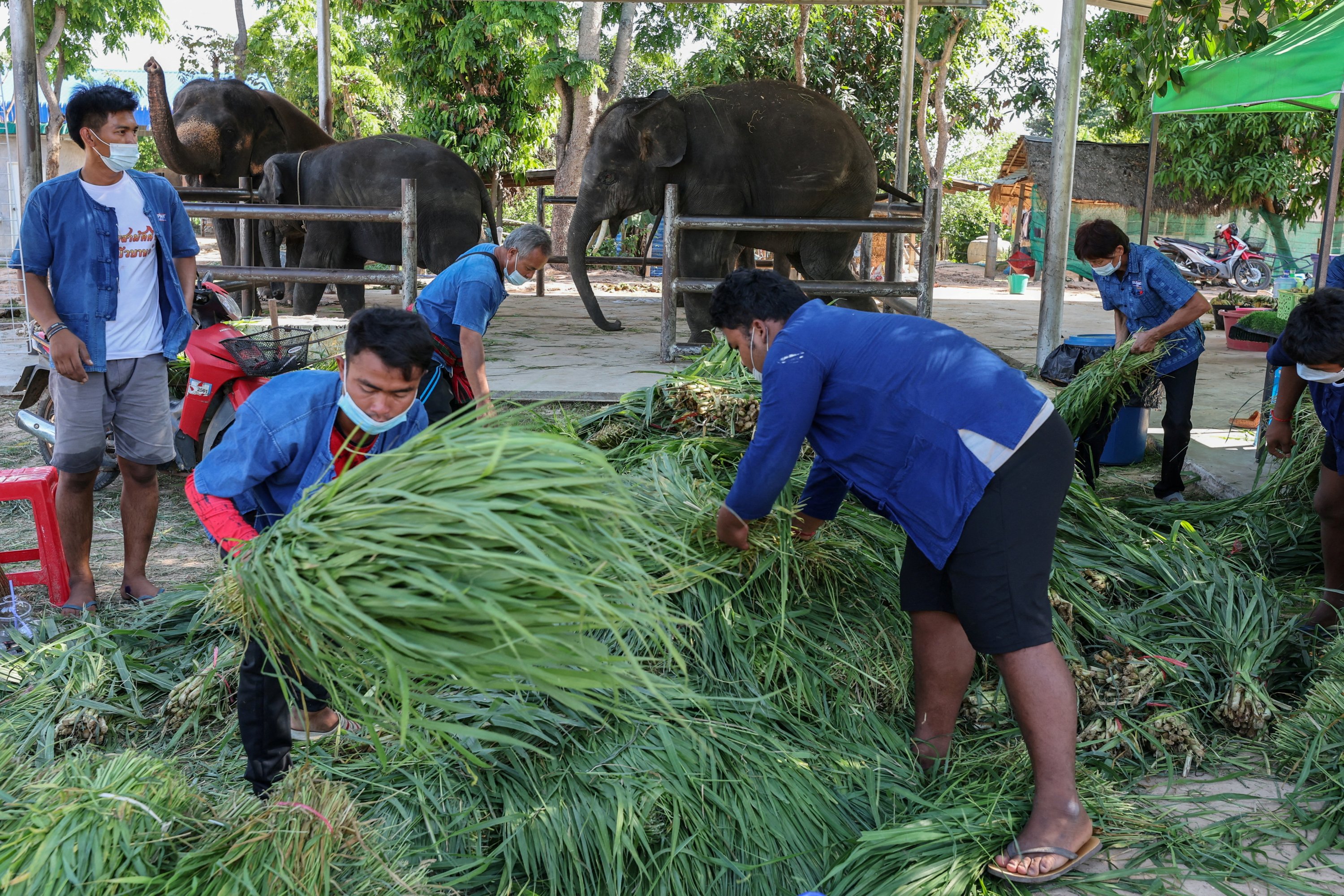
Men pile up grass to be fed to elephants attending a tourist show at Ban Ta Klang village in Surin, Thailand, April 5, 2022. (Reuters Photo)
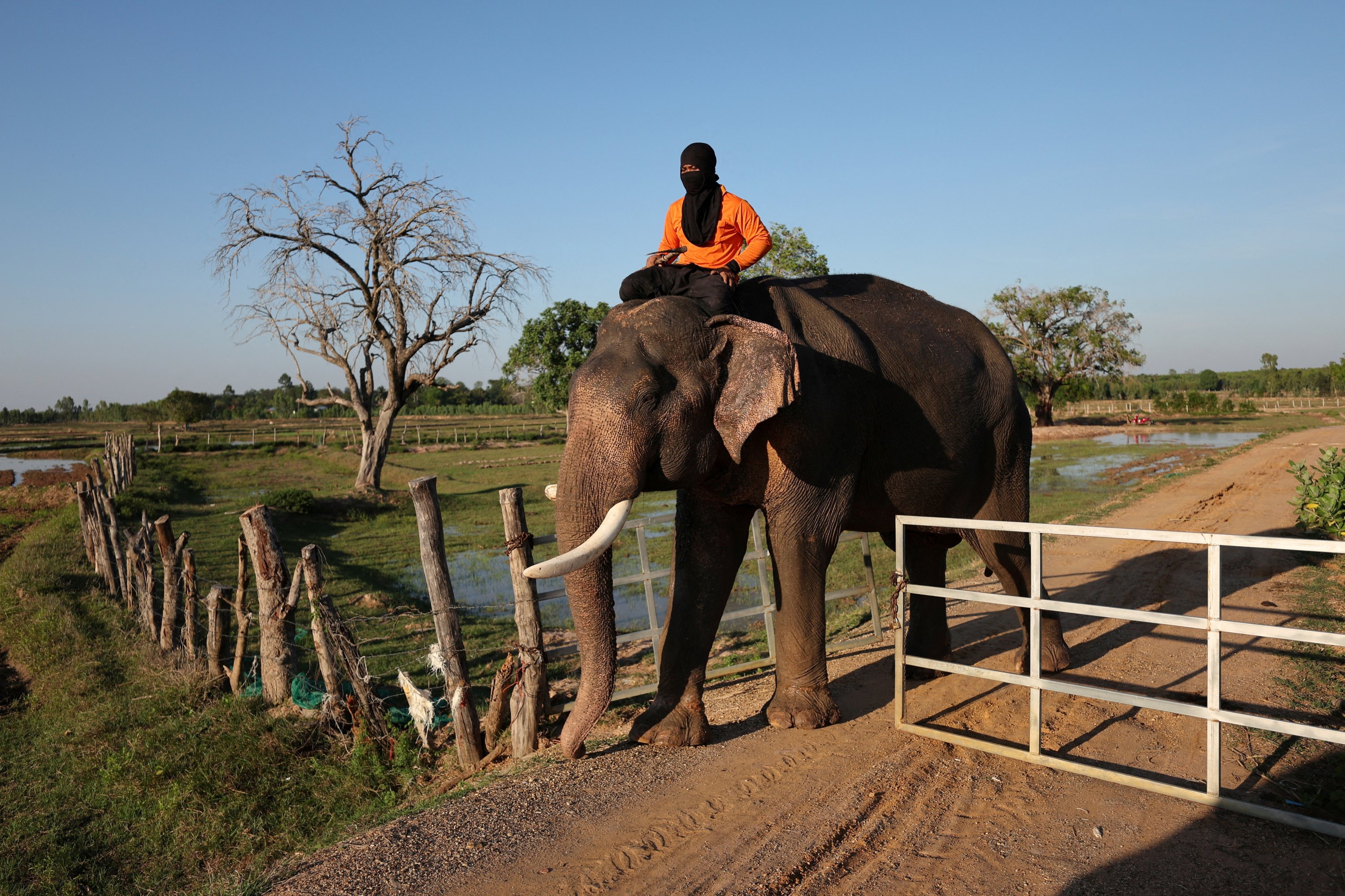
A mahout with his face covered rides on an elephant while training for tourist shows at Ban Ta Klang elephant village in Surin, Thailand, April 5, 2022. (Reuters Photo)

Some days, Siriporn doesn’t receive any donations and her elephants are underfed.

“We are hoping for tourists to (return). If they come back, we might not be doing these livestreams anymore,” she said.

“If we get to go back to work, we get a (stable) income to buy grass for elephants to eat.”

Edwin Wiek, founder of Wildlife Friends Foundation Thailand, estimates that at least a thousand elephants in Thailand would have no “proper income” until more tourists return.

Thailand has about 3,200 to 4,000 captive elephants, according to official agencies, and about 3,500 in the wild.

Wiek said the Livestock Development Department needs to find “some kind” of budget to support these elephants.

“Otherwise, it’s going to be difficult to keep them alive I think for most families,” he said.
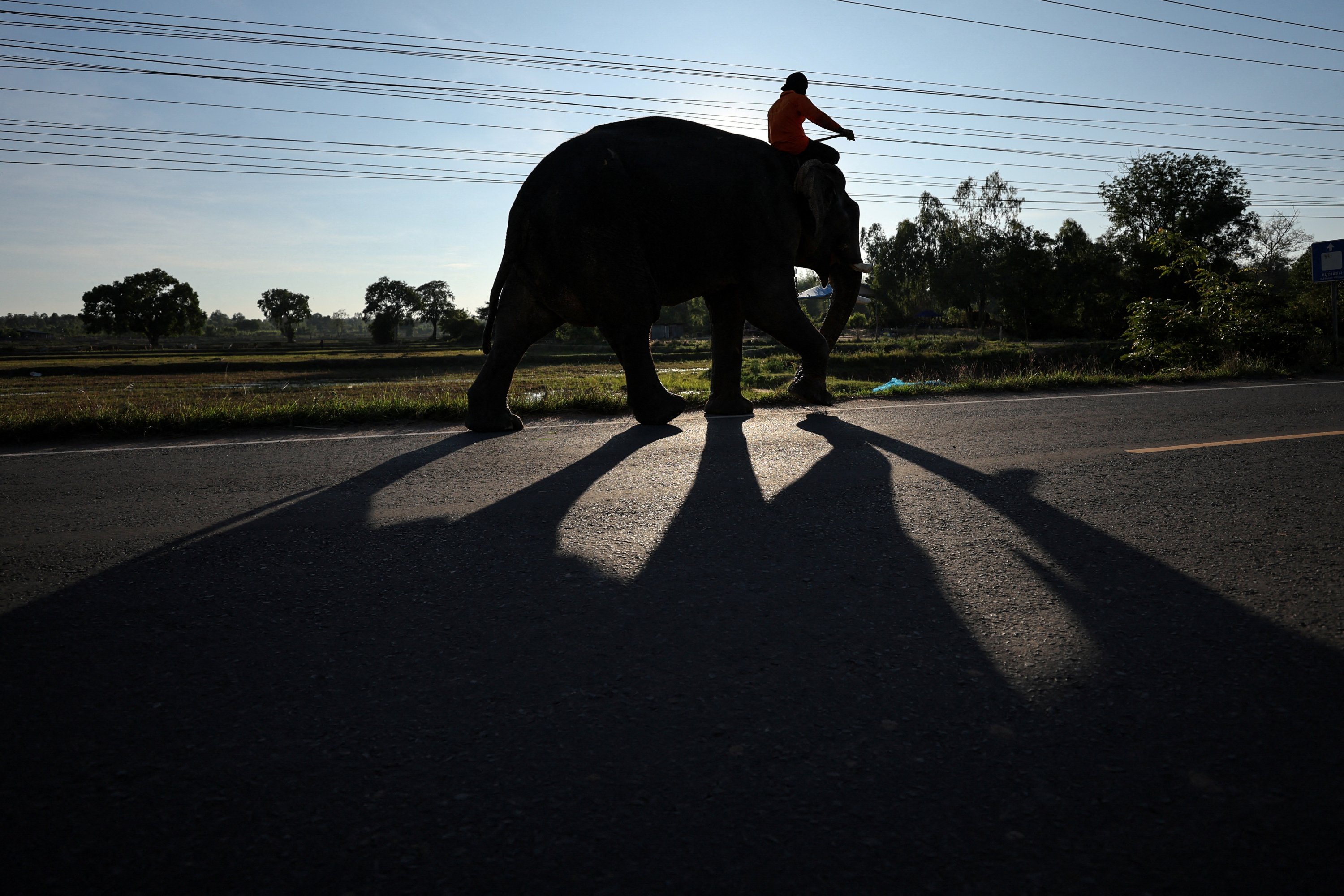
An elephant's shadow is cast on a road at Ban Ta Klang elephant village in Surin, Thailand, April 5, 2022. (Reuters Photo)

The families in Ban Ta Klang, the epicenter of Thailand’s elephant business located in Surin province, have cared for elephants for generations and have a close connection to them.

Elephant shows and rides have long been popular with tourists, especially the Chinese, while animal rights groups’ criticism of how elephants are handled there has given rise to tourism in sanctuaries.

“We are bound together, like family members,” Siriporn’s mother Pensri Sapmak, 60, said.

“Without the elephants, we don’t know what our future will look like. We have today thanks to them.”

The government has sent 500,000 kilograms (1.1 million pounds) of grass across multiple provinces since 2020 to help feed the elephants, according to the Livestock Development Department, which oversees captive elephants.

Elephants, Thailand’s national animal, eat 150 kilograms to 200 kilograms each day, according to the Wildlife Conservation Society.

Siriporn and her mother, however, said they have not yet received any government support.

“This is a big national issue,” said Livestock Development Department Director-General Sorawit Thanito.

He said the government plans to assist elephants and their caretakers and that “measures along with a budget will be proposed to the Cabinet,” without giving a time frame.

While the government is expecting 10 million foreign tourists this year, some say this may not be enough to lure elephant owners back to top tourist destinations, given the costs involved. Chinese tourists, the mainstay of elephant shows, have also yet to return amid COVID-19 lockdowns at home.

“Who has the money right now to arrange a truck ... and how much security (do) they have that they are really going to have business again when they go back?” said Wiek.

He expected more elephants to be born in captivity over the next year, exacerbating the pressures on their owners.

“Some days we make some money, some days none, meaning there’s going to be less food on the table,” said Pensri.

“I don’t see a light at the end of the tunnel.”

  • shortlink copied
  • KEYWORDS
    elephants
    The Daily Sabah Newsletter
    Keep up to date with what’s happening in Turkey, it’s region and the world.
    You can unsubscribe at any time. By signing up you are agreeing to our Terms of Use and Privacy Policy. This site is protected by reCAPTCHA and the Google Privacy Policy and Terms of Service apply.
    No Image
    This is not the US: Red fairy chimneys in Turkey's Erzurum
    PHOTOGALLERY
    • POLITICS
    • Diplomacy
    • Legislation
    • War On Terror
    • EU Affairs
    • News Analysis
    • TÜRKİYE
    • Istanbul
    • Education
    • Investigations
    • Minorities
    • Diaspora
    • World
    • Mid-East
    • Europe
    • Americas
    • Asia Pacific
    • Africa
    • Syrian Crisis
    • İslamophobia
    • Business
    • Automotive
    • Economy
    • Energy
    • Finance
    • Tourism
    • Tech
    • Defense
    • Transportation
    • News Analysis
    • Lifestyle
    • Health
    • Environment
    • Travel
    • Food
    • Fashion
    • Science
    • Religion
    • History
    • Feature
    • Expat Corner
    • Arts
    • Cinema
    • Music
    • Events
    • Portrait
    • Performing Arts
    • Reviews
    • Sports
    • Football
    • Basketball
    • Motorsports
    • Tennis
    • Opinion
    • Columns
    • Op-Ed
    • Reader's Corner
    • Editorial
    • Photo gallery
    • DS TV
    • Jobs
    • privacy
    • about us
    • contact us
    • RSS
    © Turkuvaz Haberleşme ve Yayıncılık 2021