For a long time, “quiet luxury” has reigned supreme in the fashion world. But now, it seems ready to hand its crown to a more maximalist, bold and distinctive aesthetic. This season, the message is clear: from the striking silhouettes at Gucci to Prada’s fresh takes on skirts, quiet luxury is losing its grip as the ultimate expression of good taste.
Could there be a commercial motive behind luxury’s attempt to make itself heard again? As Italy’s fashion industry looks to regain its growth, I find myself wondering whether it is really a coincidence that brands are turning to designs that spark desire and invite us to buy. As fashion houses raise their voices to be seen, how do we make sure the labor behind the clothes is heard, too? With that question in mind, I watched the fifth edition of Vogue World, held around the same time as the Milan Fashion Week we have just left behind.
Vogue World: Milano took place on Sept. 22 at Galleria Vittorio Emanuele II. Of course, the venue was no coincidence; it was part of the story itself. We are talking about a historic shopping arcade. Construction began in 1865, and the gallery connects Milan’s Piazza del Duomo with La Scala. With its vast iron-and-glass dome and intricate floor mosaics, it is one of Europe’s oldest and most magnificent shopping galleries.
The Galleria’s connection to commerce is just as important as its history. In 1913, Mario Prada opened the brand’s first store here, selling leather goods, luggage and accessories. That store would become the starting point for what would eventually grow into a global fashion house. In that sense, the Galleria itself summed up the transformation Vogue World wanted to tell us about before the show had even begun.
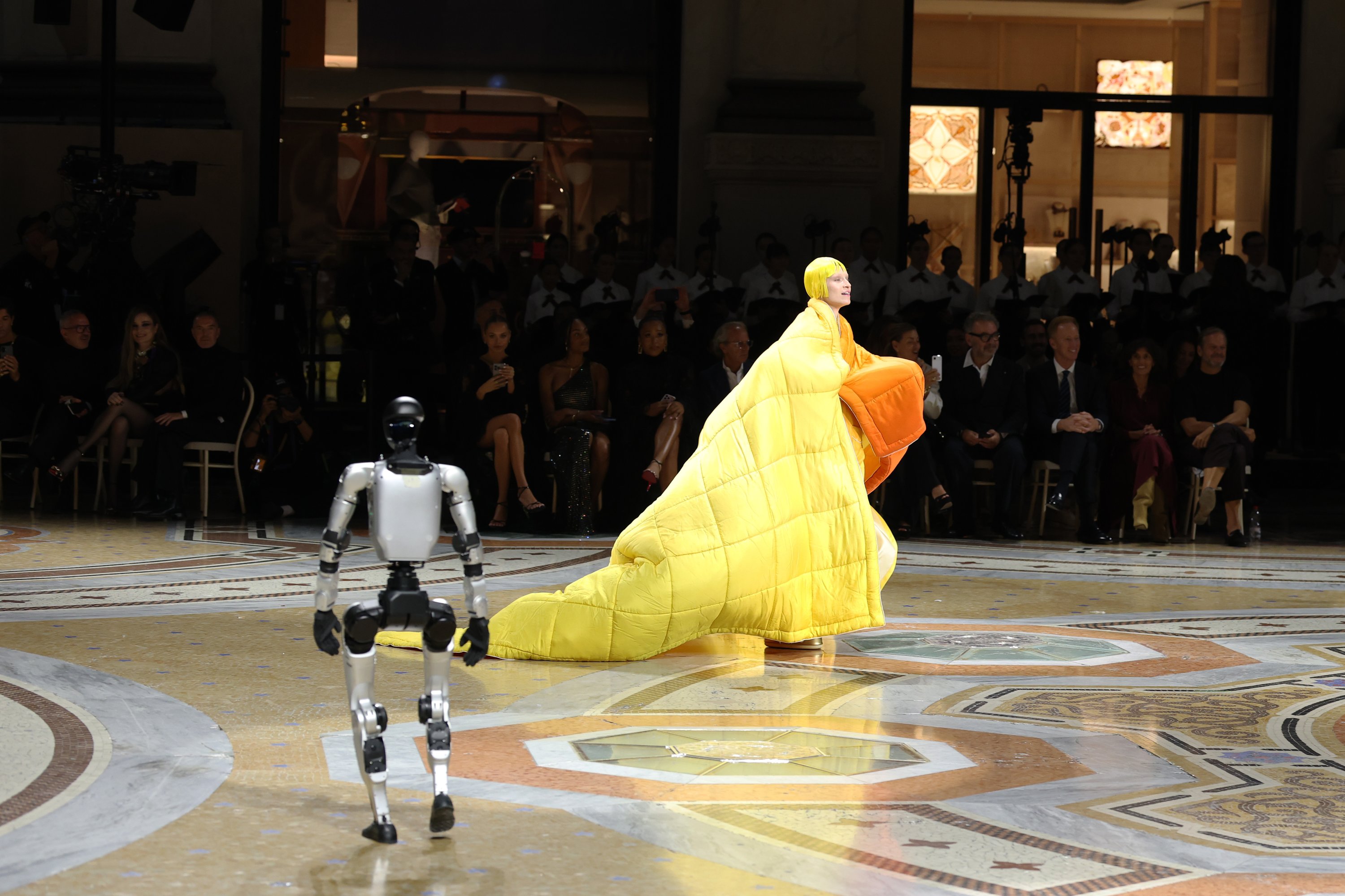
Inside this magnificent gallery, we watched a story of fashion unfold – one that began with handcraft, moved through industrial production and reached toward the coming age of artificial intelligence. At the heart of the show was the relationship between human hands, craftsmanship and imagination, and the technology that increasingly surrounds them. A loom appeared onstage at the opening of the show, while robots took to the runway during “The Age of Intelligence.” As spectators, we watched Italy’s centuries-old fashion story unfold across each chapter.
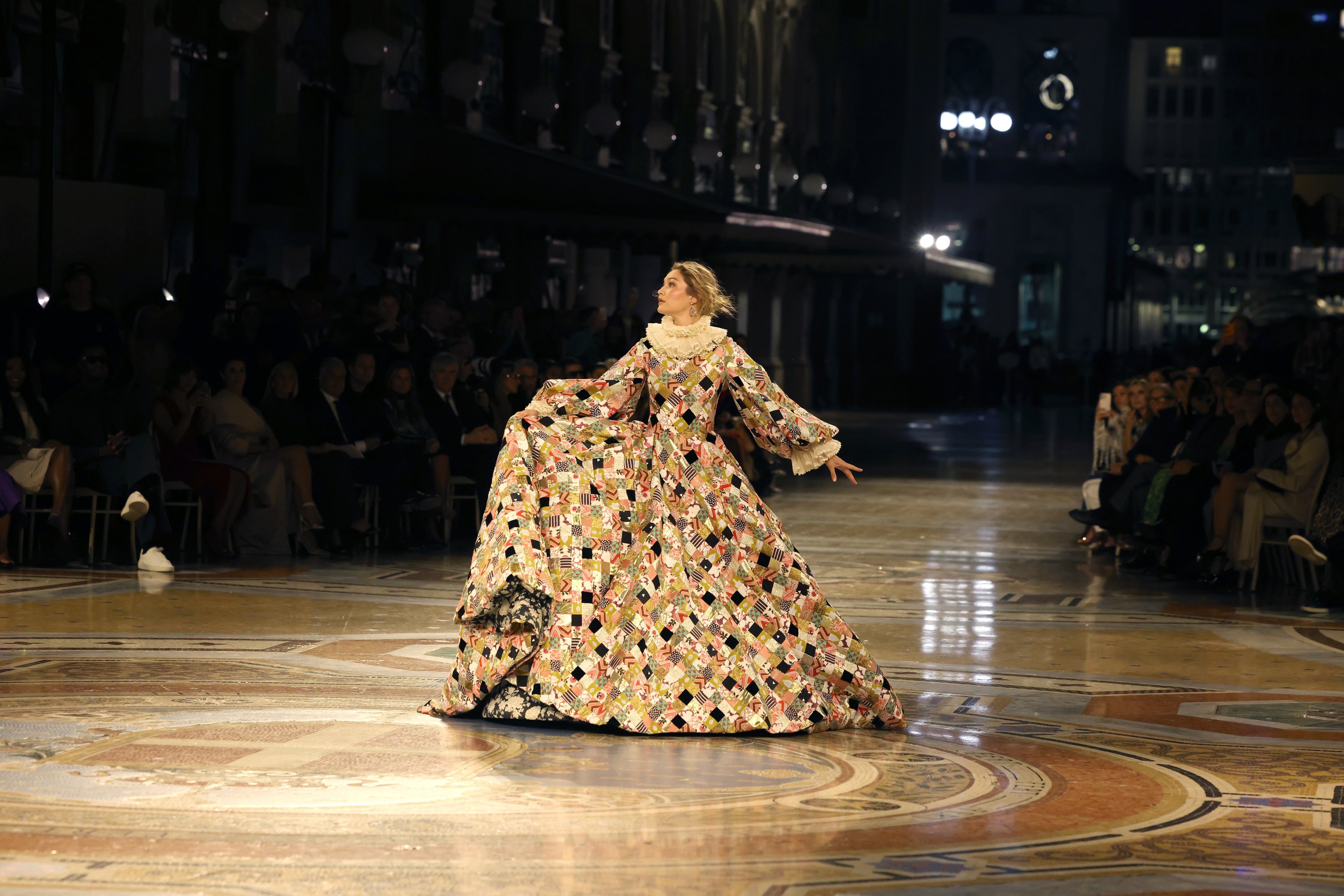
Supermodel Gigi Hadid opened the runway in a Valentino Haute Couture gown. Made from recycled Venetian quilts, the design took 1,680 hours to create. It offered a beautiful example of how a material from the past can be transformed into a new story through craftsmanship.
I have always been fascinated by Italy’s Renaissance heritage and traditional craft culture, which came through in the first chapter, “The Artisanal Revolution.” In “The Industrial Revolution,” inspired by Turin’s powerful industrial heritage, I found something that felt closer to me and to my own understanding of brand identity. There is a certain discipline in a well-tailored suit that directly reflects my approach to design. Sometimes, I even feel a little like the iconic Barney Stinson character from "How I Met Your Mother."
The show took a colorful turn with its "Made in Italy" segment. The diva figure, born from the golden age of Italian cinema and forever associated with Federico Fellini’s La Dolce Vita, returned to the stage. It was a fascinating reminder that a country’s fashion memory is not shaped by clothes alone, but also by films and the characters they create.
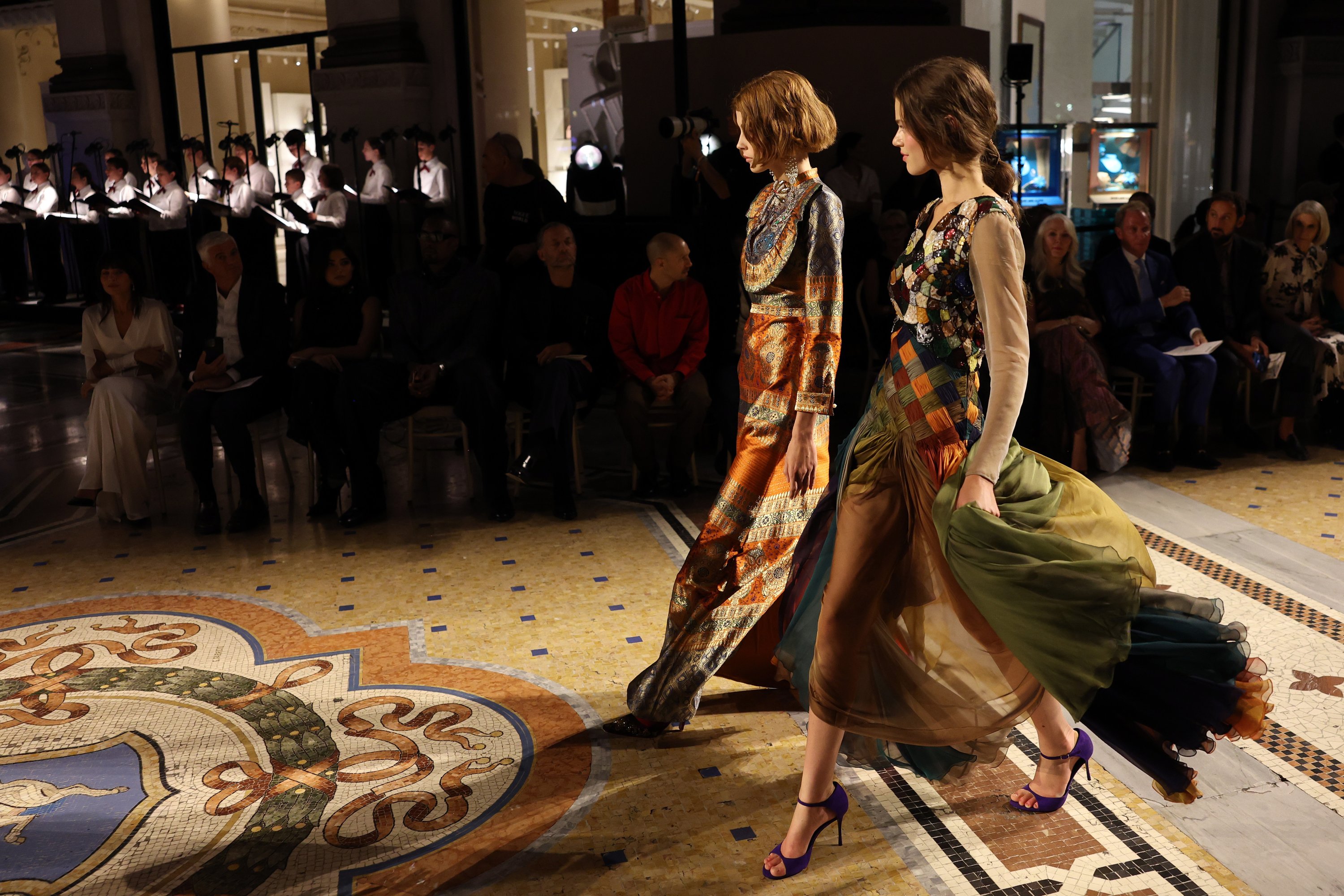
In Italy, fashion has never stayed confined to clothing. It spills into art, architecture, the streets, shop windows and, ultimately, a way of life. Milan’s “Quadrilatero d’Oro,” or “Golden Quadrilateral,” encompasses the streets between Via Monte Napoleone, Via della Spiga, Via Sant’Andrea and Via Manzoni, forming one of the world’s most important luxury shopping districts. Here, Italy’s energy, rich history and shopping culture intertwine, turning Milan into a film set where all these experiences unfold at once. This sense of wholeness creates a connection between the value of visible craftsmanship and the expertise that often remains unseen.
When we see “Made in Italy” on a garment’s label, we see more than the country where it was produced. We also think of Italy’s long relationship with fabric, tailoring and craftsmanship. The label itself may not guarantee flawless workmanship, but behind the expectations it creates lies a production culture passed down through generations. That is why it is hardly surprising that the Milan show placed Italian craftsmanship at its center. To me, however, the most valuable part of the show was the way it made that labor visible on such a grand stage. Today, it is easy to showcase technology. Making craftsmanship visible and understandable is much harder.
In short, I watched the show like a cabaret telling the story of Italian fashion, scene by scene.
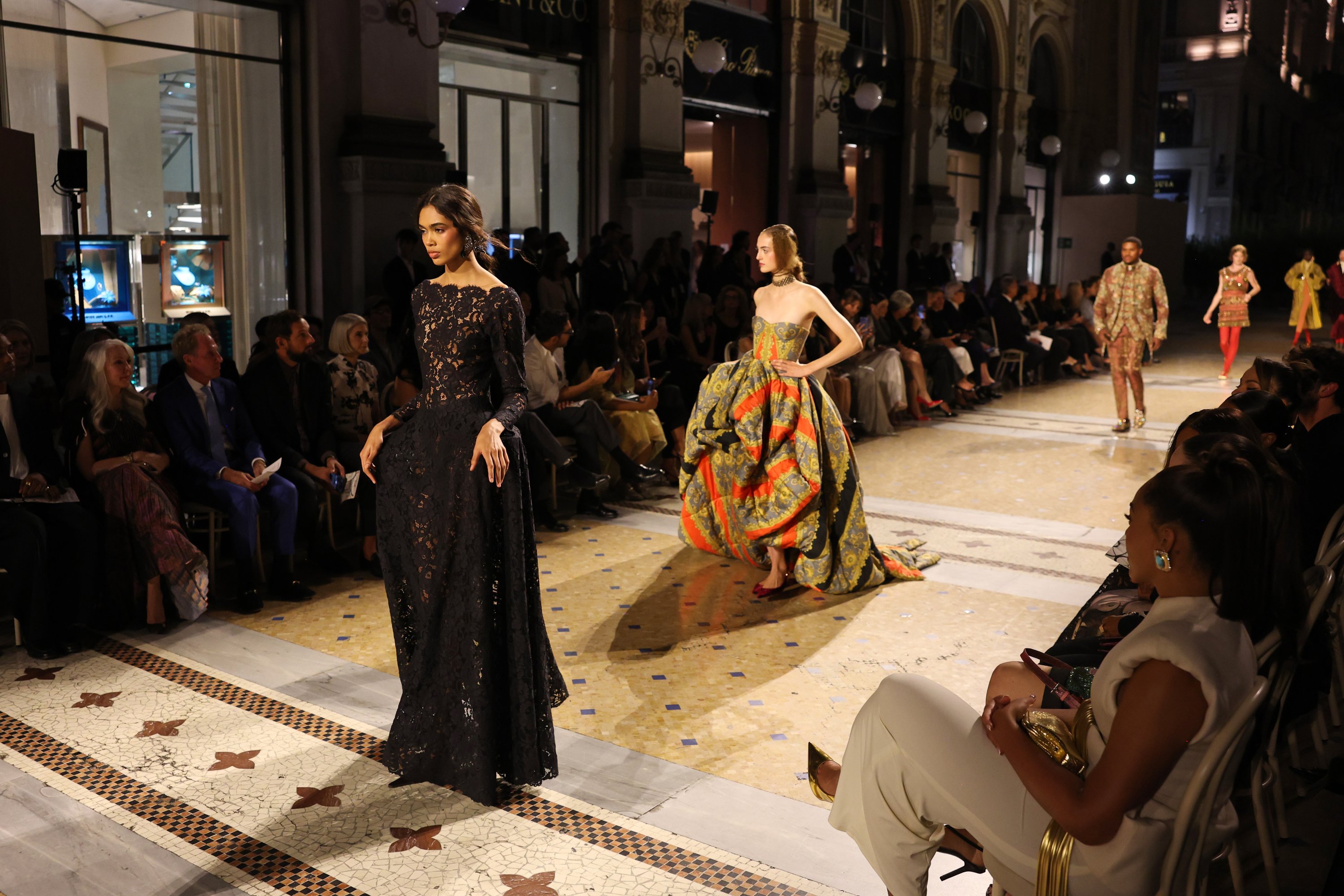
Vogue Italia described the central idea as a reminder of the value of our ability to make and create in an increasingly digital world. Yet the robots that appeared onstage also made me question, once again, how much space we are leaving for human labor.
Today, technology and craftsmanship are not strangers to one another. We need technological tools to develop new fabrics and improve the processes and production taking place in workshops. But technology cannot explain why a garment feels right, how a seam should follow the body or why a particular technique is worth passing down from one generation to the next. I see this in my own fittings, too: I might notice that a skirt cut on the bias moves with the body in a richer and more harmonious way than one cut on the straight grain. For good design, I believe that technical knowledge must be accompanied by the designer’s eye and intuition.
In this column, I want to trace the legacies that travel from one generation to the next – the designs, ideas and craftsmanship that refuse to fade with time. Because perhaps the true measure of good design is not how it looks on the runway, but what makes us reach for it again, years after the applause has faded.