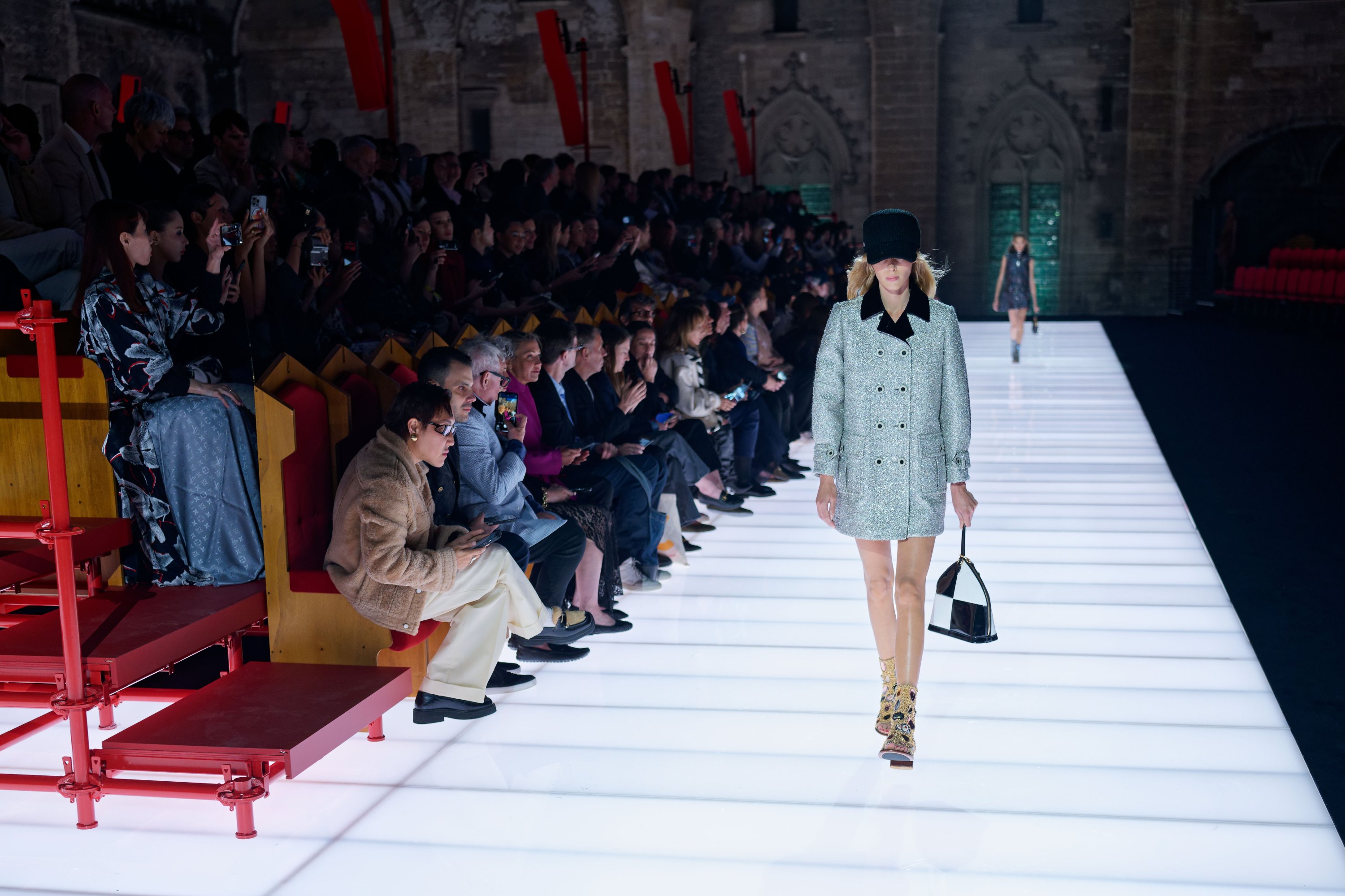
Fashion designer Gökay Gündoğdu presented his new collection a few days ago at his Istanbul showroom, where I spoke with him about his recent work and evolving perspective on fashion.
For those unfamiliar with Gündoğdu, the founder of T.A.G.G. (The Attitude by Gökay Gündoğdu), I’d like to begin by mentioning his remarkable educational background. Or rather, perhaps it’s best to hear it in his own words, as this educational journey played a defining role in shaping his life:
“I completed my degree in Business Administration at Yeditepe University on a merit scholarship. Afterward, I received another scholarship to study Strategic Marketing and Brand Management at New York University. After graduating, I had the opportunity to work in New York City. During that time, I discovered my interest in design and decided to develop myself in that field. I then applied to Domus Academy in Milan, one of the world’s Top 10 design schools, where I earned another scholarship and qualified to study Business Design. I had the opportunity to work with globally renowned brands such as Louis Vuitton ...”
After completing his studies in New York and Milan, Gündoğdu worked for luxury brands such as Armani, Bulgari, and Valentino. In 2015, he founded T.A.G.G. What stands before us today is an ambitious brand that also managed to survive the COVID-19 pandemic that affected the entire world.
His latest collection consists of captivating pieces enriched with poplin fabrics, silks and intricate handcraftsmanship. The collection blurs the boundaries between lingerie and outerwear, as well as between loungewear and streetwear. It pushes beyond the comfort zone while still maintaining a natural and wearable balance.
As we talk about the collection, I ask Gündoğdu what kind of woman he imagines while designing it. He describes her as someone who “cannot fit into a single definition” – a woman who can express herself clearly, who is multifaceted, visionary and inclusive. According to him, she is open to the world and engaged with it, yet never loses her own perspective.
I then ask whether a woman, who is this strong and independent, can truly be embraced by the fashion world. Gündoğdu says he believes fashion can stand beside women, but only if it becomes not just aesthetically, but also systemically, fairer and more inclusive. He points out that while fashion is a powerful form of expression, it also contains deep contradictions. On one side, he says, there is the “ideal” image of women constantly being projected; on the other, there is the invisible labor of women that sustains the industry itself. In his own work, he explains, he tries to position women not as objects but as subjects and adds that making women’s strength, individuality and layered identities visible is central to both his design language and production approach.
I then ask him what has changed in the Turkish fashion industry since he first decided to enter the world of fashion:
“Over the last 20-25 years, I think there has been a serious increase in visibility. There are more schools, more graduates and more brands. Naturally, this has created a larger field of movement. But fashion is not just about producing designs, it’s also about production, communication, sales, sustainability and building global networks. In these areas, we still have room for development. I believe there are incredibly creative people in Türkiye. However, for creative industries to truly grow, the systems supporting them also need to evolve. The spread of fashion education was important, but the real issue is how you support designers after they graduate. Today we see individual success stories, but transforming this into a more sustainable and globally influential structure is still an important challenge.”
As we examine pieces from the collection in the showroom, I ask:
“We are going through a period where fashion weeks are being revived, brands are organizing alternative runway shows in places that inspire them and different methods of presenting collections are constantly being discussed instead of traditional fashion shows. How do you see all these developments? I’d like you to interpret the global picture, but also analyze the country we’re living in.”
Gündoğdu replies: “Fashion weeks have already been transforming for a long time. There used to be a system with much clearer rules, but today brands are searching for the presentation format that best suits their own stories. Runway shows, digital presentations, private events, experience-focused launches ... There is no longer a single correct method. I actually see this as something positive, because every brand has a different language and that language should naturally be reflected in the way it presents itself. Today, people don’t just want to see clothing, they want to see the perspective of the brand.”
I continue asking about women in the industry:
“The fashion industry is perhaps one of the sectors where women are most commodified. In order for women to be visible within the industry, they are expected to possess certain physical characteristics. Although we generalize this as youth and beauty, the issue extends from skin tone to height, hair color and body measurements. Can such an industry truly approach women objectively and genuinely protect their rights?”
Gündoğdu answers:
“The fashion industry stands in a very contradictory place on this issue. On one hand, it can create a space that increases women’s visibility and makes women feel powerful; on the other hand, it has long been part of a system that reproduces certain beauty standards. Even today, we still see women being accepted within certain molds. This is not only about body size, but also about age, skin color, hair type, lifestyle and many other factors. Therefore, I believe there is a real need for a more inclusive perspective. What’s important is creating a system that genuinely embraces women’s individuality and diversity instead of evaluating them through a single ideal. This is not just about casting or campaigns, it is a mindset that needs to change at every stage, from production to communication.”
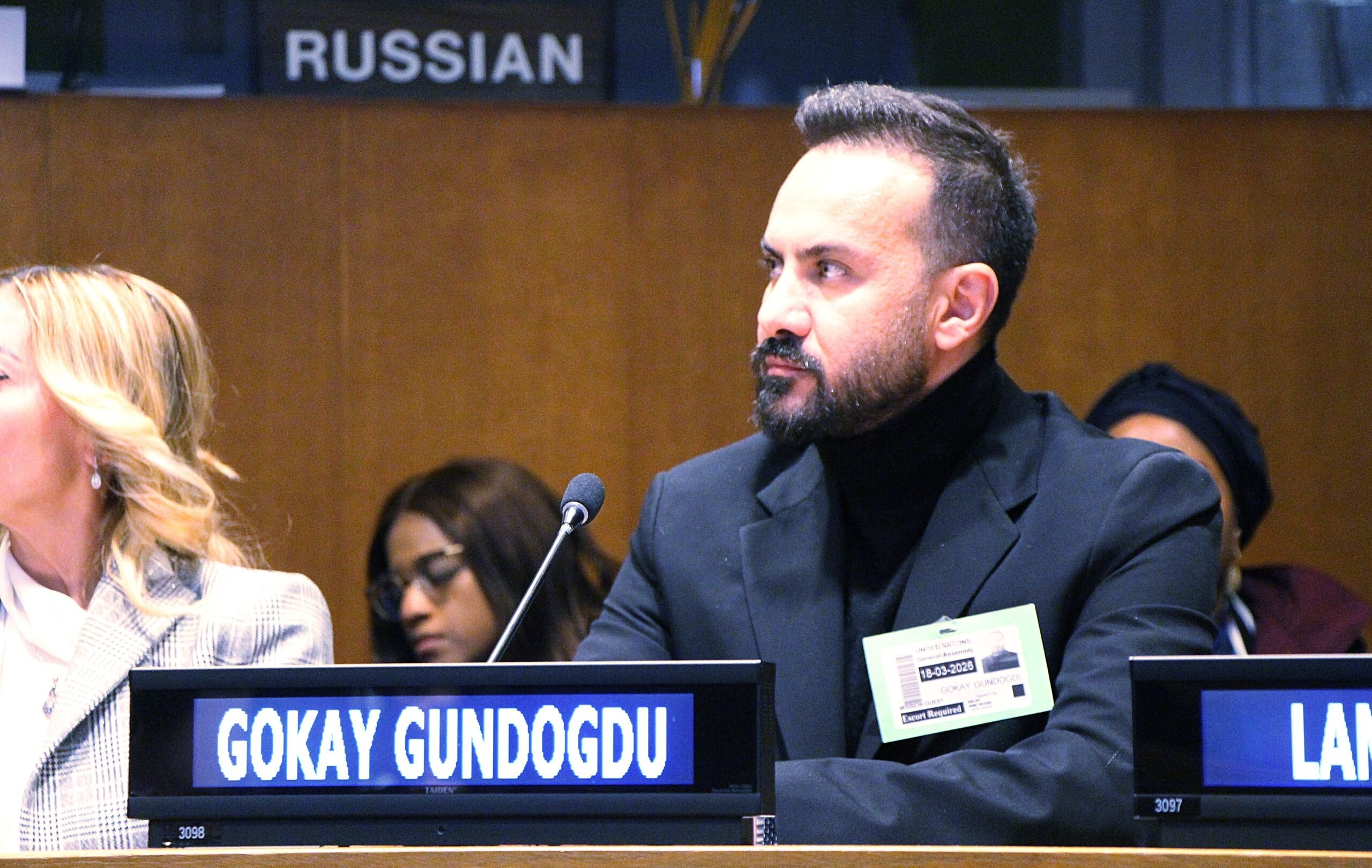
This year, Gündoğdu was also among the speakers at a highly important commission. Since we had the chance to meet, I wanted to ask him about that experience as well.
“You recently delivered a speech at the U.N. Headquarters in New York as part of the 70th Session of the United Nations Commission on the Status of Women (CSW). Could you tell us how you were selected to speak and what kind of process the U.N. followed?”
He responded:
“The opportunity to speak at the United Nations came about after a year and a half of discussions. During that process, a fashion show I held in 2018 particularly caught their attention. In that collection, I questioned the perspective that sees a woman’s body as an object that constantly needs improvement. It was a collection that rebelled against imposed and standardized concepts of beauty. Afterward, I continued producing work in every collection that emphasized this idea. Telling women’s stories, reminding women of their strength and making women’s labor and role in production visible have always been important to me. I think the fact that I have consistently maintained this perspective over the years also played a role in this process.
Structures like CSW are multidisciplinary platforms. Therefore, what matters is not only your profession, but also the perspective with which you practice it, how you interact with different disciplines and how consistently you stand behind the ideas you defend. For me, it was an incredibly valuable experience, because it was important to explain that fashion is not just an aesthetic field, but also a social and cultural form of expression.”
I ask Gündoğdu how his speech was received at the commission. He says the responses were very special for him. Afterward, he explains, he received warm feedback and congratulations from fellow speakers, the program director and several respected academics. According to Gündoğdu, many were particularly struck by how inclusive the speech was, as well as by the sincerity, passion and sense of responsibility behind his approach to the subject. He adds that he was especially proud to have the opportunity to discuss the possibility of collaborating on future projects.
"There were speakers from many different fields at the commission. Inequalities faced by women were discussed from perspectives such as human rights, education, agriculture and mental health. Yet the common point of all the speeches was that they came from a very genuine place. Alongside academic studies, there were also personal experiences and real-life stories, which made the talks especially impactful," he said.
"One of the speeches that impressed me most was by Dr. Judy Kuriansky. She explained perception management through a visual example. She talked about how, when we think of a woman working in agriculture, we still imagine a woman doing physical labor and carrying loads on her back, whereas we cannot easily imagine a female executive in the same field. Showing this through two different visuals was incredibly striking. Through this example, she demonstrated how gender roles and the male gaze shape our perceptions. That was one of the most powerful moments for me,” said Gündoğdu.