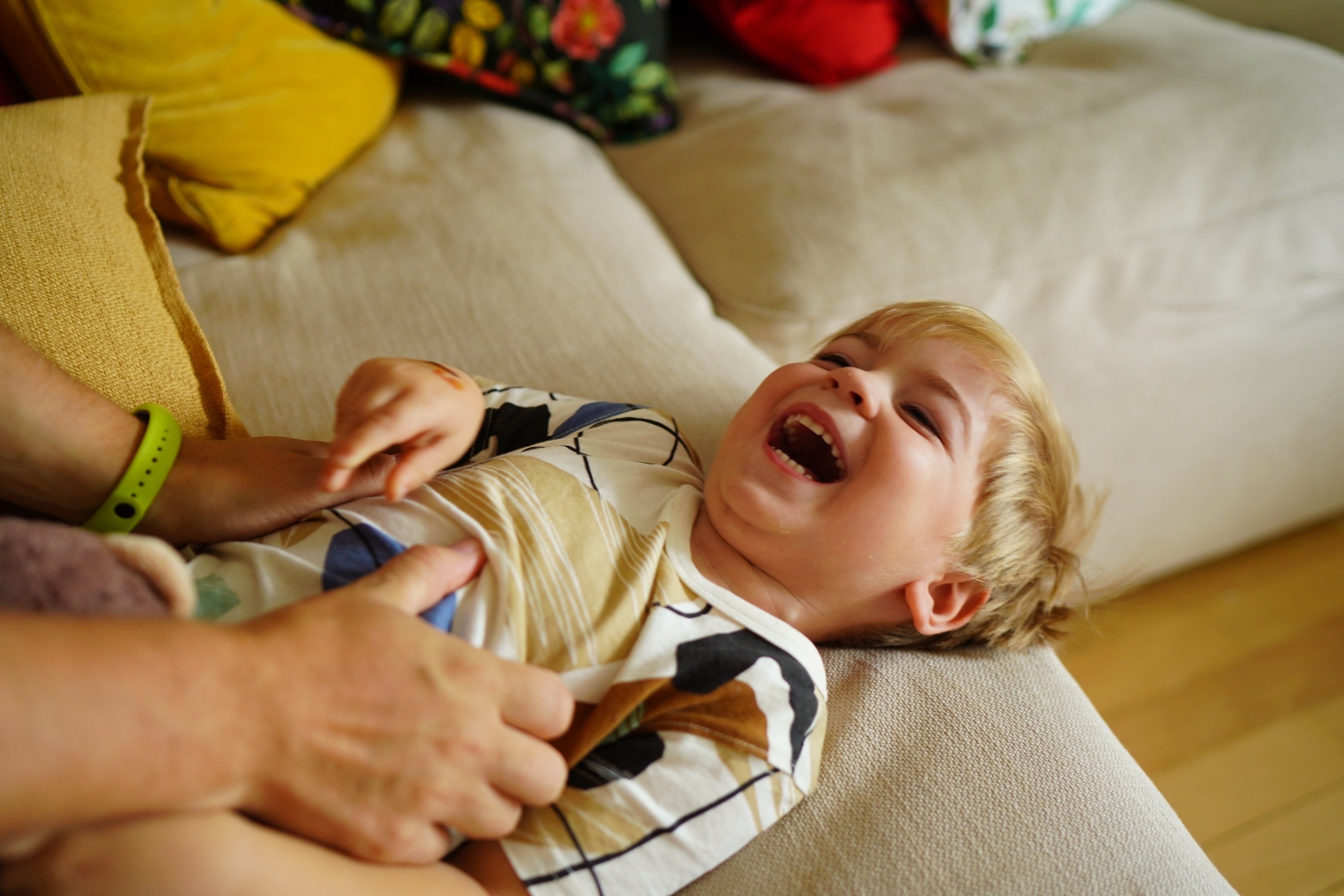
Tickling is experienced similarly across cultures, with people from different cultural backgrounds reporting sensitivity in largely the same areas of the body, according to research published in journal Nature Human Behaviour on Monday.
"We found remarkably similar patterns regardless of where participants came from," researcher Konstantina Kilteni of Radboud University said in a university statement. "More than 95% of the people we studied had either been tickled themselves or had tickled someone else, suggesting that tickling behaviors are widespread."
Participants from China, the Netherlands and Greece identified similar areas as particularly sensitive to tickling, including the armpits, neck, abdomen and soles of the feet.
"Although ticklishness is stronger in rarely touched regions, its topography relies on a psychophysiological mechanism that is more complex than previously assumed," the study said.
Spontaneous laughter was also the most common reaction across all three groups, while dodging, screaming and tickling back were frequently reported.
A large majority described tickling as pleasant, although around a quarter considered it unpleasant.
Kilteni and researcher Ziliang Xiong surveyed around 450 people aged 18 to 30 from the three countries.
More than 98% said they had been tickled, while around 96% reported having tickled others. Participants from Greece reported the highest tendency to tickle others.
The researchers used statistical analysis to examine differences in ticklishness among the three cultural groups, exploring questions about the phenomenon that have intrigued scholars since the time of Aristotle and Socrates, according to the study.