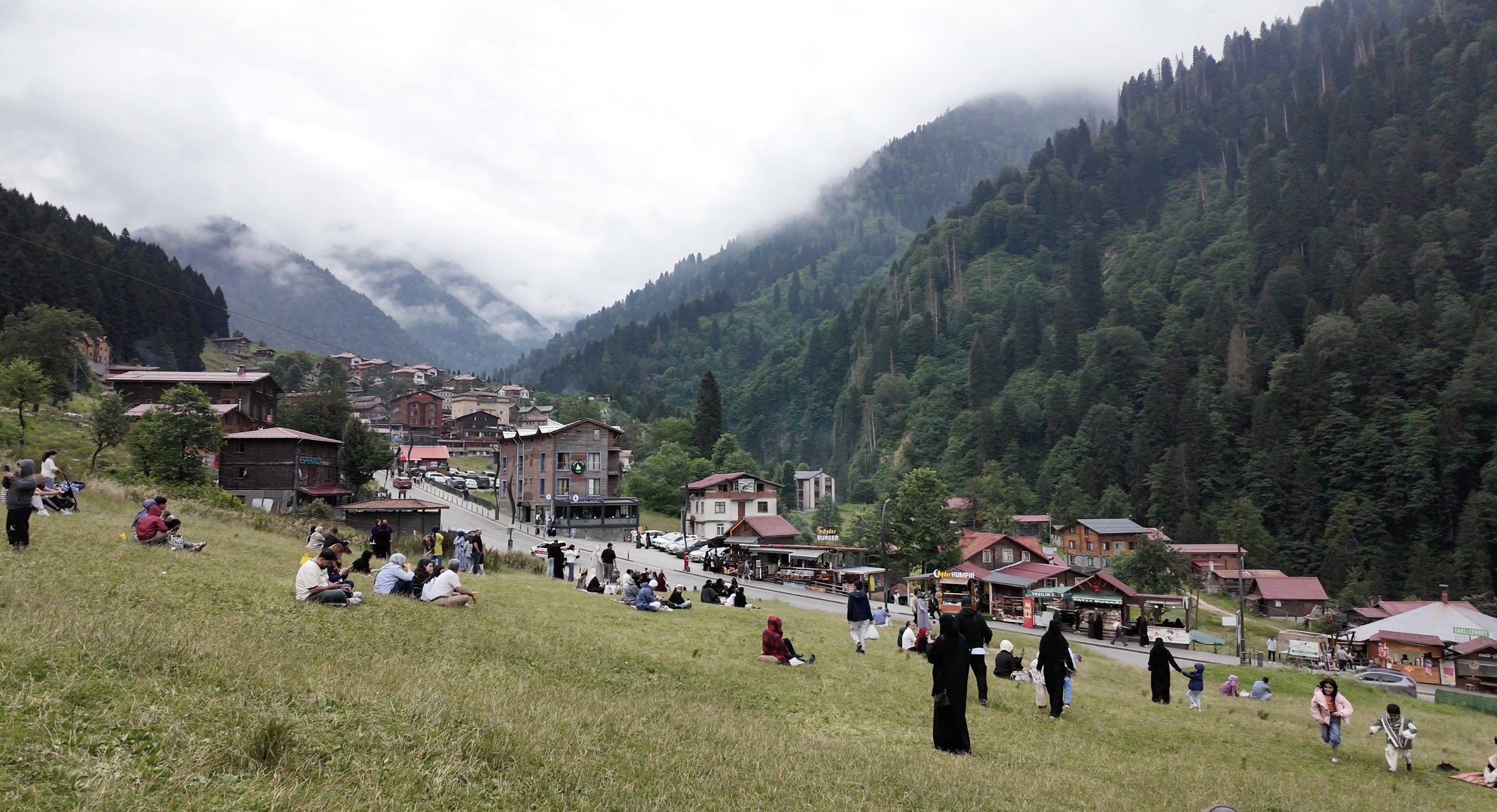
The road climbs steadily into the mountains of Türkiye's Black Sea region. The dense forests grow thicker, the air turns cooler and the villages below gradually disappear from view.
Then the landscape opens up.
Wooden houses appear along the slopes, livestock graze on green pastures and people gather outside their homes. This is the "yayla," the traditional highland settlement where generations of Black Sea families have spent the summer months.
For centuries, families in provinces including Rize, Trabzon, Artvin, Giresun and Gümüşhane have made the journey from their villages to the mountains. The tradition, known as "yaylacılık," or seasonal highland living, was once a central part of rural life.
Today, the journey is easier. Roads have replaced many of the old mountain paths, and cars have replaced animals carrying household belongings.
But every summer, people still go up.
Yaylacılık was never simply a way to escape the summer heat.
For generations, it was part of an economic system shaped by the geography of the Black Sea. Steep mountains and limited farmland made high-altitude pastures important for livestock, while the cooler summer climate allowed families to spend several months in the mountains.
The year followed a familiar pattern.
Families stayed in lower villages during the colder months, then gradually moved upward as spring arrived. Some passed through intermediate settlements known as "mezra" or "mezere," seasonal settlements located between the permanent villages and the higher pastures.
By summer, families had reached the yayla.
There, they cared for livestock, produced dairy products and spent long days working outdoors. Milk was turned into butter, cheese and other traditional foods, while animals grazed on the surrounding pastures.
The highland house was therefore more than a summer residence. It was part of a way of life built around work, family and the landscape.
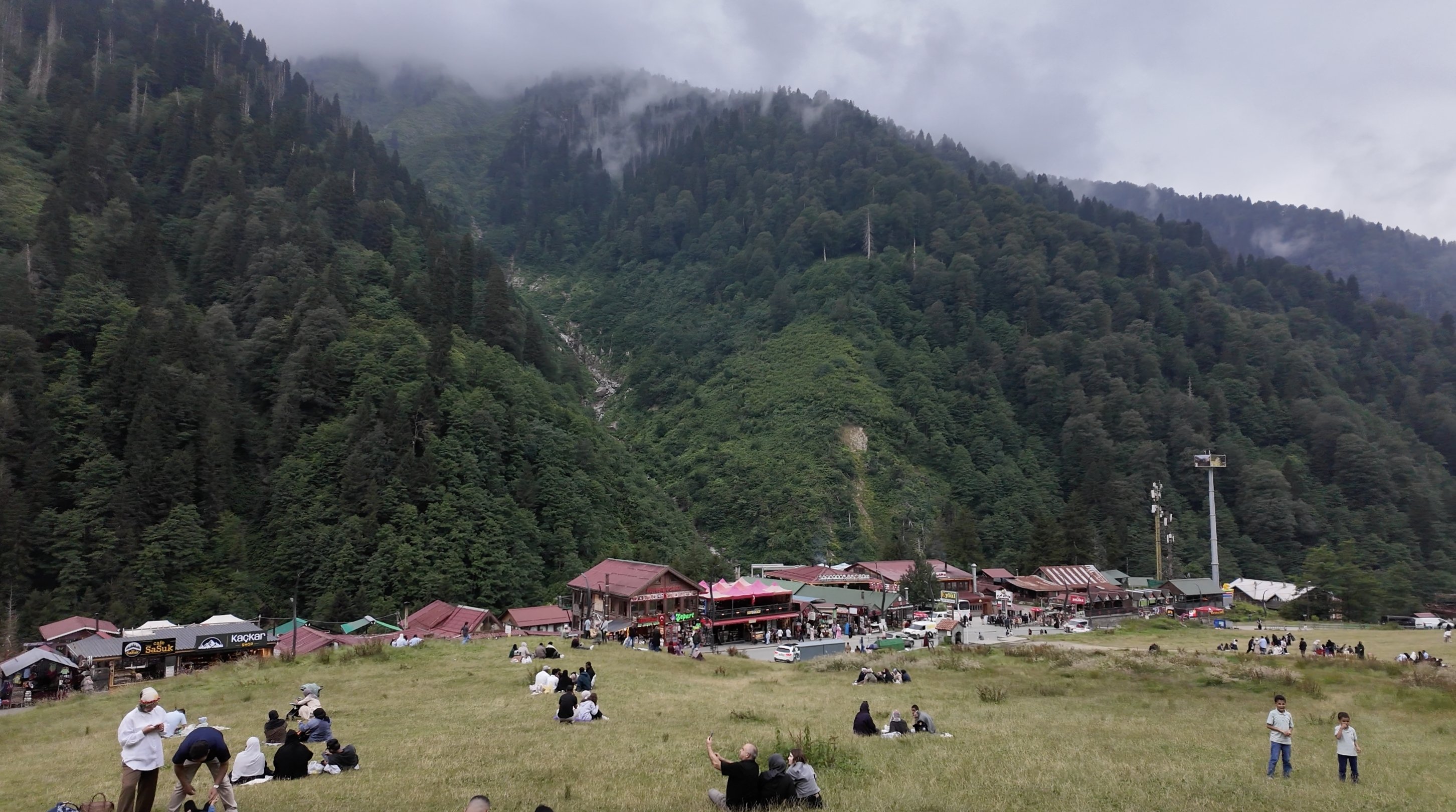
The move to the mountains was once a major undertaking. Families prepared their houses after the winter months, gathered their animals and packed the food and household goods they would need for the summer. In many places, the journey was made on foot.
The traditional migration is known in parts of the region as otçu göçü, or seasonal herders' migration. It was practical, but it was also social.
Families traveled together, neighbors helped one another and the journey brought people from different villages into contact. Music and dancing became part of the gatherings, while the highlands offered one of the few opportunities for communities to come together during the year. That sense of community is still visible today.
During my time in the highlands, the pace of life felt noticeably different from the towns below. Outside one wooden house, a woman in her 70s was pressing milk through a cloth strainer. She kept working as we spoke, repeating the same slow, practiced motion. There was less traffic, fewer people rushing and more time spent outside homes, talking with neighbors or watching livestock move across the slopes.
The mountains were quiet, but there was always something happening between the houses and across the slopes.
Music is one of the strongest links between the highlands and the wider culture of the region.
The kemençe, a small bowed string instrument associated with the eastern Black Sea, can be heard at gatherings across the region. So can the tulum, a traditional bagpipe whose sound carries easily across open mountain slopes.
Both are closely associated with the horon, a fast paced traditional group dance in which participants move together in tightly coordinated steps.
For visitors, the music and dancing may look like a performance. For the people who grew up with them, they are part of ordinary social life.
Highland festivals bring together several generations. Older residents remember the journeys they made as children. Parents return with their families, while younger people meet relatives and friends they may not see during the rest of the year.
The yayla becomes a place where memories are shared and traditions are repeated.
But the highlands are changing. Improved roads have made many settlements easier to reach. Rural migration has reduced the number of families who rely primarily on livestock, and modern agriculture has changed the economic reasons that once made seasonal migration necessary. Tourism has also transformed the region.
Visitors now come to the Black Sea highlands for cooler weather, mountain scenery, traditional food and local festivals. Some settlements that once existed mainly for seasonal agriculture now have restaurants, guesthouses and tourism facilities.
The change is visible in the landscape itself. Traditional wooden houses stand alongside newer buildings. Roads cut through areas once reached only on foot. Cars fill spaces where animals and villagers once formed the main traffic. Yet the culture has not disappeared.
For some families, spending the summer in the yayla remains closely connected to livestock and agricultural work. For others, the connection is more personal.
They return because their parents came here. Their grandparents came here. The mountain house may no longer be essential to their livelihood, but it remains part of the family's story.
That may be the most important change in the tradition. The reason for going up is no longer the same for everyone.
For some, it is work. For some, it is family. For others, it is simply a way to return to a landscape that has shaped their identity.
By the time I started back down toward the coast, the mountain had already begun to change again. The evening air was cooler, the pastures quieter, and the last traces of the day's activity were fading between the houses.
Yet the next summer, the same road will fill again.
Families will come back with their children. Livestock will return to the pastures. The kemençe and tulum will sound across the slopes. Another generation will spend its summer in a place that was once essential for survival and is now just as important for memory.
The reasons for going up may have changed. The journey has not. And that may be why the tradition has endured for generations.