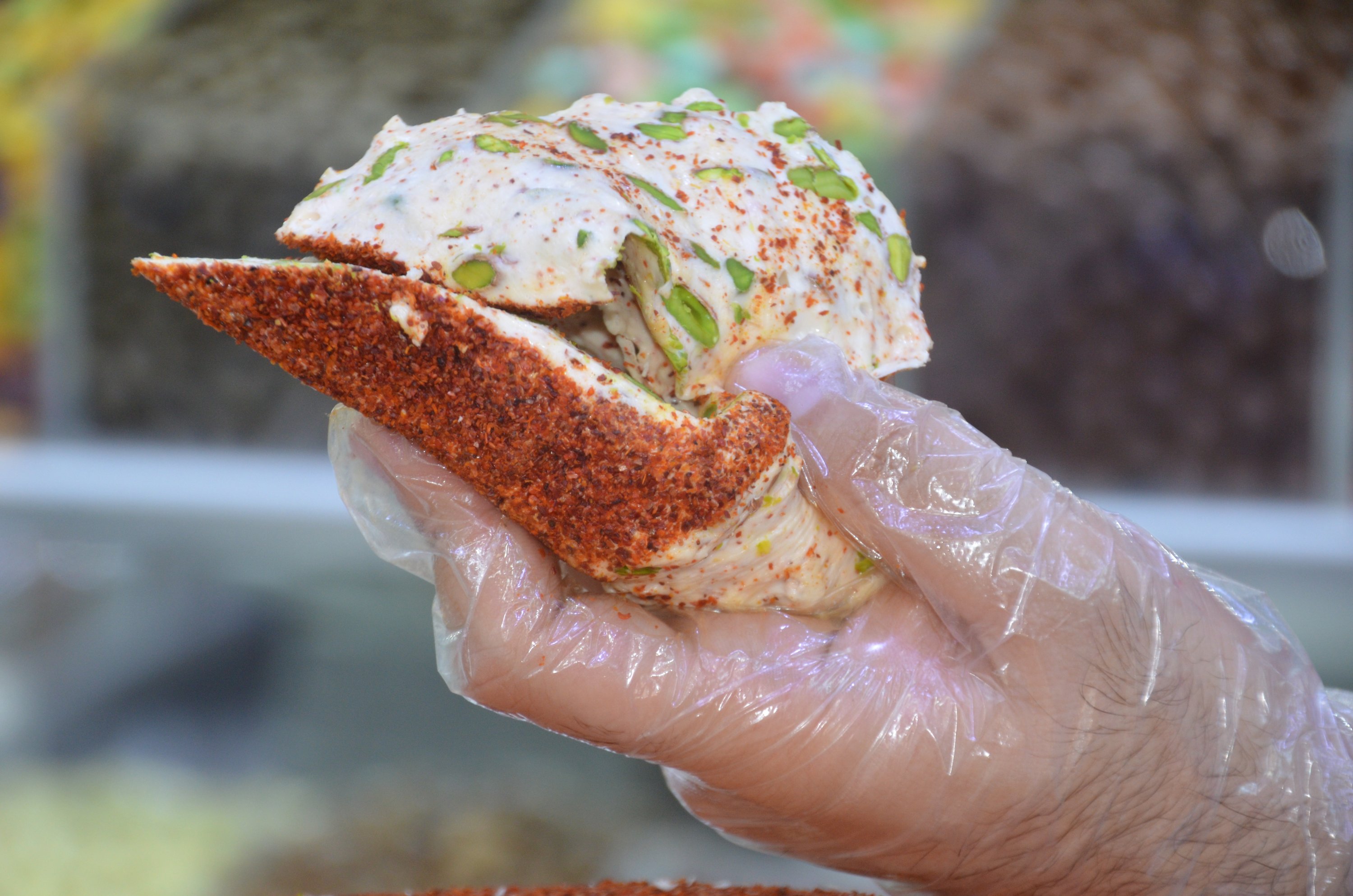
Ever considered using a bit of spicy red pepper to make something 'sweeter'? Well, check this out.
Ökkeş Nagaş has been producing Turkish delight and confectionery in southern Turkey's Kahramanmaraş province for half a century and offers those with a sweet tooth a dessert with a twist.
Nagaş, who learned his craft from his father, has come up with a new take on classic Turkish delight by adding a typical portion of pistachio and – drumroll, please – red pepper.
“When we got the idea to make it, we didn't consider the commercial side of things,” Nagaş said, adding that the confectioners only used to make it for friends and regulars.
Explaining that despite various technological developments, the family business still uses traditional methods, he said he and his son were busy testing out variations on the classic treat.
“The idea came about as a way to promote our hometown and the famous peppers grown in Maraş. With the arrival of the harvest, we started using it in our product,” he said.
“We have received positive feedback from all who have tried it,” said Nagaş, who has been in the profession since 1970.
"We inherited this business from my father. I continued with it after he passed. I hope my son Ali will take over after me."
Customer Dilara Koyunlu said that the taste of peppered Turkish delight was endemic to the Kahramanmaraş region.
“Both bitter and sweet are very popular here. The combination of these two tastes has created another extraordinary flavor,'' she said.
The history of Turkish delight, which was an important part of the imperial kitchen of the Ottoman Empire, goes back hundreds of years. It was first referred to as "rahat ul-hulküm" in Arabic, which means "comfort for the throat," but over time became shortened to "lokum" in modern Turkish.
The production of Turkish delight in Anatolia dates back to the 15th century; however, it was not until the 17th century that it gained popularity and began to be identified with Turkish culture. The treat began to be produced en masse toward the end of the 1700s in cube-shaped cuts, which is still the shape one identifies with Turkish delight today.