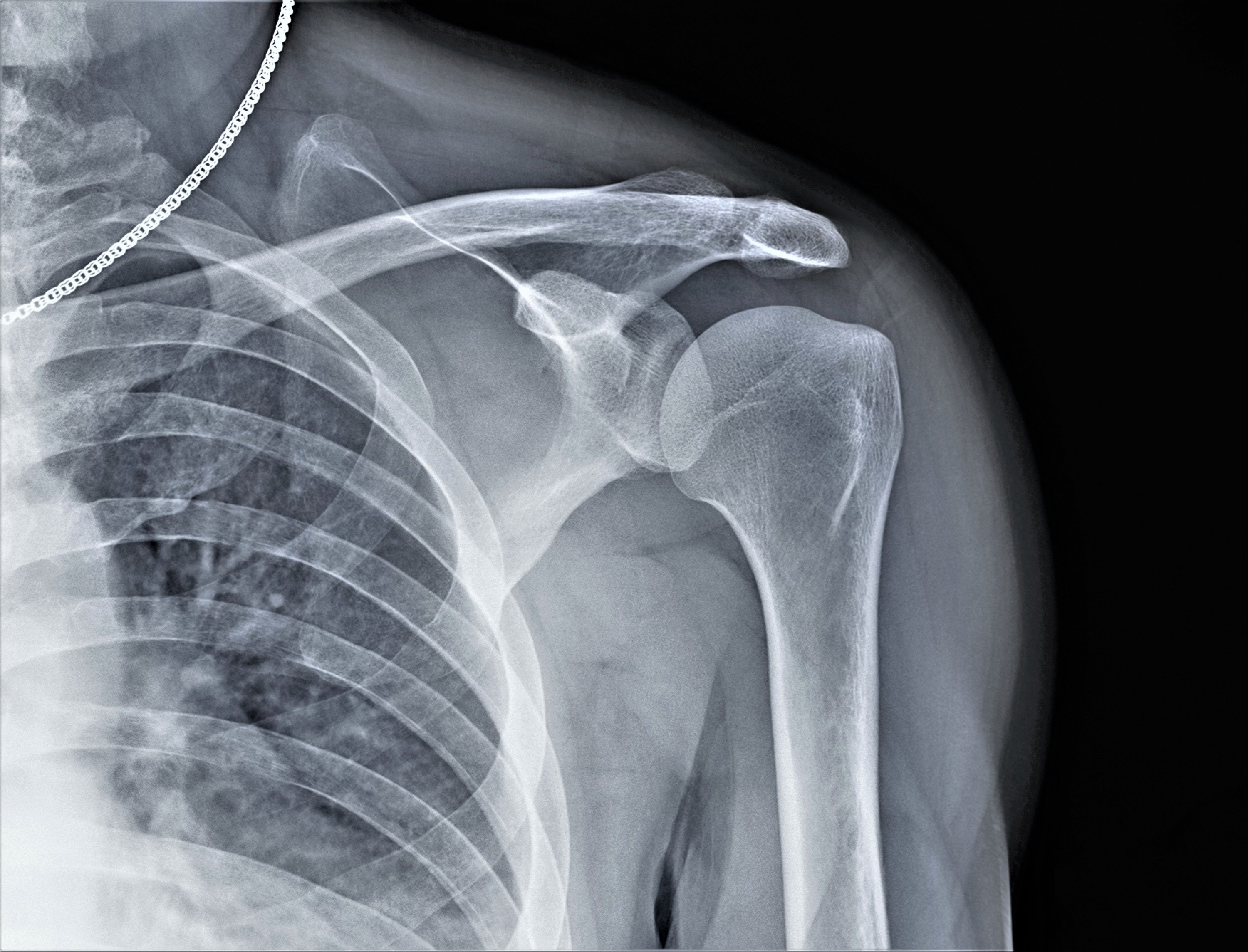
Repetitive pressure on our bones, exposing them to force and heavy loads over a long time, can cause micro-fine cracks called "stress fractures." Mostly seen in the feet and metacarpal bones, these stress fractures usually occur in professional athletes and soldiers who do activities that push the limits of the body, but also in professions that require standing for a long time.
Osman Lapçın, an orthopedics and traumatology specialist at Istanbul Aydın University Faculty of Medicine, told Anadolu Agency (AA) that stress fractures are generally thought to be a psychological condition due to the word "stress," but explained that the stress that causes the fracture is not psychological, but a physical pressure that the bone is exposed to.
Lapçın stated that this condition does not occur all of a sudden and is the result of the bone constantly carrying the weight of a load or force that it would not normally be affected by.
He noted that stress fractures are not always visible on X-rays and that other imaging techniques should be performed to detect a crack. "That would be magnetic resonance imaging (MRI). Because an MRI shows the fluid level and edema in the bone very easily, we can easily capture this process that X-rays cannot capture."
Lapçın stated that the patients do not seek treatment because of a sudden trauma or onset of symptoms, explaining that they generally complain of sensitivity in the area of the fracture, which is increased with activity and decreases with rest, adding that swelling and redness of the skin usually accompany these symptoms.
While the condition does not differentiate between ages, Lapçın stated that it is more common in advanced age groups in specific areas such as the hip joint.
Lapçın said that in modern medicine the condition was first observed in Prussian soldiers in the late 1800s.
"It can be seen more in athletes, especially female athletes. It is seen more often in soldiers. These two occupational groups require activities that physically push the limits of the body. Anyone who physically pushes the limits of the body can experience a stress fracture."
Lapçın pointed out that stress fractures can occur in desk workers, laborers and homemakers when they repeat an activity for a long time, one which they are not accustomed to, and emphasized that even a weekend of mountain hiking can cause a fracture.
Lapçın stated that the bones did not separate from each other in a stress fracture.
"In the first process, the wall of the bone, called the cortex, does not break. (However), in the following time, this can happen as well. In stress fractures, since the bone does not move, it is possible to restrict the activity without giving any load at the first time, and in some cases, it is possible to apply plaster casts to reduce this movement and load. However, sometimes, like when the hip joint is in question, we do need to operate according to the region of the fracture."
Lapçın emphasized that during the treatment period patients need to be careful like with normal fractures.
"Usually, our suggestions are not taken into account as there is no pain unless we put the slightest load on the ankle. Our patients continue to bear weight. After a few days or hours, the pain starts. It goes away with rest. Our patients think that they can tolerate it this way. No, I mean we need to be as careful in these cases until the fracture heals as we would be in normal fracture cases. If our doctor says not to bear weight, then one should not bear any weight. If our doctor says plaster, then it should be cast. This issue should be considered as if it is a real fracture."
Lapçın stated that doing sports without the proper training and long walks that push the body's limits should be avoided.
"We need to increase the tempo over time. The ground we walk on is important. Activities on very stony, uneven ground increase this risk. Doing such challenging activities with inappropriate shoes, using tight, narrow or very high-heeled shoes for a long time throughout the day will not break the bone, but it will be a risk because it will bring a repetitive burden to the same point," he said.
"It is enough to pay attention to the choice of shoes, the ground on which we walk and do sports on, and the strength and duration of the activities we choose."