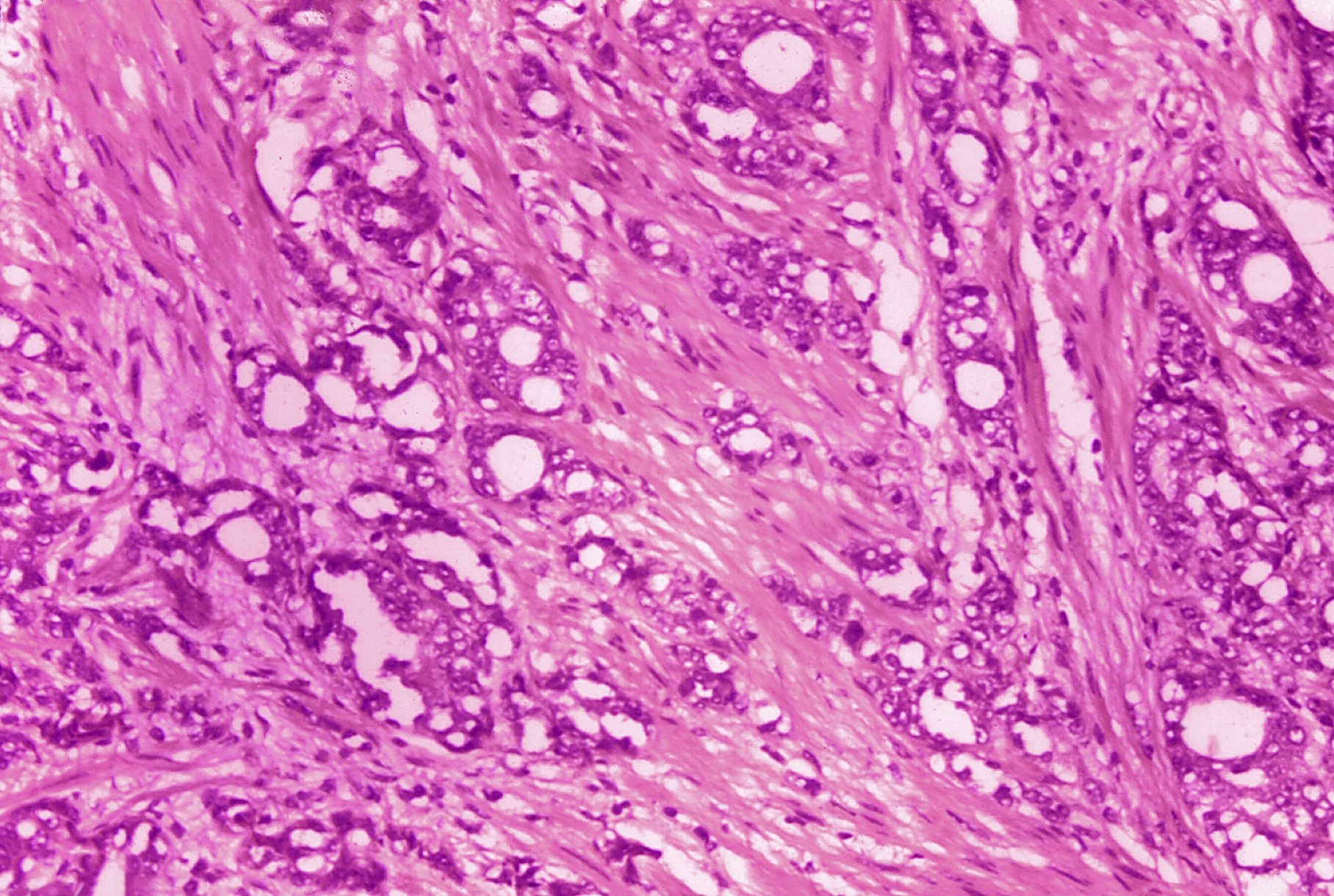
Researchers have identified five types of bacteria – common in urine and tissue samples from men – linked to aggressive prostate cancer. Though scientists do not yet know how people got the bacteria or whether they are causing the disease. It is hoped the findings could help pave the way for treatments that could target these bacteria and slow or prevent the development of aggressive disease.
Project lead Professor Colin Cooper of the University of East Anglia’s (UEA) Norwich Medical School, said: "We already know of some strong associations between infections and cancer.
"For example, the presence of Helicobacter pylori bacteria in the digestive tract can lead to stomach ulcers and is associated with stomach cancer, and some types of the HPV virus can cause cervical cancer.
"We wanted to find out whether bacteria could be linked to the way prostate cancer grows and spreads."
Dr. Jeremy Clark, also from UEA's Norwich Medical School, said: "While prostate cancer is responsible for a large proportion of all male cancer deaths, it is more commonly a disease men die with rather than from.
"And little is known about what causes some prostate cancers to become more aggressive than others.
"We now have evidence that certain bacteria are involved in this and are part of the puzzle."
The team worked with researchers at the Norfolk and Norwich University Hospital, the Quadram Institute, and other collaborators to analyze urine or tissue samples from more than 600 patients with or without prostate cancer.
They developed methods of finding the bacteria associated with aggressive prostate cancer.
Dr. Rachel Hurst, the first author of this work and also from UEA's Norwich Medical School, said: "We found several types of bacteria associated with aggressive prostate cancer, some of which are new types of bacteria never found before."
Two of the new bacteria species found by the team have been named after two of the study’s funders – Porphyromonas bobii, after The Bob Champion Cancer Trust, and Varibaculum prostatecancerukia, after Prostate Cancer U.K.
The set of bacteria found by the team includes Anaerococcus, Peptoniphilus, Porphyromonas, Fenollaria and Fusobacterium.
All the bacteria like to grow without oxygen present.
Dr. Hurst said: "When any of these specific anaerobic bacteria were detected in the patient’s samples, it was linked to the presence of higher grades of prostate cancer and more rapid progression to aggressive disease.
"We also identified potential biological mechanisms of how these bacteria may be linked to cancer.
"Among the things we don't yet know is how people pick up these bacteria, whether they are causing cancer, or whether a poor immune response permits the growth of the bacteria.
"But we hope that our findings and future work could lead to new treatment options that could slow or prevent aggressive prostate cancer from developing.
"Our work could also lay the foundations for new tests that use bacteria to predict the most effective treatment for each man's cancer."
The researchers also noted many bacteria are beneficial to human life and it is not a simple matter to remove the harmful bacteria without removing the protection provided by the good bacteria.
The study, published in European Urology Oncology, was funded by The Bob Champion Cancer Trust and Prostate Cancer U.K.
Dr. Hayley Luxton, research impact manager at Prostate Cancer U.K., said: "This is an exciting discovery that has the potential to truly revolutionize treatment for men.
"We currently have no way of reliably identifying aggressive prostate cancers, and this research could help make sure men get the right treatment for them.
"If the team can demonstrate that these newly-identified bacteria can not only predict but actually cause aggressive prostate cancer, for the first time, we may actually be able to prevent prostate cancer from occurring.
"This would be a huge breakthrough that could save thousands of lives each year."