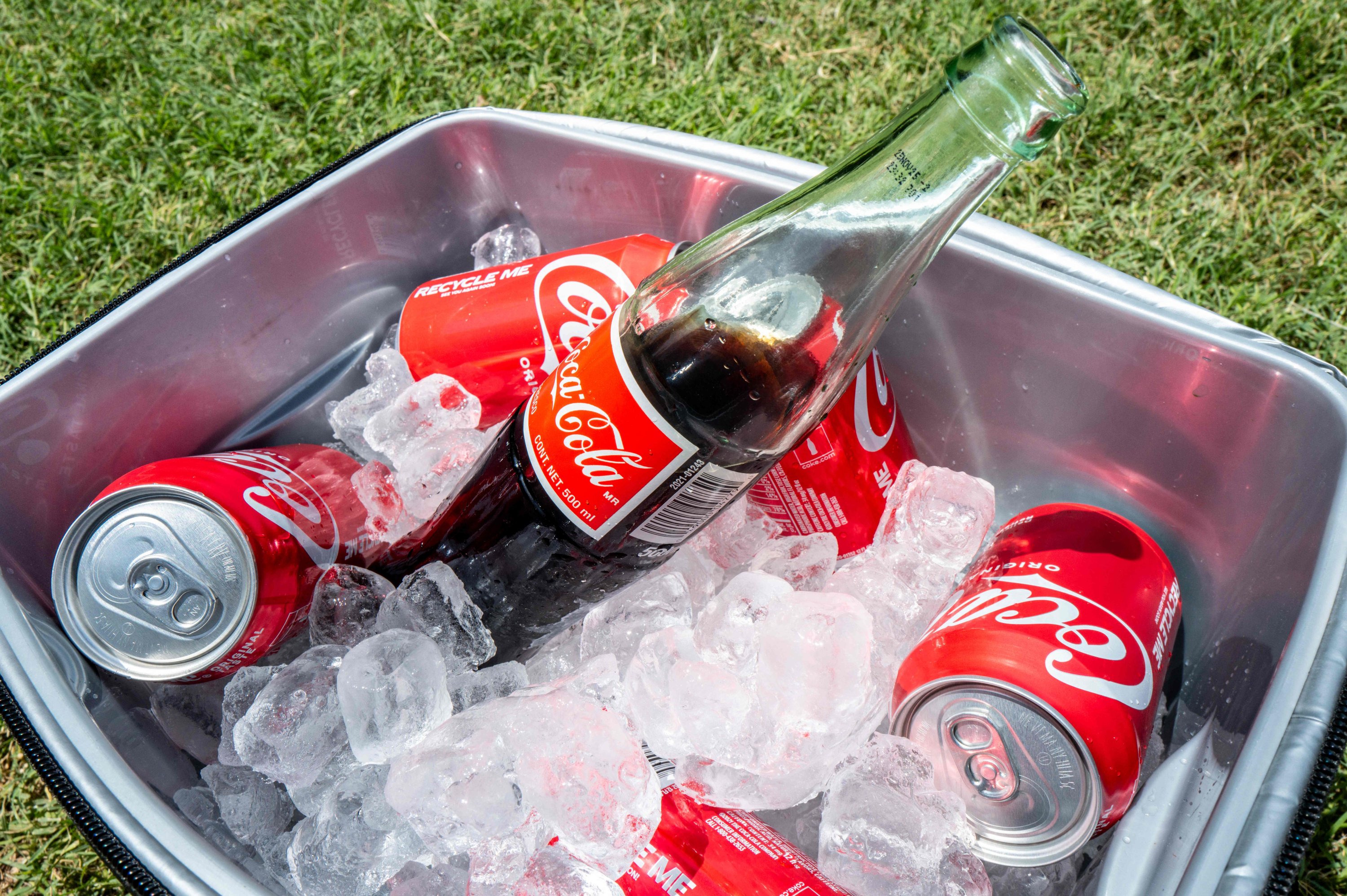
U.S. President Donald Trump teased the announcement last week, but Coca-Cola Co. confirmed it last Tuesday: a cane sugar-sweetened version of the beverage maker's trademark soda will be released in the U.S. this fall.
For decades, Coke and the makers of other soft drinks have generally used high fructose corn syrup or artificial sweeteners in their products manufactured in the U.S. But American consumers are increasingly looking for food and drinks with fewer and more natural ingredients, and beverage companies are responding.
PepsiCo and Dr Pepper have sold versions of their flagship sodas sweetened with cane sugar since 2009. Coca-Cola has sold Mexican Coke – which uses cane sugar – in the U.S. since 2005, but it's positioned as a trendy alternative and sold in glass bottles. Coke with cane sugar will likely be more widely available.
Here are some frequently asked questions about the sweeteners in U.S. sodas.
Many consumers know that consuming too many sweets can negatively affect their health, but soda drinkers sometimes debate if either cane sugar or high fructose corn syrup is better (or worse) than the other.
The short answer is that it doesn’t make a difference, said Marion Nestle, one of the nation’s top nutrition experts and professor emeritus at New York University.
High fructose corn syrup is made of the simple sugars glucose and fructose in liquid form. Cane sugar, also known as sucrose, is made of glucose and fructose bonded, but quickly split, Nestle explained.
Both are still sugars, with about the same number of calories.
Whether a can of Coca-Cola contains one or the other, it will still be a sugary drink with about the same amount of calories and the same potential to increase well-documented health problems from obesity and diabetes to tooth decay.
High fructose corn syrup costs less. According to price data from the U.S. Department of Agriculture, the wholesale price of HFCS-55, the type of corn syrup most commonly used in beverages, averaged 49.4 cents per pound last year. The average wholesale price of refined cane sugar was 60.1 cents per pound, while the average wholesale price of refined beet sugar was 51.7 cents per pound.
But high fructose corn syrup has advantages beyond price. According to a 2008 paper in the American Journal of Clinical Nutrition, high fructose corn syrup is more stable than sugar when added to acidic beverages, and it can be pumped directly from delivery trucks into storage and mixing tanks.
Tariffs are one reason. The U.S. has had barriers on sugar imports almost back to its founding; the first went into place in 1789, according to the Cato Institute, a think tank that advocates free markets.
Since the passage of the Farm Bill in 1981, the U.S. has had a system in place that raises duties on sugar once a certain amount has been imported. The U.S. also has domestic production controls that limit supplies, keeping prices higher.
But high fructose corn syrup is also cheaper because of the federal government’s billions of dollars in subsidies for corn farmers. Loans, direct payments, insurance premium subsidies and surplus crop purchases all lower farmers’ costs – and the price of the corn they grow.
While cutting back on added sugars has documented benefits, replacing them with artificial sweeteners is complicated, too.
Coca-Cola Zero Sugar, introduced in 2017, uses the artificial sweetener aspartame and the natural sweetener stevia in its recipe.
But research suggests that aspartame may be linked to cancer. In 2023, a committee for the World Health Organization determined that aspartame should be categorized "as possibly carcinogenic to humans.”
While that doesn’t mean that diet soda causes cancer, the scientific committee concluded that there may be a possible link between aspartame and liver cancer, and that the issue should be studied further.
The U.S. Food and Drug Administration disagreed with the WHO panel, citing "significant shortcomings” in the research that backed the conclusion.
FDA officials noted that aspartame is one of the most studied food additives and said "FDA scientists do not have safety concerns” when it is used under approved conditions.
Stevia, a plant-based sweetener, appears to be "a safe choice,” according to the Center for Science in the Public Interest, an advocacy group.