Daily Sabah logo

Politics
Diplomacy Legislation War On Terror EU Affairs Elections News Analysis
TÜRKİYE
Istanbul Education Investigations Minorities Expat Corner Diaspora
World
Mid-East Europe Americas Asia Pacific Africa Syrian Crisis Islamophobia
Business
Automotive Economy Energy Finance Tourism Tech Defense Transportation News Analysis
Lifestyle
Health Environment Travel Food Fashion Science Religion History Feature Expat Corner
Arts
Cinema Music Events Portrait Reviews Performing Arts
Sports
Football Basketball Motorsports Tennis
Opinion
Columns Op-Ed Reader's Corner Editorial
PHOTO GALLERY
JOBS ABOUT US RSS PRIVACY CONTACT US
© Turkuvaz Haberleşme ve Yayıncılık 2025

Daily Sabah - Latest & Breaking News from Turkey | Istanbul

  • Politics
    • Diplomacy
    • Legislation
    • War On Terror
    • EU Affairs
    • Elections
    • News Analysis
  • TÜRKİYE
    • Istanbul
    • Education
    • Investigations
    • Minorities
    • Expat Corner
    • Diaspora
  • World
    • Mid-East
    • Europe
    • Americas
    • Asia Pacific
    • Africa
    • Syrian Crisis
    • Islamophobia
  • Business
    • Automotive
    • Economy
    • Energy
    • Finance
    • Tourism
    • Tech
    • Defense
    • Transportation
    • News Analysis
  • Lifestyle
    • Health
    • Environment
    • Travel
    • Food
    • Fashion
    • Science
    • Religion
    • History
    • Feature
    • Expat Corner
  • Arts
    • Cinema
    • Music
    • Events
    • Portrait
    • Reviews
    • Performing Arts
  • Sports
    • Football
    • Basketball
    • Motorsports
    • Tennis
  • Gallery
  • Opinion
    • Columns
    • Op-Ed
    • Reader's Corner
    • Editorial
  • TV
  • Life
  • Health
  • Environment
  • Travel
  • Food
  • Fashion
  • Science
  • Religion
  • History
  • Feature
  • Expat Corner

12,000-year-old mummies in Southeast Asia could rewrite history

by Associated Press

NEW YORK Sep 15, 2025 - 10:03 pm GMT+3
Edited By Nurbanu Tanrıkulu Kızıl
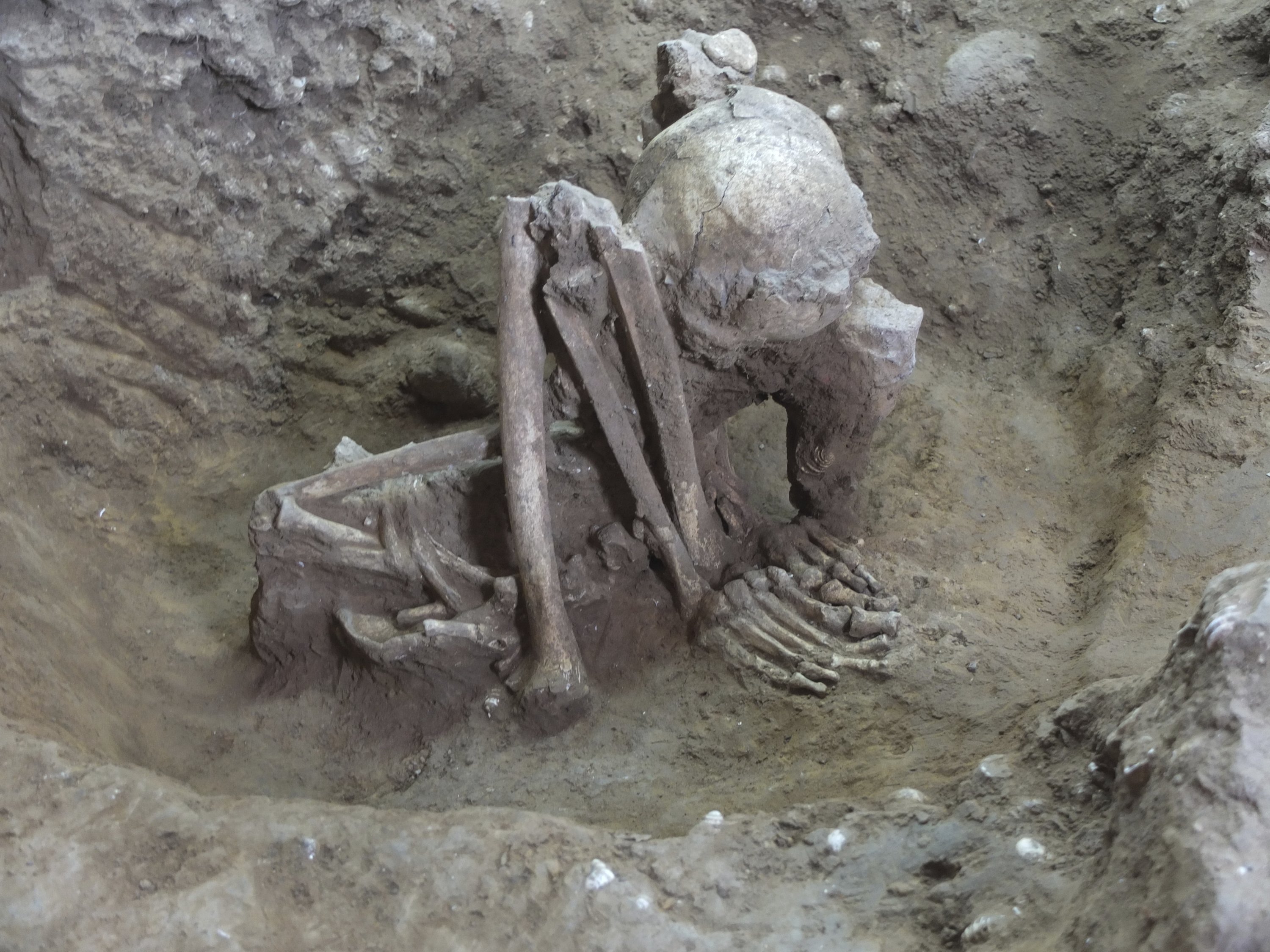
This undated photo provided by Hirofumi Matsumura shows a 9,000-year-old mummy in Guangxi, China, in a squatting position. (Hirofumi Matsumura via AP)
by Associated Press Sep 15, 2025 10:03 pm
Edited By Nurbanu Tanrıkulu Kızıl

Scientists have uncovered what may be the world’s oldest mummies in Southeast Asia, dating back as far as 12,000 years.

Mummification prevents decay by preserving dead bodies. The process can happen naturally in places like the sands of Chile's Atacama Desert or the bogs of Ireland, where conditions can fend off decomposition. Humans across various cultures also mummified their ancestors through embalming to honor them or send their souls to the afterlife.

Egypt's mummies may be the most well-known, but until now, some of the oldest mummies were prepared by a fishing people called the Chinchorro about 7,000 years ago in what's now Peru and Chile.

A new study published Monday in the journal Proceedings of the National Academy of Sciences pushes that timeline back.

Researchers found human remains that were buried in crouched or squatted positions with some cuts and burn marks in various archaeological sites across China and Vietnam and to a lesser extent, from the Philippines, Laos, Thailand, Malaysia, and Indonesia.

Studying the bones further, scientists discovered the bodies were likely exposed to heat. That suggested the bodies had been smoke-dried over a fire and mummified by hunter-gatherer communities in the area.

The practice "allowed people to sustain physical and spiritual connections with their ancestors, bridging time and memory,” study author Hirofumi Matsumura with Sapporo Medical University in Japan said in an email.

Dating methods used on the mummies could have been more robust and it’s not yet clear that mummies were consistently smoke-dried across all these locations in southeastern Asia, said human evolution expert Rita Peyroteo Stjerna with Uppsala University in Sweden, who was not involved with the research.

The findings offer "an important contribution to the study of prehistoric funerary practices,” she said in an email.

Mummies are far from a thing of the past. Even today, Indigenous communities in Australia and Papua New Guinea smoke-dry and mummify their dead, scientists said.


  • shortlink copied
  • KEYWORDS
    mummies asia chile history southeast asia
    The Daily Sabah Newsletter
    Keep up to date with what’s happening in Turkey, it’s region and the world.
    You can unsubscribe at any time. By signing up you are agreeing to our Terms of Use and Privacy Policy. This site is protected by reCAPTCHA and the Google Privacy Policy and Terms of Service apply.
    No Image
    Turkey's Birgül Erken dives for anniversary of Çanakkale victory
    PHOTOGALLERY
    • POLITICS
    • Diplomacy
    • Legislation
    • War On Terror
    • EU Affairs
    • News Analysis
    • TÜRKİYE
    • Istanbul
    • Education
    • Investigations
    • Minorities
    • Diaspora
    • World
    • Mid-East
    • Europe
    • Americas
    • Asia Pacific
    • Africa
    • Syrian Crisis
    • İslamophobia
    • Business
    • Automotive
    • Economy
    • Energy
    • Finance
    • Tourism
    • Tech
    • Defense
    • Transportation
    • News Analysis
    • Lifestyle
    • Health
    • Environment
    • Travel
    • Food
    • Fashion
    • Science
    • Religion
    • History
    • Feature
    • Expat Corner
    • Arts
    • Cinema
    • Music
    • Events
    • Portrait
    • Performing Arts
    • Reviews
    • Sports
    • Football
    • Basketball
    • Motorsports
    • Tennis
    • Opinion
    • Columns
    • Op-Ed
    • Reader's Corner
    • Editorial
    • Photo gallery
    • DS TV
    • Jobs
    • privacy
    • about us
    • contact us
    • RSS
    © Turkuvaz Haberleşme ve Yayıncılık 2021