Daily Sabah logo

Politics
Diplomacy Legislation War On Terror EU Affairs Elections News Analysis
TÜRKİYE
Istanbul Education Investigations Minorities Expat Corner Diaspora
World
Mid-East Europe Americas Asia Pacific Africa Syrian Crisis Islamophobia
Business
Automotive Economy Energy Finance Tourism Tech Defense Transportation News Analysis
Lifestyle
Health Environment Travel Food Fashion Science Religion History Feature Expat Corner
Arts
Cinema Music Events Portrait Reviews Performing Arts
Sports
Football Basketball Motorsports Tennis
Opinion
Columns Op-Ed Reader's Corner Editorial
PHOTO GALLERY
JOBS ABOUT US RSS PRIVACY CONTACT US
© Turkuvaz Haberleşme ve Yayıncılık 2026

Daily Sabah - Latest & Breaking News from Turkey | Istanbul

  • Politics
    • Diplomacy
    • Legislation
    • War On Terror
    • EU Affairs
    • Elections
    • News Analysis
  • TÜRKİYE
    • Istanbul
    • Education
    • Investigations
    • Minorities
    • Expat Corner
    • Diaspora
  • World
    • Mid-East
    • Europe
    • Americas
    • Asia Pacific
    • Africa
    • Syrian Crisis
    • Islamophobia
  • Business
    • Automotive
    • Economy
    • Energy
    • Finance
    • Tourism
    • Tech
    • Defense
    • Transportation
    • News Analysis
  • Lifestyle
    • Health
    • Environment
    • Travel
    • Food
    • Fashion
    • Science
    • Religion
    • History
    • Feature
    • Expat Corner
  • Arts
    • Cinema
    • Music
    • Events
    • Portrait
    • Reviews
    • Performing Arts
  • Sports
    • Football
    • Basketball
    • Motorsports
    • Tennis
  • Gallery
  • Opinion
    • Columns
    • Op-Ed
    • Reader's Corner
    • Editorial
  • TV
  • Life
  • Health
  • Environment
  • Travel
  • Food
  • Fashion
  • Science
  • Religion
  • History
  • Feature
  • Expat Corner

45M-year-old crocodilian fossils found in Great Sphinx limestone

by Anadolu Agency

ANKARA Oct 07, 2026 - 7:39 pm GMT+3
Edited By Nurbanu Tanrıkulu Kızıl
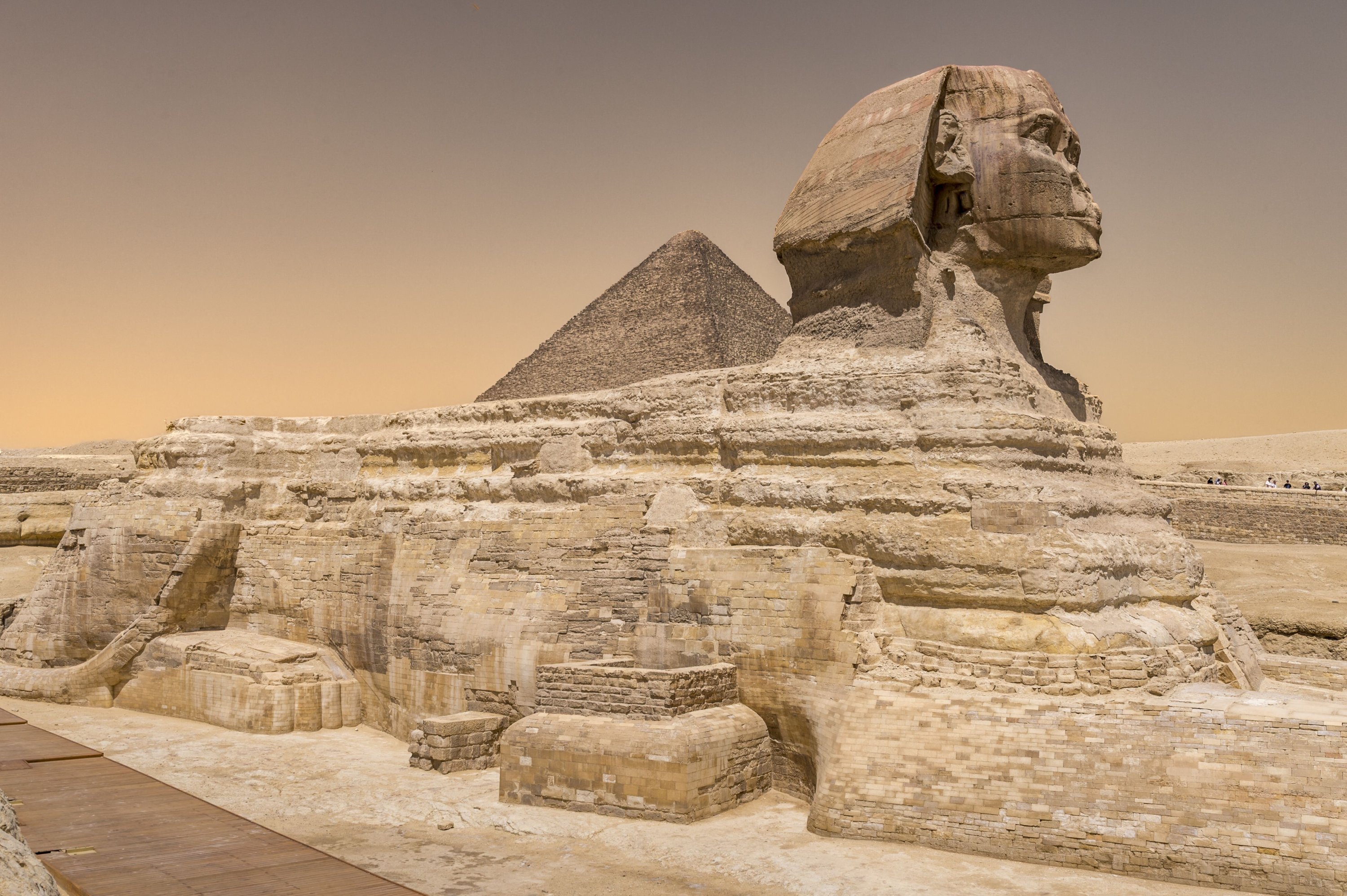
The Great Sphinx and the Pyramid of Cheops, Giza, Cairo, Egypt, April 5, 2026. (AFP File Photo)
by Anadolu Agency Oct 07, 2026 7:39 pm
Edited By Nurbanu Tanrıkulu Kızıl

Fossils unearthed from the same limestone formation used to build Egypt’s Great Sphinx have been identified as a distinct crocodilian species that lived about 45 million years ago, researchers said Tuesday.

The animal, named Herugavialis cairensis, inhabited the shallow tropical sea that once covered what is now northern Egypt, according to a study published in the journal Royal Society Open Science.

Its remains came from the Mokattam Formation, a thick limestone deposit containing fossils of fish, sharks and early whales, according to the study.

It said stone quarried from the formation was later used in some of ancient Egypt's best-known monuments, including the Great Sphinx and the Giza pyramids.

The key specimen, a nearly complete skull uncovered during the 1920s, had previously been classified as a member of Tomistoma, the genus that includes the modern false gharial of Southeast Asia.

Researchers used computed tomography, or CT, scans to examine the skull's internal anatomy and compared more than 300 features with those of living and extinct crocodilians.

Their analysis found enough differences to place the Egyptian animal in a separate genus.

The name Herugavialis combines "Heru," another name for the ancient Egyptian god Horus, with a term referring to gharials. The species name cairensis reflects its connection to Cairo.

The skull is also missing the end of its snout, an accidental resemblance to the Great Sphinx, which famously lacks its nose.

"Given this coincidence with the famously missing nose of the Great Sphinx, we decided to name the new crocodile after the Egyptian god Heru, who was possibly the inspiration for this iconic monument," said study co-leader Philip Mannion of University College London.

Gharials are crocodilians distinguished by their long, narrow snouts, according to the study.

Only two species survive today: the critically endangered Indian gharial and the endangered false gharial, both found in parts of South and Southeast Asia.

Their fossil record, however, shows that gharial-like crocodilians once had a much wider geographical range and that some species lived in marine environments.

The identification of Herugavialis cairensis adds to evidence that several gharial species inhabited the Mediterranean region over tens of millions of years.

Researchers said the finding provides a clearer picture of the group's complex evolutionary history.


  • shortlink copied
  • KEYWORDS
    fossils egypt great sphinx pyramids crocodile
    The Daily Sabah Newsletter
    Keep up to date with what’s happening in Turkey, it’s region and the world.
    You can unsubscribe at any time. By signing up you are agreeing to our Terms of Use and Privacy Policy. This site is protected by reCAPTCHA and the Google Privacy Policy and Terms of Service apply.
    Şavşat
    Slow cities of Turkey
    PHOTOGALLERY
    • POLITICS
    • Diplomacy
    • Legislation
    • War On Terror
    • EU Affairs
    • News Analysis
    • TÜRKİYE
    • Istanbul
    • Education
    • Investigations
    • Minorities
    • Diaspora
    • World
    • Mid-East
    • Europe
    • Americas
    • Asia Pacific
    • Africa
    • Syrian Crisis
    • İslamophobia
    • Business
    • Automotive
    • Economy
    • Energy
    • Finance
    • Tourism
    • Tech
    • Defense
    • Transportation
    • News Analysis
    • Lifestyle
    • Health
    • Environment
    • Travel
    • Food
    • Fashion
    • Science
    • Religion
    • History
    • Feature
    • Expat Corner
    • Arts
    • Cinema
    • Music
    • Events
    • Portrait
    • Performing Arts
    • Reviews
    • Sports
    • Football
    • Basketball
    • Motorsports
    • Tennis
    • Opinion
    • Columns
    • Op-Ed
    • Reader's Corner
    • Editorial
    • Photo gallery
    • DS TV
    • Jobs
    • privacy
    • about us
    • contact us
    • RSS
    © Turkuvaz Haberleşme ve Yayıncılık 2021