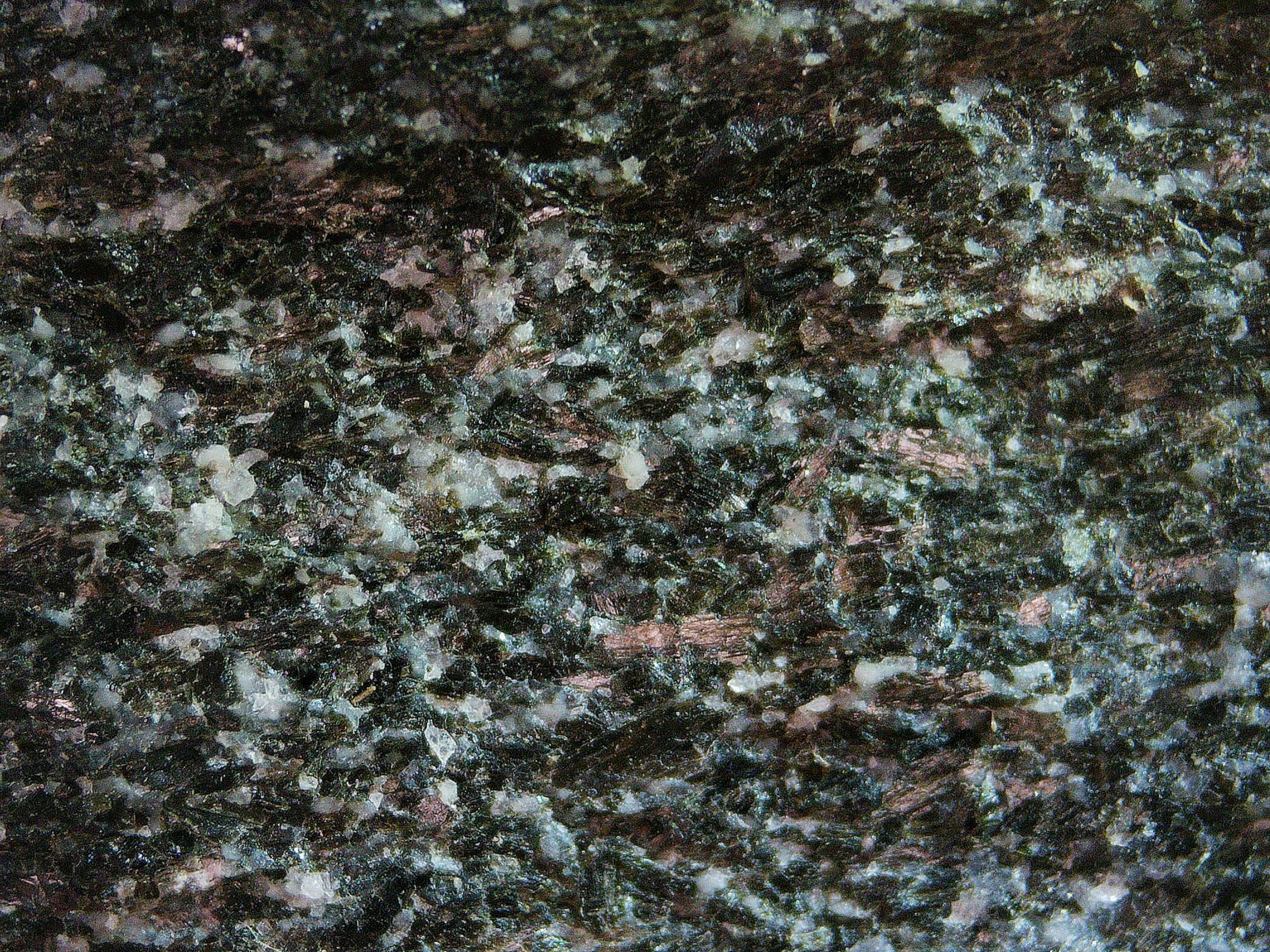
A belt of volcanic rock along the eastern shore of Hudson Bay in Canada’s Quebec province has been confirmed as the oldest known rock on Earth, dating back 4.16 billion years, scientists said Thursday.
Located near the Inuit municipality of Inukjuak, the Nuvvuagittuq Greenstone Belt displays striking dark and light green hues, with flecks of pink and black. Researchers say the region harbors remnants of Earth’s earliest crust, offering a rare glimpse into the Hadean eon—a time named after the Greek god of the underworld, Hades, due to the planet's then-hostile conditions.
The study, published in Science, analyzed rocks called intrusions—formed when magma penetrated existing rock layers and cooled underground. Two independent dating methods based on the radioactive decay of samarium and neodymium confirmed the rocks are 4.16 billion years old.
“This makes them the oldest-known rocks on Earth,” said Jonathan O’Neil, a geology professor at the University of Ottawa who led the study. “They offer a unique window into our planet’s earliest time to better understand how the first crust formed and what geodynamic processes were involved.”
The metamorphosed volcanic rocks are primarily basaltic in composition. Basalt is a common volcanic rock, while metamorphic rocks are those altered over time by heat and pressure.
O’Neil said the rocks likely formed when rain fell on molten rock, cooling and solidifying it. That rain would have come from evaporated water from Earth’s early oceans. “Since some of these rocks formed from precipitation from ancient seawater, they can reveal insights into the first oceans’ composition, temperature, and the environment where life may have begun,” he said.
Previously, the oldest-known rocks dated back about 4.03 billion years, found in Canada’s Northwest Territories. While older zircon mineral crystals from Australia have been dated to 4.4 billion years, they are not part of intact rock formations like those in Nuvvuagittuq.
The Hadean eon spanned from Earth’s formation about 4.5 billion years ago to 4.03 billion years ago. Despite the name’s fiery connotation, Earth had formed a solid basaltic crust, warm shallow oceans, and an atmosphere by 4.4 billion years ago, according to O’Neil.
Earlier studies of the Nuvvuagittuq rocks, including one in 2008, produced conflicting results—some dating the rock layers to 4.3 billion years, others suggesting 3.3 to 3.8 billion years. O’Neil said the new research resolves the discrepancy and confirms the intrusions are at least 4.16 billion years old, meaning the volcanic rock layers containing them could be even older—up to 4.3 billion years.