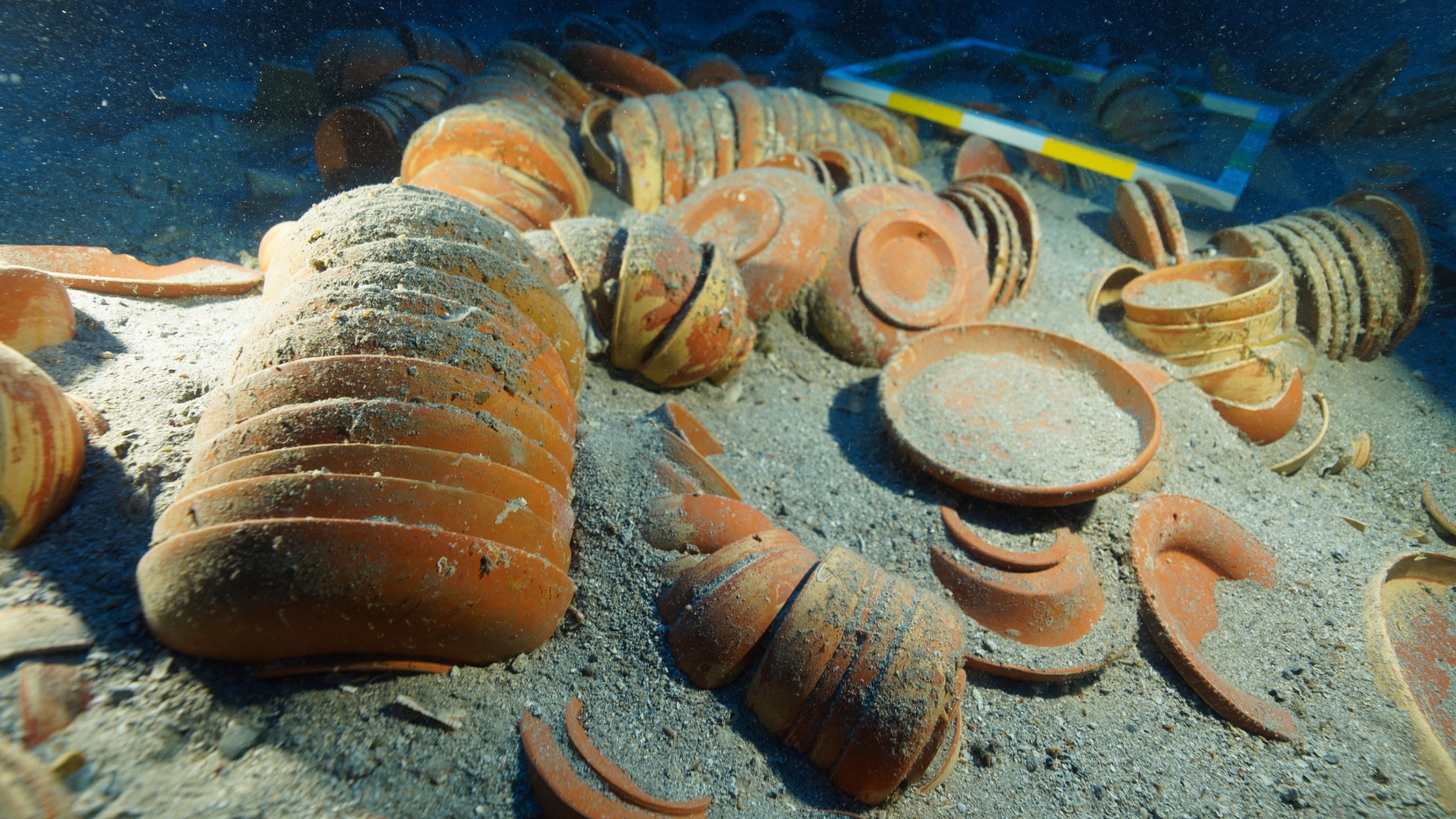
Culture and Tourism Minister Mehmet Nuri Ersoy said thousands of ceramic artifacts have been unearthed during excavations of a roughly 2,100-year-old shipwreck off Adrasan in Antalya.
In a statement shared on his social media account, Ersoy said thousands of artifacts had so far been recovered from the ceramic-laden shipwreck during underwater excavations launched in 2025.
Ersoy said the team had so far uncovered 2,100-year-old tableware from the depths of the Mediterranean, including plates, bowls and trays in 122 different shapes and sizes that shed light on the luxurious dining culture of the period.
“We are bringing 2,100-year-old tableware to the surface from the depths of the Mediterranean,” Ersoy said.
He also thanked the excavation team for continuing its work at depths of 42 to 55 meters (137 to 180 feet) with the support of underwater robots, as well as those working to uncover the cultural heritage of Türkiye’s “Blue Homeland.”
According to a statement from the ministry, excavations of the shipwreck are shedding light on dining culture and trade in the ancient Mediterranean.
The ship’s main cargo consisted of plates and bowls believed to have originated in Antakya. The artifacts, thought to have been produced along the coast of Arsuz, include nut dishes, soup bowls, fish plates and trays in various sizes.
Particularly sought after in Rome, these products were among the luxury tableware of the Mediterranean world.
Amphorae believed to have been produced on some Aegean islands were also found in the wreck. The finds, pointing to different production centers, reveal the diversity of the ship’s cargo.
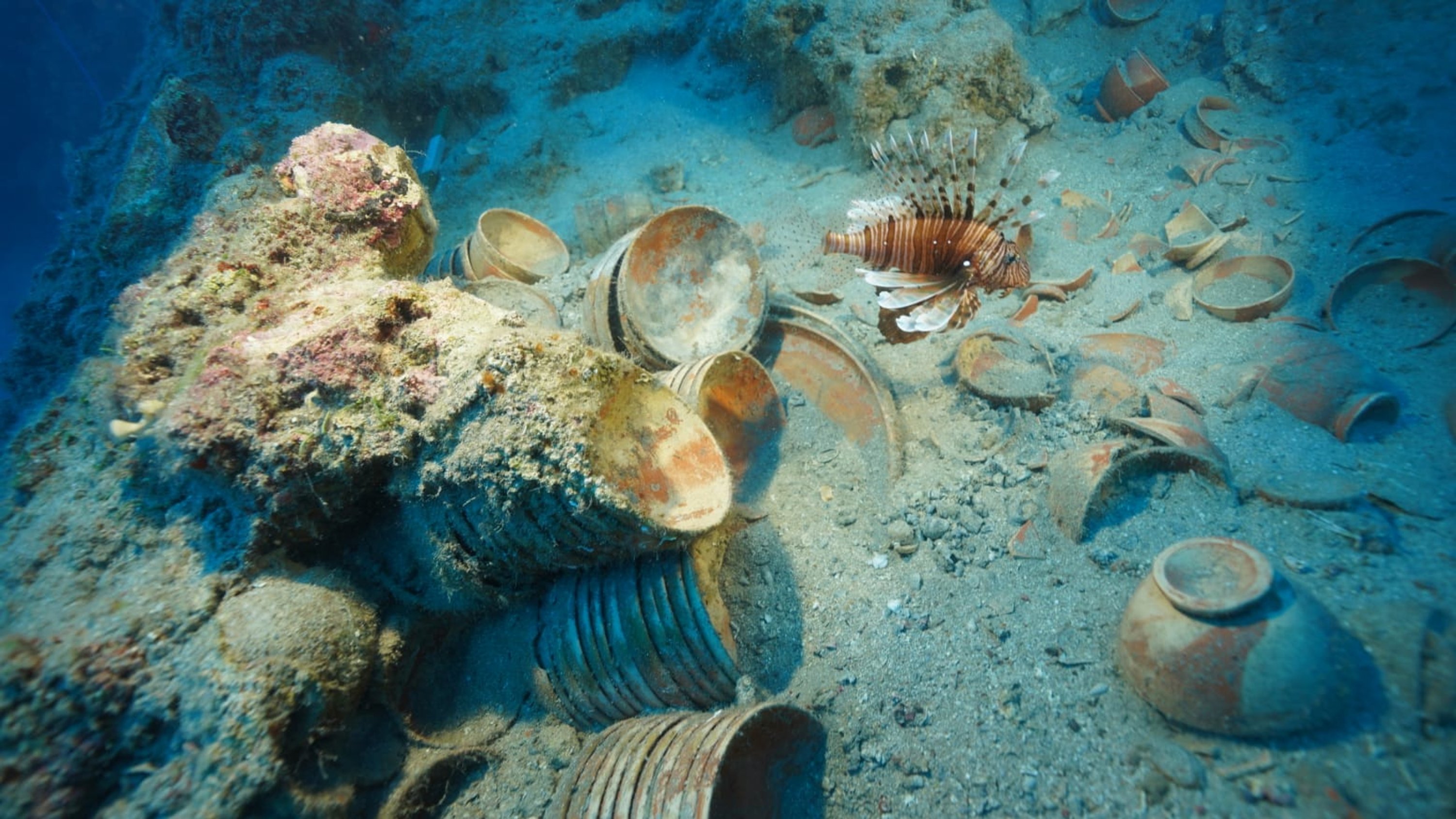
The ceramics hold historical significance. Believed to have been produced in Rhosus, the ancient name of Arsuz, they were also mentioned in letters by the famous Roman orator Cicero.
In a letter to his friend Atticus in 50 B.C., Cicero wrote that he had ordered ceramic vessels from Rhosus for him. The correspondence shows that tableware produced in the region was known and sought after in the Roman world.
The identification of the ceramics also makes the excavation important for understanding the role of these products in maritime trade.
A method used for loading cargo helped preserve the plates and bowls in good condition.
Clay was placed between the ceramics before they were packed into wooden crates. The practice helped prevent the artifacts from breaking as the ship sank, allowing them to survive for thousands of years.
The plates and bowls recovered from the sea still reveal the craftsmanship and distinctive forms of the period.
Coins from the first century B.C. originating in Antakya and found aboard the ship are helping to date the wreck. The findings suggest that the ship operated in a trade network connecting Antakya, the Aegean, Greece and the Italian coast around the middle of the first century B.C.
The ship is thought to have departed from Arsuz and was likely sailing toward Rome when it struck a shallow area during a storm and sank.
Excavations off the coast of Adrasan are continuing, with underwater archaeologists working with help from underwater robots.