Daily Sabah logo

Politics
Diplomacy Legislation War On Terror EU Affairs Elections News Analysis
TÜRKİYE
Istanbul Education Investigations Minorities Expat Corner Diaspora
World
Mid-East Europe Americas Asia Pacific Africa Syrian Crisis Islamophobia
Business
Automotive Economy Energy Finance Tourism Tech Defense Transportation News Analysis
Lifestyle
Health Environment Travel Food Fashion Science Religion History Feature Expat Corner
Arts
Cinema Music Events Portrait Reviews Performing Arts
Sports
Football Basketball Motorsports Tennis
Opinion
Columns Op-Ed Reader's Corner Editorial
PHOTO GALLERY
JOBS ABOUT US RSS PRIVACY CONTACT US
© Turkuvaz Haberleşme ve Yayıncılık 2025

Daily Sabah - Latest & Breaking News from Turkey | Istanbul

  • Politics
    • Diplomacy
    • Legislation
    • War On Terror
    • EU Affairs
    • Elections
    • News Analysis
  • TÜRKİYE
    • Istanbul
    • Education
    • Investigations
    • Minorities
    • Expat Corner
    • Diaspora
  • World
    • Mid-East
    • Europe
    • Americas
    • Asia Pacific
    • Africa
    • Syrian Crisis
    • Islamophobia
  • Business
    • Automotive
    • Economy
    • Energy
    • Finance
    • Tourism
    • Tech
    • Defense
    • Transportation
    • News Analysis
  • Lifestyle
    • Health
    • Environment
    • Travel
    • Food
    • Fashion
    • Science
    • Religion
    • History
    • Feature
    • Expat Corner
  • Arts
    • Cinema
    • Music
    • Events
    • Portrait
    • Reviews
    • Performing Arts
  • Sports
    • Football
    • Basketball
    • Motorsports
    • Tennis
  • Gallery
  • Opinion
    • Columns
    • Op-Ed
    • Reader's Corner
    • Editorial
  • TV
  • Life
  • Health
  • Environment
  • Travel
  • Food
  • Fashion
  • Science
  • Religion
  • History
  • Feature
  • Expat Corner

Archaeologists discover rare Caanite inscription on ancient comb

by Associated Press

JERUSALEM Nov 09, 2022 - 3:38 pm GMT+3
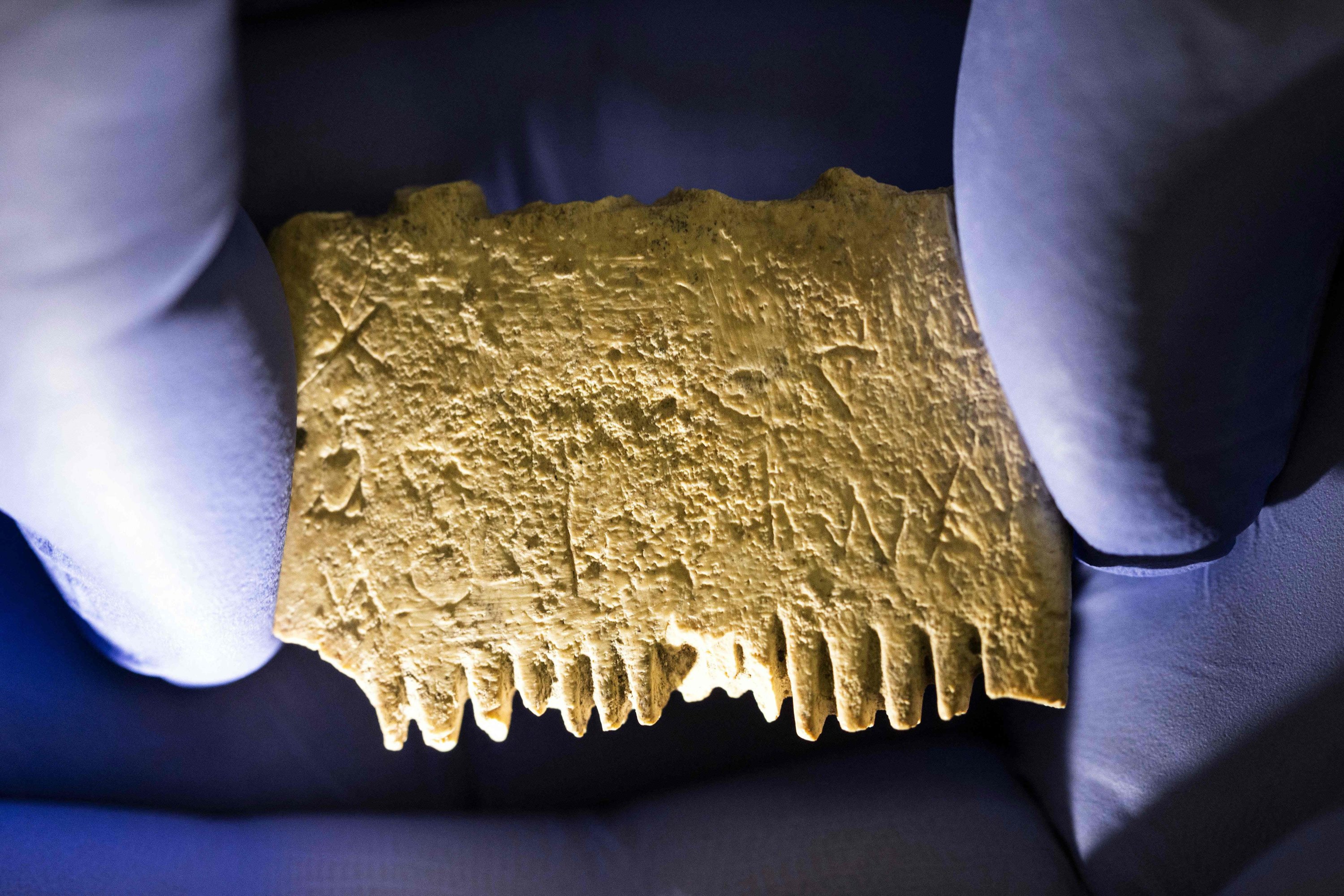
An ivory comb with a rare inscription at the conservation laboratory of the Hebrew University in Jerusalem, Israel, Nov. 8, 2022. (AFP Photo)
by Associated Press Nov 09, 2022 3:38 pm

Israeli archaeologists have discovered a rare inscription on an ivory comb that sheds new light on the use of the Canaanite language some 3,700 years ago, marking what is likely the oldest-known full sentence in the Canaanite alphabetical script.

The inscription encourages people to comb their hair and beards to rid themselves of lice. The sentence contains 17 letters that read: "May this tusk root out the lice of the hair and the beard."

Experts say the discovery shines new light on some of humanity’s earliest use of the Canaanite alphabet, invented around 1800 B.C. and the foundation of all successive alphabetic systems, such as Hebrew, Arabic, Greek, Latin and Cyrillic.

The mundane topic indicates that people had trouble with lice in everyday life during the time – and archaeologists say they have even found microscopic evidence of head lice on the comb.
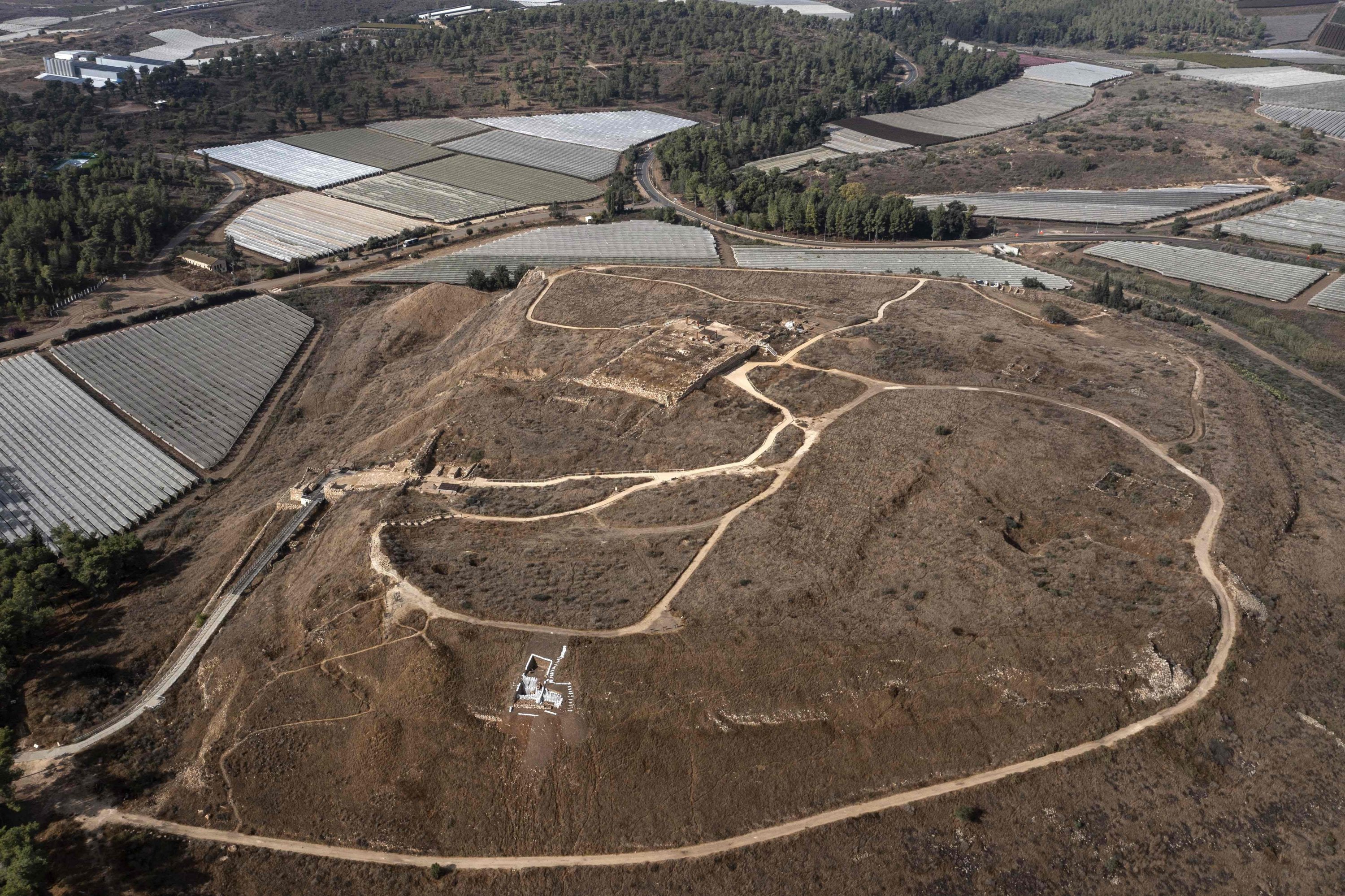
An aerial picture shows the Tel Lachish archeological site, a key Canaanite city about 40 kilometers (25 miles) southwest of Jerusalem, Israel, Nov. 8, 2022. (AFP Photo)

The comb was first excavated in 2016 at Tel Lachish, an archaeological site in southern Israel, but it was only late last year when a professor at Israel’s Hebrew University noticed the tiny words inscribed on it. Details of the find were published Wednesday in an article in the Jerusalem Journal of Archaeology.

The lead researcher, Hebrew University archaeologist Yosef Garfinkel, told The Associated Press (AP) that while many artifacts bearing the Canaanite script have been found over the years, this is the first complete sentence to be discovered.

Garfinkel said previous findings of just a few letters, maybe a word here and there, did not leave much room for further research on the lives on the Canaanites. "We didn’t have enough material," he said.

The find also opens up room for debate about the ancient era, Garfinkel added. The fact that the sentence was found on an ivory comb in the ancient city's palace and temple district, coupled with the mentioning of the beard, could indicate that only wealthy men were able to read and write.

"It is a very human text," Garfinkel said. "It shows us that people didn't really change, and lice didn’t really change."

Canaanites spoke an ancient Semitic language – related to modern Hebrew, Arabic and Aramaic – and resided in the lands abutting the eastern Mediterranean. They are believed to have developed the first known alphabetic system of writing.
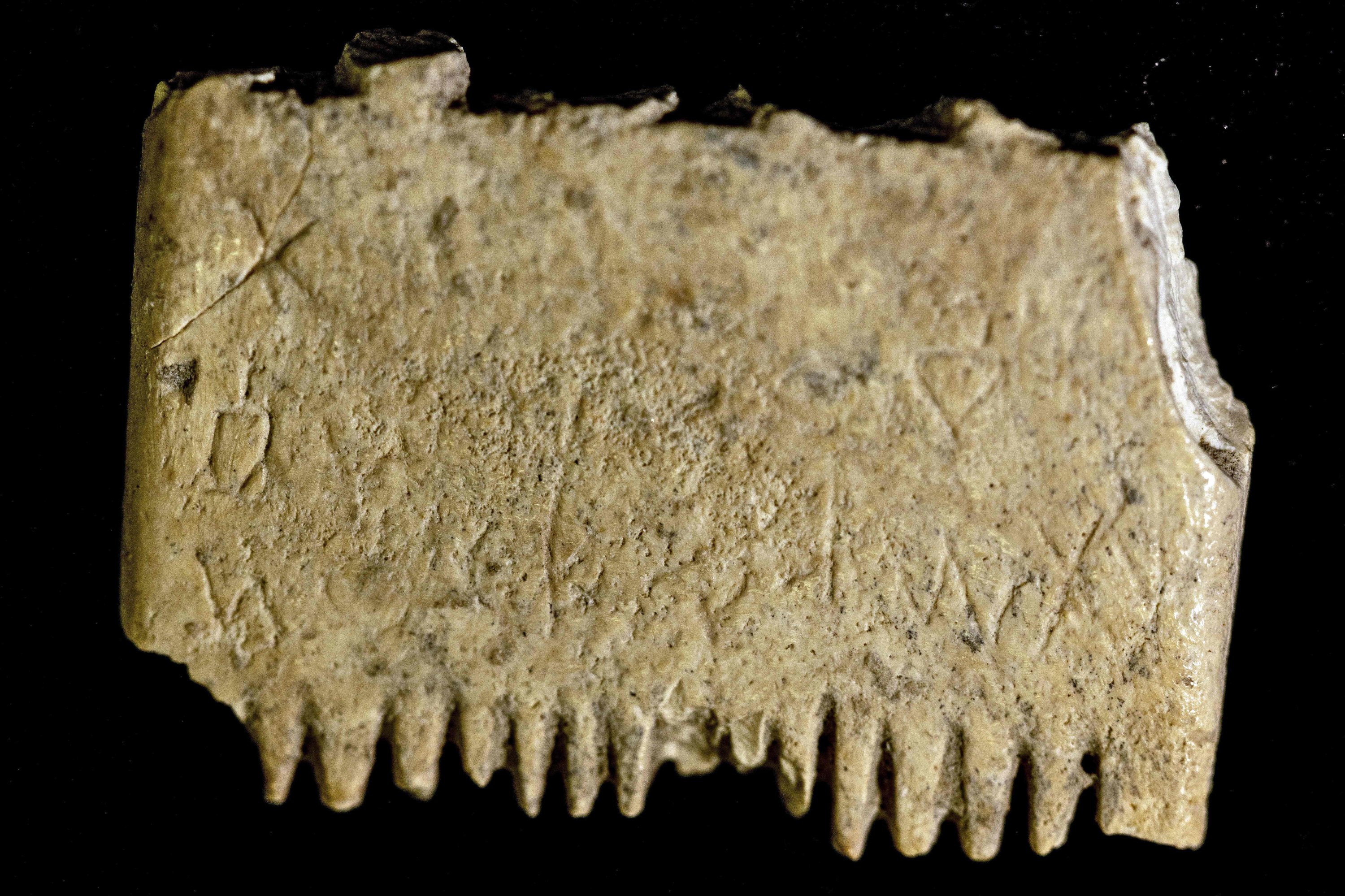
An ivory comb with a rare inscription at the conservation laboratory of the Hebrew University in Jerusalem, Israel, Nov. 8, 2022. (AFP Photo)

Finding a complete sentence would further indicate that Canaanites stood out among early civilizations in their use of the written word. "It shows that even in the most ancient phase there were full sentences," Garfinkel added.

He said experts dated the script to 1700 B.C. by comparing it to the archaic Canaanite alphabet previously found in Egypt’s Sinai desert, dating back to between 1900 B.C. and 1700 B.C.

But the Tel Lachish comb was found in a much later archaeological context, and carbon dating failed to determine its exact age, the article notes.

Austrian archaeologist Felix Hoflmayer, an expert on the period who was not part of the publication, said this method of dating was not definitive.

"There are just not enough securely dated early alphabetic inscriptions currently known," he said. Nonetheless, he added the discovery was highly significant and will help solidify Tel Lachish as a center of the early alphabet development.

"Seventeen letters preserved on a single object is definitely remarkable," Hoflmayer said.

  • shortlink copied
  • Last Update: Nov 09, 2022 5:15 pm
    KEYWORDS
    archaeology ancient times ancient humans caanite language jerusalem
    The Daily Sabah Newsletter
    Keep up to date with what’s happening in Turkey, it’s region and the world.
    You can unsubscribe at any time. By signing up you are agreeing to our Terms of Use and Privacy Policy. This site is protected by reCAPTCHA and the Google Privacy Policy and Terms of Service apply.
    No Image
    In photos: 100 days of military rule in Myanmar
    PHOTOGALLERY
    • POLITICS
    • Diplomacy
    • Legislation
    • War On Terror
    • EU Affairs
    • News Analysis
    • TÜRKİYE
    • Istanbul
    • Education
    • Investigations
    • Minorities
    • Diaspora
    • World
    • Mid-East
    • Europe
    • Americas
    • Asia Pacific
    • Africa
    • Syrian Crisis
    • İslamophobia
    • Business
    • Automotive
    • Economy
    • Energy
    • Finance
    • Tourism
    • Tech
    • Defense
    • Transportation
    • News Analysis
    • Lifestyle
    • Health
    • Environment
    • Travel
    • Food
    • Fashion
    • Science
    • Religion
    • History
    • Feature
    • Expat Corner
    • Arts
    • Cinema
    • Music
    • Events
    • Portrait
    • Performing Arts
    • Reviews
    • Sports
    • Football
    • Basketball
    • Motorsports
    • Tennis
    • Opinion
    • Columns
    • Op-Ed
    • Reader's Corner
    • Editorial
    • Photo gallery
    • DS TV
    • Jobs
    • privacy
    • about us
    • contact us
    • RSS
    © Turkuvaz Haberleşme ve Yayıncılık 2021