Daily Sabah logo

Politics
Diplomacy Legislation War On Terror EU Affairs Elections News Analysis
TÜRKİYE
Istanbul Education Investigations Minorities Expat Corner Diaspora
World
Mid-East Europe Americas Asia Pacific Africa Syrian Crisis Islamophobia
Business
Automotive Economy Energy Finance Tourism Tech Defense Transportation News Analysis
Lifestyle
Health Environment Travel Food Fashion Science Religion History Feature Expat Corner
Arts
Cinema Music Events Portrait Reviews Performing Arts
Sports
Football Basketball Motorsports Tennis
Opinion
Columns Op-Ed Reader's Corner Editorial
PHOTO GALLERY
JOBS ABOUT US RSS PRIVACY CONTACT US
© Turkuvaz Haberleşme ve Yayıncılık 2025

Daily Sabah - Latest & Breaking News from Turkey | Istanbul

  • Politics
    • Diplomacy
    • Legislation
    • War On Terror
    • EU Affairs
    • Elections
    • News Analysis
  • TÜRKİYE
    • Istanbul
    • Education
    • Investigations
    • Minorities
    • Expat Corner
    • Diaspora
  • World
    • Mid-East
    • Europe
    • Americas
    • Asia Pacific
    • Africa
    • Syrian Crisis
    • Islamophobia
  • Business
    • Automotive
    • Economy
    • Energy
    • Finance
    • Tourism
    • Tech
    • Defense
    • Transportation
    • News Analysis
  • Lifestyle
    • Health
    • Environment
    • Travel
    • Food
    • Fashion
    • Science
    • Religion
    • History
    • Feature
    • Expat Corner
  • Arts
    • Cinema
    • Music
    • Events
    • Portrait
    • Reviews
    • Performing Arts
  • Sports
    • Football
    • Basketball
    • Motorsports
    • Tennis
  • Gallery
  • Opinion
    • Columns
    • Op-Ed
    • Reader's Corner
    • Editorial
  • TV
  • Life
  • Health
  • Environment
  • Travel
  • Food
  • Fashion
  • Science
  • Religion
  • History
  • Feature
  • Expat Corner

Archaeologists find ice age footprints of earliest North Americans

by Agence France-Presse - AFP

LOS ANGELES Aug 14, 2022 - 2:35 pm GMT+3
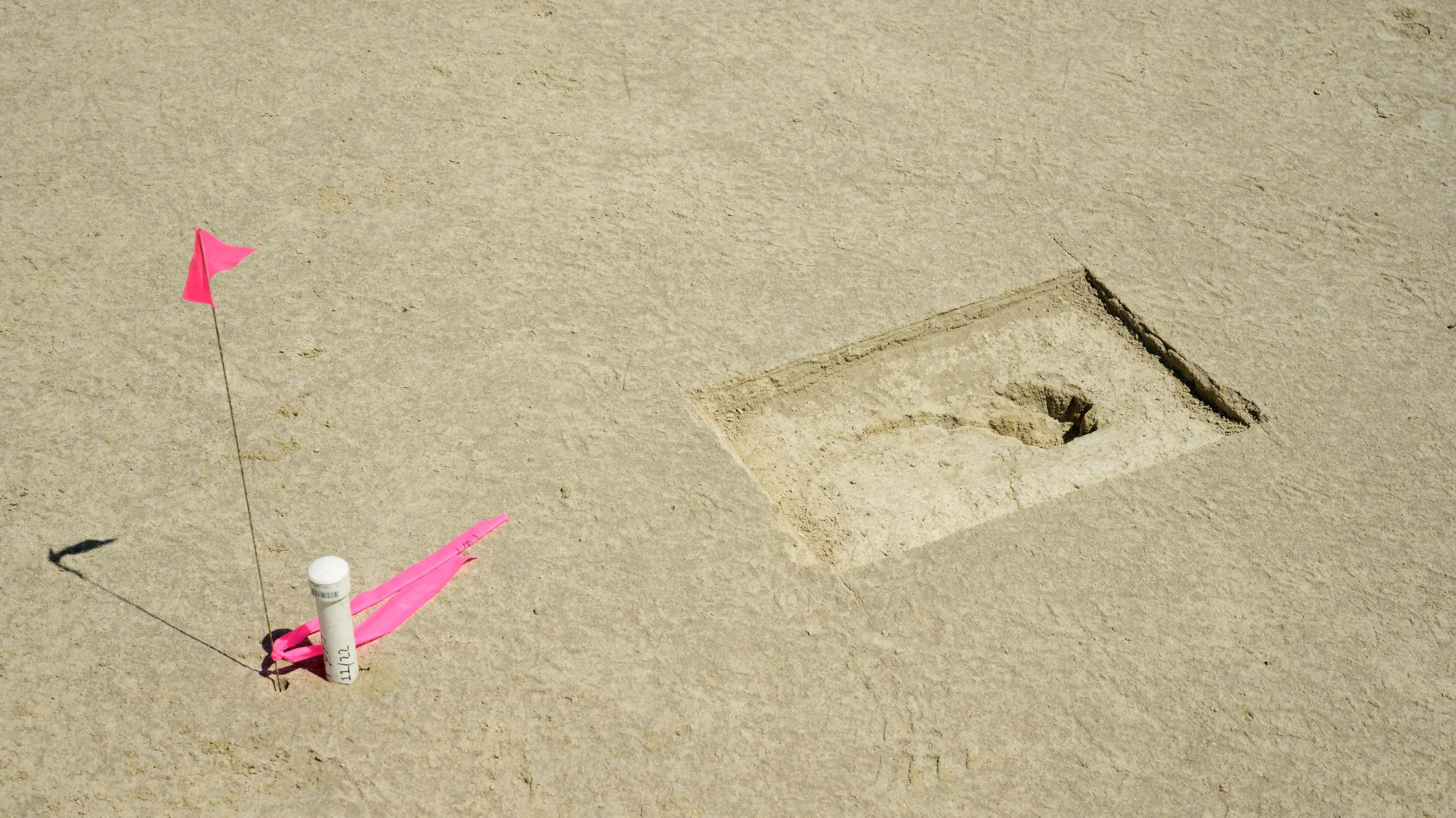
A footprint discovered on an archaeological site marked with a pin flag on the Utah Test and Training Range, Utah, U.S., July 18, 2022. (U.S. Airforce via AFP)
by Agence France-Presse - AFP Aug 14, 2022 2:35 pm

Dozens of fossilized prints laid down during the ice age have been discovered in dried-up riverbeds in a desert in the western state of Utah in the United States, and are shedding new light on North America's earliest human inhabitants, revealing more details about the continent's original occupants more than 12,000 years ago – just as the frozen planet was starting to thaw.

The fossils could have remained unnoticed if not for a chance glance out of a moving car as researchers Daron Duke and Thomas Urban drove through Hill Air Force Base chatting about footprints.

"We were talking about, 'What would they look like?'" Duke told Agence France-Presse (AFP). "And he said, 'Kind of like that out the window.'"

What the men had found turned out to be 88 distinct prints left by a mixture of adults and children.

"They vary between just looking like discolored patches on the ground and... little pop-ups, little pieces of dirt around them or on them. But they look like footprints," Duke said.

The discovery was followed by a painstaking few days of very careful digging – with Duke sometimes lying on his belly – to ensure that what they were looking at was as old as it appeared.

"What I found was bare feet of people... that had stepped in what looks to be shallow water where there was a mud sub-layer," Duke explained.

"The minute they pulled their foot out, the sand infilled that and has preserved it perfectly."
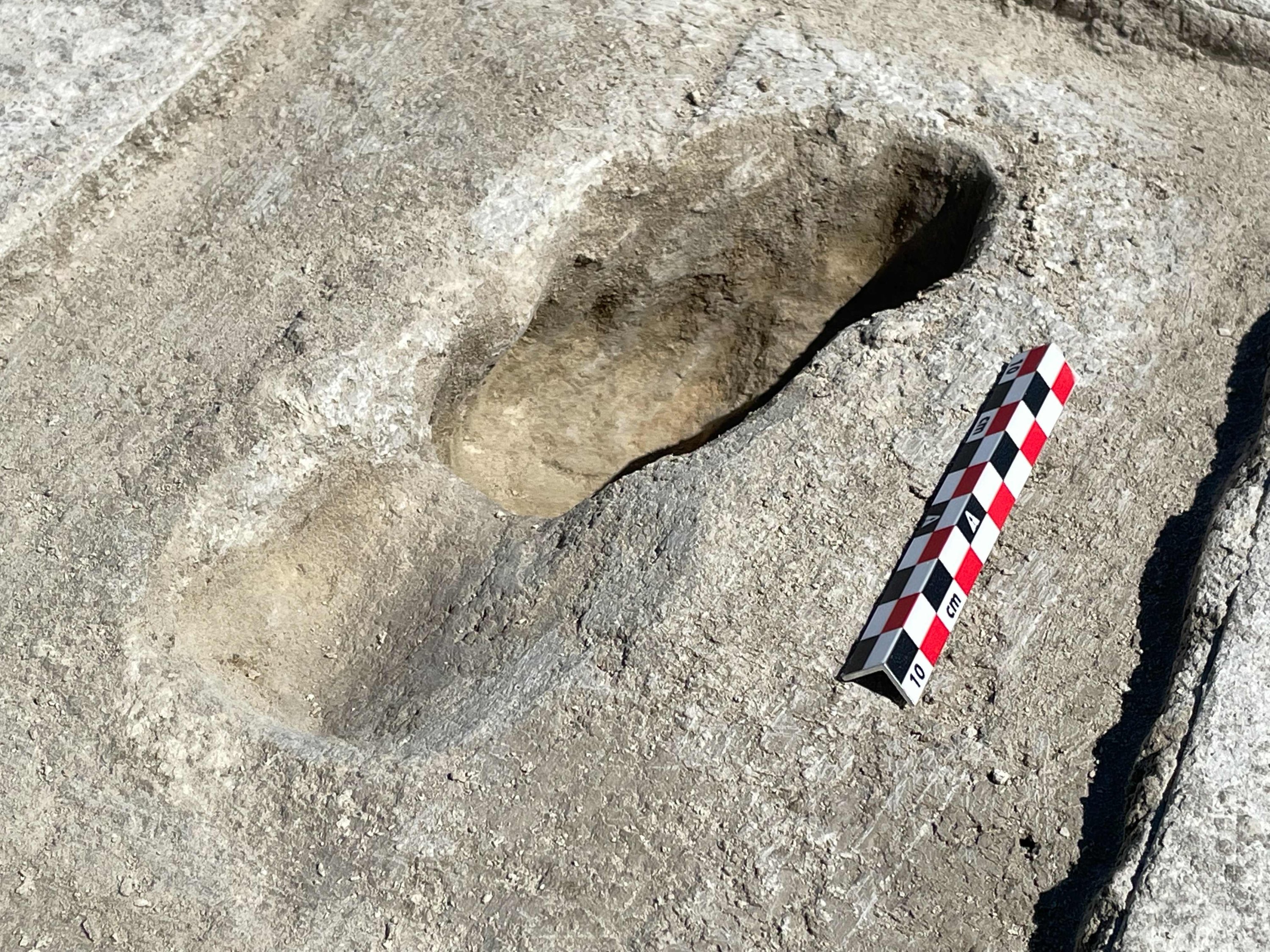
A footprint from the ice age discovered on an archaeological site in the southern Great Salt Lake Desert on the Utah Test and Training Range, Utah, U.S., July 18, 2022. (Daron Duke via AFP)

Duke, of the Nevada-based Far Western Anthropological Research Group, had been in the area looking for evidence of prehistoric campfires built by the Shoshone, a people whose descendants still live in the western U.S.

He had brought Urban over from Cornell University because of his expertise in uncovering evidence of ancient humans – including the discovery of human tracks in New Mexico's White Sands National Park that are thought to be up to 23,000 years old.

The new fossils add to a wealth of other finds from the area – including stone tools, evidence of tobacco use, bird bones and campfire remains – that are starting to provide a more complete record of the Shoshone and their continuous presence in the region beginning 13,000 years ago.

"These are the resident Indigenous people of North America; this is where they lived, and this is where they still live today," Duke said.

For him personally, finding the footprints has been a professional high point.

"Once I... realized I was digging a human footprint, I was seeing toes, I was seeing the thing in immaculate condition... I was just kind of awestruck by it," he said.

"Nothing beats the sense of discovery and awe that maybe as an archaeologist, you are actually chasing your whole career."

And sharing the discovery with the distant descendants of the people who made the prints was immensely rewarding, Duke said.

"You realize the same thing is happening – what the connection is to such a distant past and to something so human, I think it gets to everybody in one way or another eventually," he added.


  • shortlink copied
  • KEYWORDS
    archaeology north america early history ice age fossilized footprints
    The Daily Sabah Newsletter
    Keep up to date with what’s happening in Turkey, it’s region and the world.
    You can unsubscribe at any time. By signing up you are agreeing to our Terms of Use and Privacy Policy. This site is protected by reCAPTCHA and the Google Privacy Policy and Terms of Service apply.
    No Image
    Migrants stranded in Bosnia-Herzegovina survive subzero conditions
    PHOTOGALLERY
    • POLITICS
    • Diplomacy
    • Legislation
    • War On Terror
    • EU Affairs
    • News Analysis
    • TÜRKİYE
    • Istanbul
    • Education
    • Investigations
    • Minorities
    • Diaspora
    • World
    • Mid-East
    • Europe
    • Americas
    • Asia Pacific
    • Africa
    • Syrian Crisis
    • İslamophobia
    • Business
    • Automotive
    • Economy
    • Energy
    • Finance
    • Tourism
    • Tech
    • Defense
    • Transportation
    • News Analysis
    • Lifestyle
    • Health
    • Environment
    • Travel
    • Food
    • Fashion
    • Science
    • Religion
    • History
    • Feature
    • Expat Corner
    • Arts
    • Cinema
    • Music
    • Events
    • Portrait
    • Performing Arts
    • Reviews
    • Sports
    • Football
    • Basketball
    • Motorsports
    • Tennis
    • Opinion
    • Columns
    • Op-Ed
    • Reader's Corner
    • Editorial
    • Photo gallery
    • DS TV
    • Jobs
    • privacy
    • about us
    • contact us
    • RSS
    © Turkuvaz Haberleşme ve Yayıncılık 2021