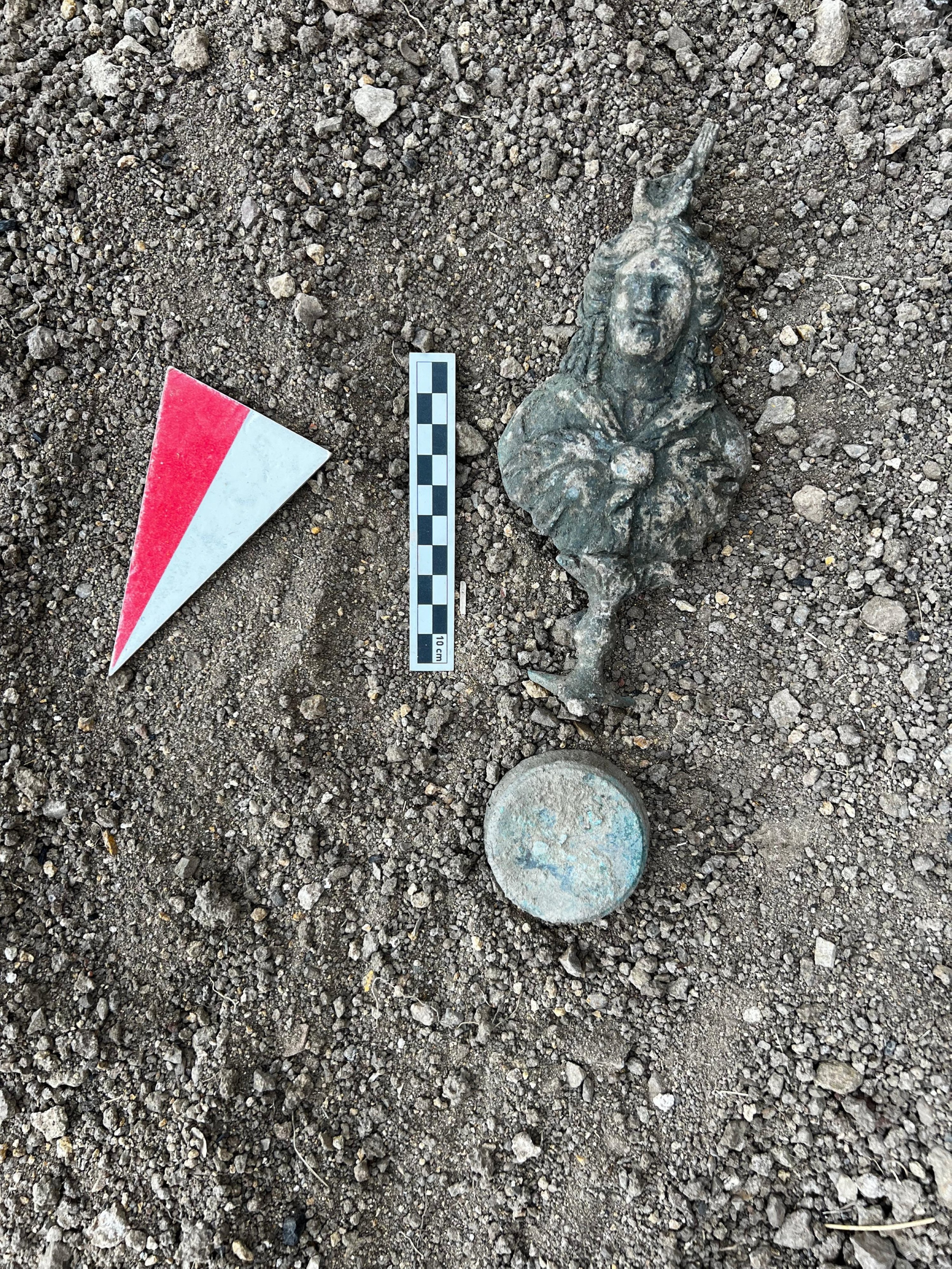
In the Kelkit district of Gümüşhane, northwestern Türkiye, archaeologists made a remarkable discovery at Satala, an ancient city that once served as a Roman military headquarters. During excavations in the necropolis, they unearthed a 20-centimeter (7.87-inch) bronze bust of the Egyptian goddess Isis.
Elif Yavuz Çakmur, head of the excavation and a faculty member of Karadeniz Technical University’s Archaeology Department, explained that the statue was found detached from its base. “We already know that the Roman legions followed Mithras and worshipped the Twelve Gods. Finding a statue of Isis indicates their engagement with Eastern religious practices and highlights the diversity of beliefs among the soldiers,” she said.
The discovery is also significant because it is the first bust to be found at the site since the 1870s, when an Aphrodite statue was unearthed. “This bust sheds new light on the religious life of the Roman legions and demonstrates their openness to different cultural influences,” Çakmur added.
Çakmur also provided details about the bust itself. The statue had been placed on a three-legged base, emerging gracefully from a three-petaled calyx. On its head, two ears of corn - symbols of fertility and abundance - remain preserved on the left side. The goddess is depicted wearing a tasseled shawl, tied in a neat knot at the front, reflecting the intricate craftsmanship of the period.