Daily Sabah logo

Politics
Diplomacy Legislation War On Terror EU Affairs Elections News Analysis
TÜRKİYE
Istanbul Education Investigations Minorities Expat Corner Diaspora
World
Mid-East Europe Americas Asia Pacific Africa Syrian Crisis Islamophobia
Business
Automotive Economy Energy Finance Tourism Tech Defense Transportation News Analysis
Lifestyle
Health Environment Travel Food Fashion Science Religion History Feature Expat Corner
Arts
Cinema Music Events Portrait Reviews Performing Arts
Sports
Football Basketball Motorsports Tennis
Opinion
Columns Op-Ed Reader's Corner Editorial
PHOTO GALLERY
JOBS ABOUT US RSS PRIVACY CONTACT US
© Turkuvaz Haberleşme ve Yayıncılık 2025

Daily Sabah - Latest & Breaking News from Turkey | Istanbul

  • Politics
    • Diplomacy
    • Legislation
    • War On Terror
    • EU Affairs
    • Elections
    • News Analysis
  • TÜRKİYE
    • Istanbul
    • Education
    • Investigations
    • Minorities
    • Expat Corner
    • Diaspora
  • World
    • Mid-East
    • Europe
    • Americas
    • Asia Pacific
    • Africa
    • Syrian Crisis
    • Islamophobia
  • Business
    • Automotive
    • Economy
    • Energy
    • Finance
    • Tourism
    • Tech
    • Defense
    • Transportation
    • News Analysis
  • Lifestyle
    • Health
    • Environment
    • Travel
    • Food
    • Fashion
    • Science
    • Religion
    • History
    • Feature
    • Expat Corner
  • Arts
    • Cinema
    • Music
    • Events
    • Portrait
    • Reviews
    • Performing Arts
  • Sports
    • Football
    • Basketball
    • Motorsports
    • Tennis
  • Gallery
  • Opinion
    • Columns
    • Op-Ed
    • Reader's Corner
    • Editorial
  • TV
  • Life
  • Health
  • Environment
  • Travel
  • Food
  • Fashion
  • Science
  • Religion
  • History
  • Feature
  • Expat Corner

Cold War's almost hot moments: A history of close nuclear calls

by Agence France-Presse - AFP

PARIS Oct 28, 2022 - 9:00 am GMT+3
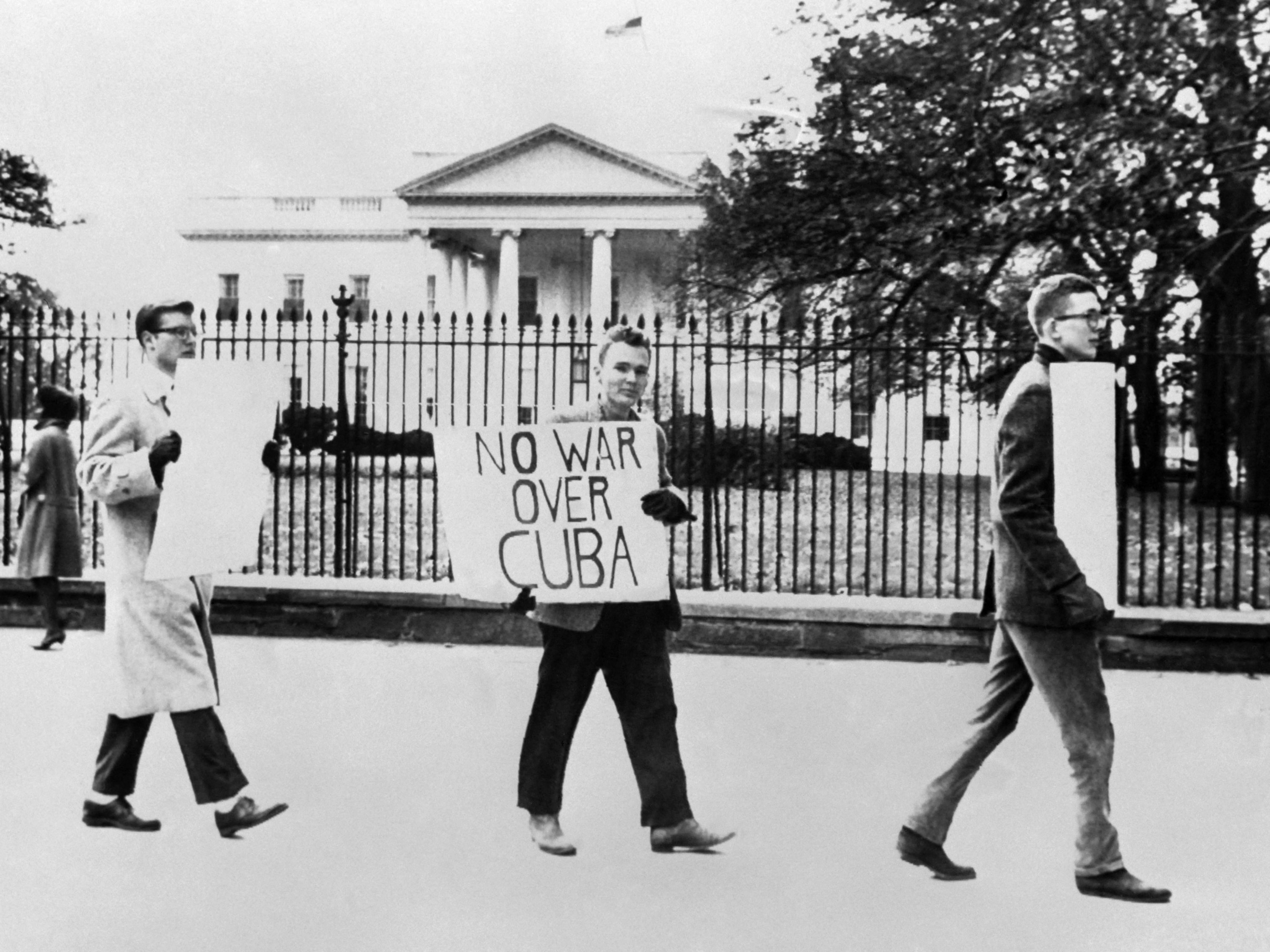
People demonstrate against war during the Cuban missile crisis, in front of the White House in Washington, D.C., U.S., Oct. 27, 1962. (AFP Photo)
by Agence France-Presse - AFP Oct 28, 2022 9:00 am

As the Russian invasion of Ukraine continues, the world has been reminded once again of the threat of nuclear war. The closest example of such a conflict was 60 years ago when the United States and Soviet Union were on the brink of an atomic war over Soviet missiles deployed on the island of Cuba.

There have been numerous other nuclear near misses throughout recent history. Let's take a look at some of them.

1962: Submarine incident

The 13-day showdown between U.S. President John F. Kennedy and Soviet leader Nikita Khrushchev has been documented in great detail.

But one incident only came to light many years later.

On Oct. 27, 1962, just as the crisis was nearing resolution, one of four Russian submarines sent to the area with nuclear torpedoes aboard found itself targeted by the U.S. Navy after getting stuck in the Sargasso Sea.

When U.S. forces began dropping non-lethal charges to pressure submarine B59 to surface, the frazzled crew, which had Moscow's green light to use the vessel's "special weapon" in event of attack, thought war was breaking out.

Believing that "the point of no return" had been reached the submarine commander decided to launch the torpedo but he needed the agreement of two other officers, including the second-in-command Vasily Arkhipov, according to the Russian Defense Ministry's "Army Legends" documentary series.

Arkhipov kept his composure and opposed the launch, guessing correctly that the Americans did not know the submarine was carrying a nuclear weapon. The man "who prevented World War III" died in 1998.

1983: Soviet false alarm

Another level-headed Soviet officer helped prevent a potential nuclear conflagration 20 years later.

On Sept. 26, 1983, Air Force Colonel Stanislav Petrov was on duty at a secret base near Moscow responsible for monitoring missile attack early warning systems when the alarms started ringing.

Petrov had just minutes to react to a warning that five American intercontinental ballistic missiles were headed toward the Soviet Union.

With Soviet nuclear doctrine calling for retaliation, reporting it to his higher-ups would have had enormous consequences.

But Petrov's gut instinct told him that an American attack would have involved around 100 missiles and he correctly deduced it was a false alarm.

Soviet experts later concluded that the warning system mistook the sun's reflection off clouds for a missile.

Petrov was decorated several months later but the incident was covered up for a decade.

2001-2002: India-Pakistan

In May 2002, India and Pakistan, at odds over the disputed Himalayan state of Kashmir since their partition in 1947, went to the brink.

India blamed extremists from Pakistan for a suicide attack against the parliament in New Delhi on Dec. 13, 2001, that left 14 dead.

The two countries, which became nuclear powers in 1998, mobilized a million soldiers along their shared border.

In April 2002, Pakistani President Pervez Musharraf declared he would use nuclear weapons if threatened with destruction by an attack from India.

India's Defense Minister George Fernandes was scathing, saying: "India can survive a nuclear attack, but Pakistan cannot."

New Delhi and Islamabad carried out months of tit-for-tat missile tests before agreeing to U.S.-sponsored de-escalation measures that lead to a cease-fire in November 2003 and leaders' talks in January 2004.

Other incidents

In 1988, a KGB defector, Colonel Oleg Gordievsky, revealed that Soviet leaders had nearly pressed the button five years earlier in November 1983, when they believed the West was preparing a surprise nuclear attack on the Soviet Union.

The panic attack was sparked by NATO manoeuvres.

On Jan. 25, 1995, aides brought Russian President Boris Yeltsin his nuclear briefcase when Russian radars mistook the launch of a Norwegian meteorological sounding rocket from the Arctic Circle for a U.S. strike.

Yeltsin concludes that it is not actually a U.S. missile and does not retaliate. A week later Moscow admits there was a "misunderstanding."


  • shortlink copied
  • KEYWORDS
    history nuclear war nuclear disaster nuclear weapons atomic bombing cold war
    The Daily Sabah Newsletter
    Keep up to date with what’s happening in Turkey, it’s region and the world.
    You can unsubscribe at any time. By signing up you are agreeing to our Terms of Use and Privacy Policy. This site is protected by reCAPTCHA and the Google Privacy Policy and Terms of Service apply.
    No Image
    Hagia Sophia and full moon meet in same frame
    PHOTOGALLERY
    • POLITICS
    • Diplomacy
    • Legislation
    • War On Terror
    • EU Affairs
    • News Analysis
    • TÜRKİYE
    • Istanbul
    • Education
    • Investigations
    • Minorities
    • Diaspora
    • World
    • Mid-East
    • Europe
    • Americas
    • Asia Pacific
    • Africa
    • Syrian Crisis
    • İslamophobia
    • Business
    • Automotive
    • Economy
    • Energy
    • Finance
    • Tourism
    • Tech
    • Defense
    • Transportation
    • News Analysis
    • Lifestyle
    • Health
    • Environment
    • Travel
    • Food
    • Fashion
    • Science
    • Religion
    • History
    • Feature
    • Expat Corner
    • Arts
    • Cinema
    • Music
    • Events
    • Portrait
    • Performing Arts
    • Reviews
    • Sports
    • Football
    • Basketball
    • Motorsports
    • Tennis
    • Opinion
    • Columns
    • Op-Ed
    • Reader's Corner
    • Editorial
    • Photo gallery
    • DS TV
    • Jobs
    • privacy
    • about us
    • contact us
    • RSS
    © Turkuvaz Haberleşme ve Yayıncılık 2021