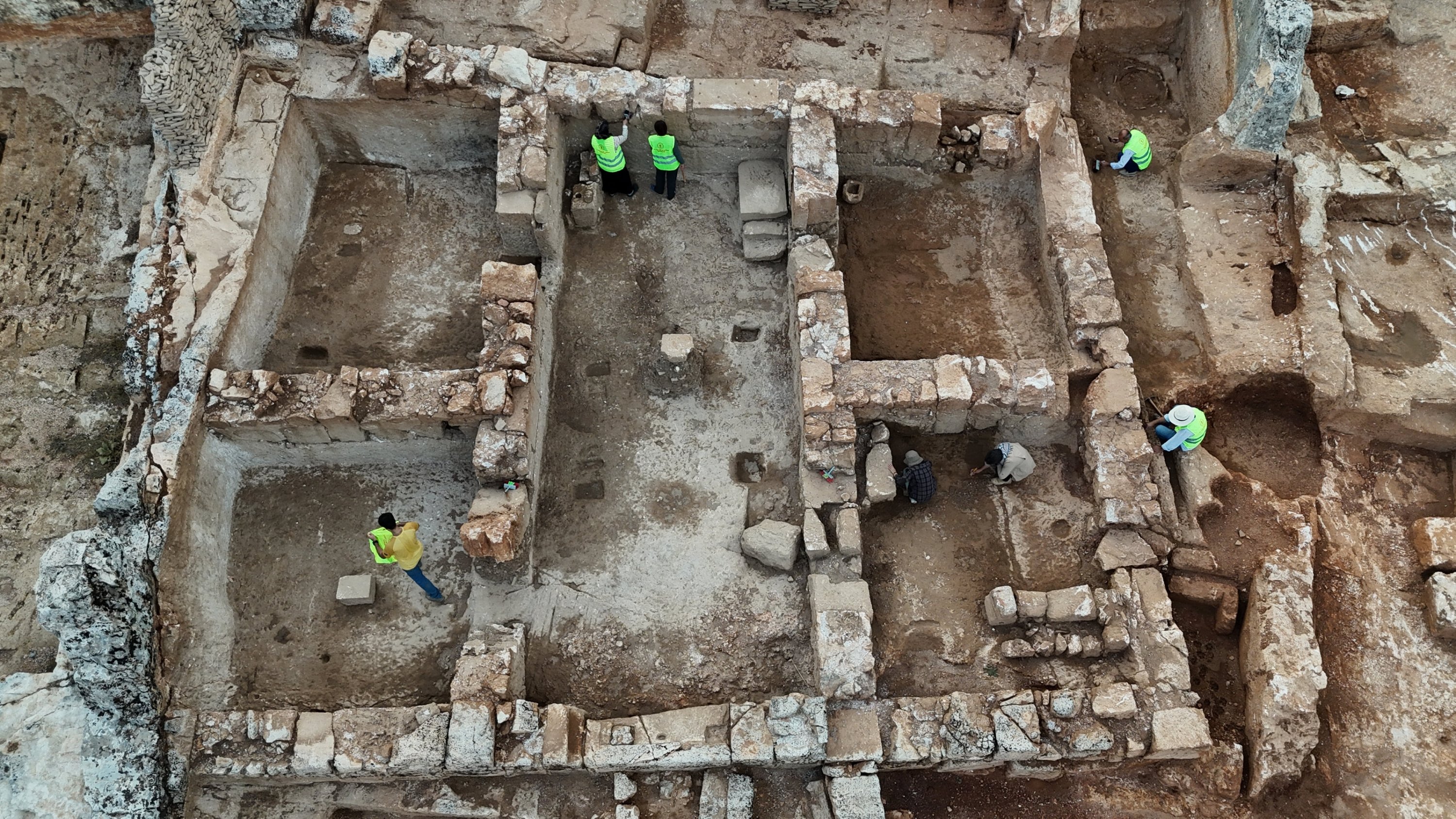
Archaeologists have uncovered a nearly 1,500-year-old Roman-period residential area at the ancient city of Perre in Adıyaman, southeastern Türkiye, one of the five major cities of the Commagene civilization
Excavations at Perre, which have been conducted intermittently since 2001, have previously revealed a Roman fountain, stone block structures, water channels and numerous architectural remnants.
This year, under the coordination of the Adıyaman Museum Directorate, a team of 20 workers and four archaeologists uncovered new findings, including a 154-square-meter living space. Researchers also identified a tandoor oven and two adjacent rooms, shedding light on the domestic life of the period.
Mehmet Yelken, director of the Adıyaman Provincial Directorate of Culture and Tourism, told Anadolu Agency (AA) that significant discoveries were made during the excavations.
“We are currently working on a structure built during the Roman period. Right next to it is the basilica known for the ‘Paradise Mosaic,’” Yelken said. “This year’s work revealed the architectural textures surrounding the basilica. In the 154-square-meter area our archaeologists examined, we found numerous items indicating daily life, including coins, bronze objects, and household utensils.”
Yelken explained that the tandoor and two-room structure indicate the building served as a residence. “The presence of the tandoor shows this was an active living space. We believe this structure, built around 1,500 years ago, offers an important example of Roman-era domestic life.”
He also noted that Perre’s strategic location contributed to the variety of artifacts found. “The city was historically at the crossroads of trade and military routes, making it both a transit and lodging center. We expect to uncover even more valuable finds in the future.”