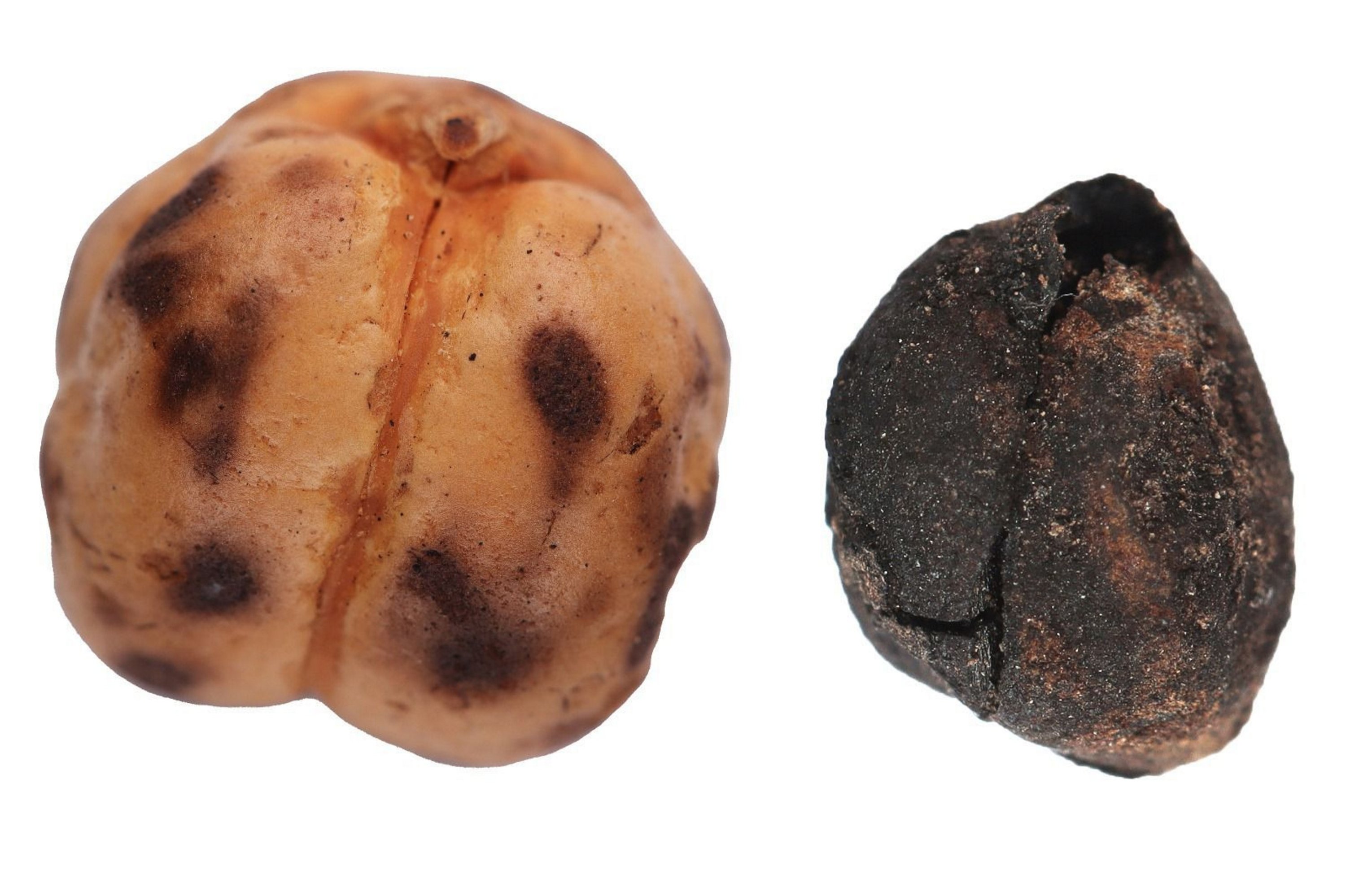
Culture and Tourism Minister Mehmet Nuri Ersoy announced significant archaeological discoveries, including 4,000-year-old chickpeas unearthed at Tavşanlı Höyük in Kütahya, western Türkiye and 8,600-year-old bread remains found at Çatalhöyük in Konya, central Türkiye.
These discoveries shed new light on the rich culinary heritage of Anatolia, supported by ongoing excavations funded by the ministry.
In a statement shared on social media, Ersoy highlighted how these findings illuminate the ancient dining culture of Anatolia. He emphasized that just as Türkiye is renowned for its gastronomy today, thousands of years ago, Anatolia was already a center of abundant food culture and cultural richness. The ministry remains committed to tracing this deep-rooted heritage and illuminating Türkiye's past.
During this year’s excavation season, archaeologists uncovered chickpea remnants – the raw material for roasted chickpeas – at Tavşanlı Höyük, dating back to the Middle Bronze Age. These findings were discovered alongside wheat grains, fired clay vessels and a silver hair ring.
Microscopic analysis conducted by Doğa Karakaya, a member of the Tavşanlı Höyük team, confirmed that these remains belong to Anatolia’s early agricultural culture. Additionally, analysis of 4,200-year-old hazelnut remnants found in 2022 at the same site identified them as a naturally growing bush hazelnut species (Corylus), native to the region.
While chickpea discoveries reflect Anatolia’s deep-rooted agricultural heritage, bread samples from various sites illustrate how food production translated into daily life and rituals.
At Çatalhöyük in Konya, an 8,600-year-old piece of fermented bread was found. Similarly, in Eskişehir’s Küllüoba Höyük, archaeologists unearthed 5,000-year-old fermented and baked bread used for ritual purposes. At the ancient city of Topraktepe (Eirenepolis) in Karaman, 1,300-year-old decorated barley breads were discovered.
Analysis of the Küllüoba bread revealed ingredients such as einkorn wheat and lentils. It was baked at approximately 140 degrees Celsius (280 degrees Fahrenheit). One piece was intentionally broken off and burned as part of a fertility ritual before being buried near the threshold in the back room of a house. This practice highlights how production and belief systems were deeply intertwined in the social life of that era.
The ministry’s scientific excavations and preservation efforts continue to provide a comprehensive understanding of Anatolia’s agricultural production, belief systems and dining traditions. Basic foodstuffs like bread, chickpeas and hazelnuts serve not only as evidence of dietary habits but also reflect agricultural practices, social rituals and spiritual beliefs.
Thanks to Türkiye's robust scientific infrastructure and preservation vision, these invaluable finds have been added to the story of human history and are exhibited in museums, creating a meaningful bridge between the past and the present.