Daily Sabah logo

Politics
Diplomacy Legislation War On Terror EU Affairs Elections News Analysis
TÜRKİYE
Istanbul Education Investigations Minorities Expat Corner Diaspora
World
Mid-East Europe Americas Asia Pacific Africa Syrian Crisis Islamophobia
Business
Automotive Economy Energy Finance Tourism Tech Defense Transportation News Analysis
Lifestyle
Health Environment Travel Food Fashion Science Religion History Feature Expat Corner
Arts
Cinema Music Events Portrait Reviews Performing Arts
Sports
Football Basketball Motorsports Tennis
Opinion
Columns Op-Ed Reader's Corner Editorial
PHOTO GALLERY
JOBS ABOUT US RSS PRIVACY CONTACT US
© Turkuvaz Haberleşme ve Yayıncılık 2025

Daily Sabah - Latest & Breaking News from Turkey | Istanbul

  • Politics
    • Diplomacy
    • Legislation
    • War On Terror
    • EU Affairs
    • Elections
    • News Analysis
  • TÜRKİYE
    • Istanbul
    • Education
    • Investigations
    • Minorities
    • Expat Corner
    • Diaspora
  • World
    • Mid-East
    • Europe
    • Americas
    • Asia Pacific
    • Africa
    • Syrian Crisis
    • Islamophobia
  • Business
    • Automotive
    • Economy
    • Energy
    • Finance
    • Tourism
    • Tech
    • Defense
    • Transportation
    • News Analysis
  • Lifestyle
    • Health
    • Environment
    • Travel
    • Food
    • Fashion
    • Science
    • Religion
    • History
    • Feature
    • Expat Corner
  • Arts
    • Cinema
    • Music
    • Events
    • Portrait
    • Reviews
    • Performing Arts
  • Sports
    • Football
    • Basketball
    • Motorsports
    • Tennis
  • Gallery
  • Opinion
    • Columns
    • Op-Ed
    • Reader's Corner
    • Editorial
  • TV
  • Life
  • Health
  • Environment
  • Travel
  • Food
  • Fashion
  • Science
  • Religion
  • History
  • Feature
  • Expat Corner

Remains of 'Lady in the Well' in Turkey reveal Asia to Med migration began 4,000 years ago

by REUTERS

WASHINGTON Jun 02, 2020 - 11:25 am GMT+3
Edited By Yasemin Nicola Sakay
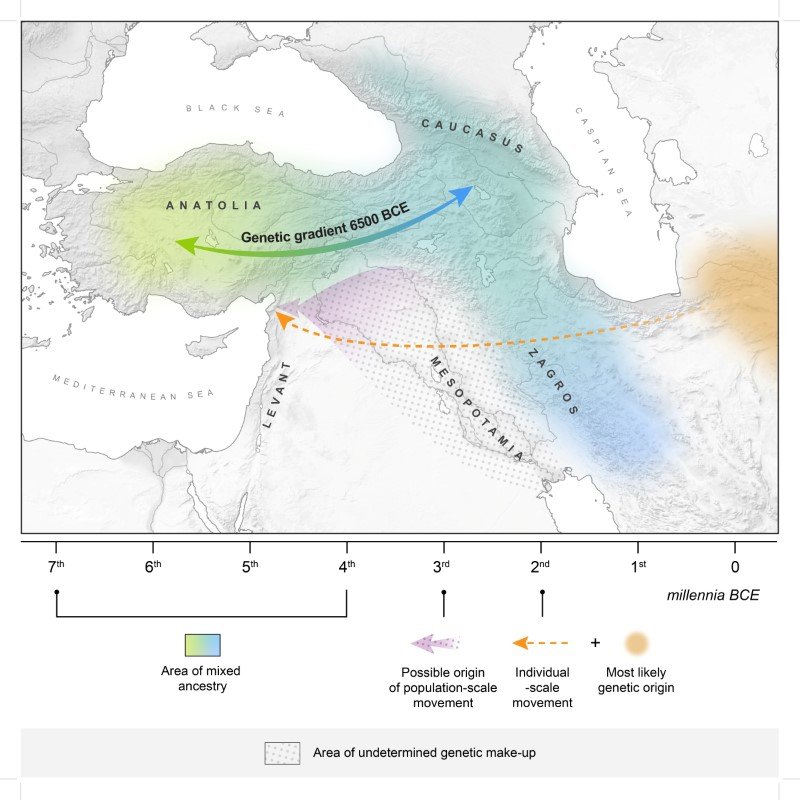
West Asia, which includes Anatolia, the Northern Levant and the Southern Caucasus, is seen in this partial map. The orange marker shows the route from Central Asia. (Max Planck-Harvard Research Center / via Reuters)
by REUTERS Jun 02, 2020 11:25 am
Edited By Yasemin Nicola Sakay

The bones of a woman of Central Asian descent found at the bottom of a deep well after a violent death in an ancient city in Turkey are helping scientists understand population movements during a crucial juncture in human history.

Researchers have dubbed her the "lady in the well" and her bones were among 110 skeletal remains of people who lived in a region of blossoming civilization running from Turkey through Iran between 7,500 and 3,000 years ago. The study provided the most comprehensive look to date of genetics revealing the movement and interactions of human populations in this area after the advent of agriculture and into the rise of city-states, two landmarks in human history.

The remains of the "lady in the well," found in the ruins of the ancient city of Alalakh in southern Turkey, illustrated how people and ideas circulated through the region.

The international team of researchers showed populations from Anatolia and the Caucasus started genetically mixing around 6,500 B.C. and that small migration events from Mesopotamia 4,000 years ago brought more genetic mixture to the region. DNA from the lone ancient woman revealed proof of long-distance migration during the late Bronze age about 4,000 years ago from Central Asia to the Mediterranean Coast.

Her DNA showed she hailed from somewhere in Central Asia – perhaps 2,000 miles (3,200 km) or more away. She died at about 40 to 45 years of age, the researchers said, probably between 1625 B.C. and 1511 B.C. Her body bore signs of multiple injuries.

"How and why a woman from Central Asia – or both of her parents – came to Alalakh is unclear," said Ludwig Maximilian University Munich archaeologist Philipp Stockhammer, co-director of the Max Planck-Harvard Research Center for the Archaeoscience of the Ancient Mediterranean and co-author of the study published in the journal Cell.

"Trader? Slaves? Marriage? What we can say is that genetically this woman is absolutely foreign, so that she is not the result of an intercultural marriage," Stockhammer added. "Therefore, a single woman or a small family came this long distance. The woman is killed. Why? Rape? Hate against foreigners? Robbery? And then her body was disposed in the well."


  • shortlink copied
  • Last Update: Jun 02, 2020 12:32 pm
    KEYWORDS
    human history ancient humans dna turkey anatolia alalakh genetics
    The Daily Sabah Newsletter
    Keep up to date with what’s happening in Turkey, it’s region and the world.
    You can unsubscribe at any time. By signing up you are agreeing to our Terms of Use and Privacy Policy. This site is protected by reCAPTCHA and the Google Privacy Policy and Terms of Service apply.
    No Image
    'Butcher of Gaza' protest against Blinken in US Senate
    PHOTOGALLERY
    • POLITICS
    • Diplomacy
    • Legislation
    • War On Terror
    • EU Affairs
    • News Analysis
    • TÜRKİYE
    • Istanbul
    • Education
    • Investigations
    • Minorities
    • Diaspora
    • World
    • Mid-East
    • Europe
    • Americas
    • Asia Pacific
    • Africa
    • Syrian Crisis
    • İslamophobia
    • Business
    • Automotive
    • Economy
    • Energy
    • Finance
    • Tourism
    • Tech
    • Defense
    • Transportation
    • News Analysis
    • Lifestyle
    • Health
    • Environment
    • Travel
    • Food
    • Fashion
    • Science
    • Religion
    • History
    • Feature
    • Expat Corner
    • Arts
    • Cinema
    • Music
    • Events
    • Portrait
    • Performing Arts
    • Reviews
    • Sports
    • Football
    • Basketball
    • Motorsports
    • Tennis
    • Opinion
    • Columns
    • Op-Ed
    • Reader's Corner
    • Editorial
    • Photo gallery
    • DS TV
    • Jobs
    • privacy
    • about us
    • contact us
    • RSS
    © Turkuvaz Haberleşme ve Yayıncılık 2021