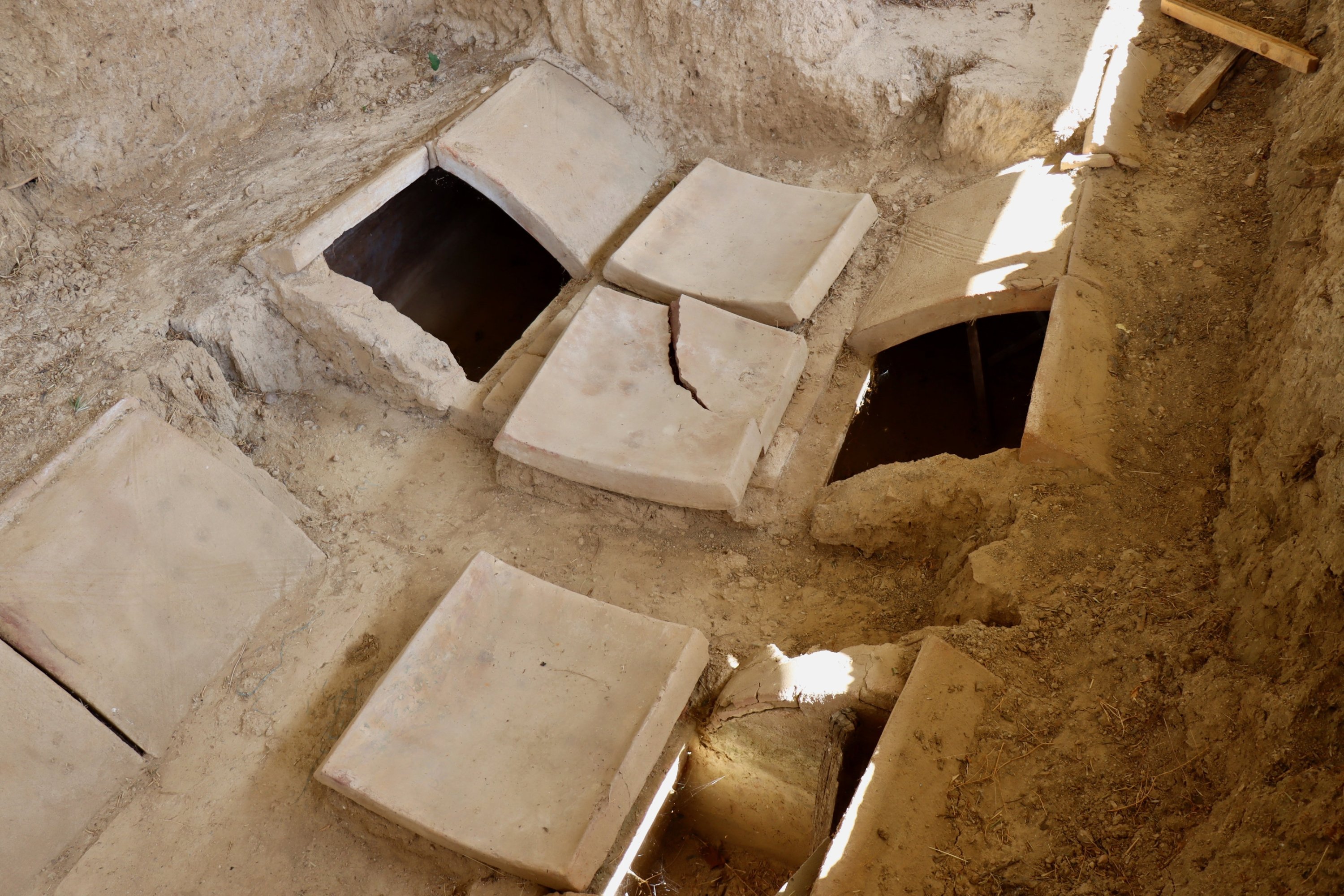
Ongoing archaeological excavations in Hisardere, located in the Iznik district of Bursa, Türkiye, are shedding new light on burial customs and tomb architecture from the Roman and Early Byzantine periods. Used as a necropolis from the second century to the end of the fifth century, the site offers a rare and remarkably well-preserved glimpse into the funerary traditions of the ancient city of Nicaea.
The excavations began in 2018 in a 10-decare (approximately 2.5-acre) area that had previously served as vineyards and olive groves. Under the supervision of the Iznik Museum Directorate and with permission from the Ministry of Culture and Tourism, a team from Dokuz Eylül University has been leading the archaeological research.
Archaeologists have uncovered a variety of burial structures that illustrate the evolution of funerary practices during the Roman Imperial and Early Byzantine periods. Among the discoveries are terracotta-roofed chamber tombs adorned with frescoes unique to Iznik, subterranean hypogea (vaulted underground tombs), elaborately carved sarcophagi, burial offerings and human remains.
These finds offer significant insight into the spiritual beliefs and social customs of the time, painting a detailed picture of how the people of ancient Nicaea honored their dead.
Professor Aygün Ekin Meriç, the scientific coordinator of the excavations and a faculty member at Dokuz Eylül University’s Department of Archaeology, explained that the necropolis lies about 2.5 kilometers (1.5 miles) outside the city walls of modern-day Iznik.
Although illegal excavations were first recorded at the site in 1992, the area was not officially expropriated until 2017. Scientific excavations began the following year, transitioning from rescue operations to systematic archaeological research.
Meriç, some of the most striking findings include terracotta-roofed family tombs featuring hinged lids, which allowed for repeated use. Some of these tombs housed up to 14 individuals, indicating they served extended family groups over periods spanning 100 to 150 years.
Many of the chamber tombs were constructed with stone walls and finished with plaster, and some were decorated with frescoes depicting paradisiacal gardens, lush plants and colorful birds.
Hypogea – underground tombs accessed via staircases – were also in use during the second and third centuries. In addition, simpler pit graves and timber-framed tombs have been identified throughout the site.
Strikingly, Meriç noted that individuals from various social classes – nobles, the wealthy and the poor – were all buried within this shared necropolis. What makes the site particularly important, he added, is that many of the tombs have remained undisturbed since antiquity, offering an exceptionally well-preserved archaeological record.
One of the most remarkable discoveries came during the exploration of the site’s upper layers: the remains of a vast basilica, dated to the fifth century. Measuring 30 by 70 meters (100 by 230 feet), the structure features three naves and geometric mosaics adorned with fourth- and fifth-century motifs. It is now considered the largest basilica ever uncovered in Iznik.
As the team traced the basilica’s walls, they encountered sarcophagi that had been carefully incorporated into the later Christian architecture, reflecting a reverent adaptation of the earlier burial spaces. This sequence of development – from pagan necropolis to Christian basilica and basilica cemetery –offers a compelling narrative of religious transformation in late antiquity.
Meriç emphasized the excitement surrounding the discoveries and noted that, once excavations are complete, there are plans to convert the Hisardere Necropolis into an open-air museum. The goal is to make the site accessible to the public while ensuring the preservation of its archaeological integrity.
By revealing the burial traditions of ancient Nicaea, the Hisardere Necropolis is not only rewriting the funerary history of Iznik but also offering a vivid window into the cultural transitions of the Roman and Byzantine worlds.