Daily Sabah logo

Politics
Diplomacy Legislation War On Terror EU Affairs Elections News Analysis
TÜRKİYE
Istanbul Education Investigations Minorities Expat Corner Diaspora
World
Mid-East Europe Americas Asia Pacific Africa Syrian Crisis Islamophobia
Business
Automotive Economy Energy Finance Tourism Tech Defense Transportation News Analysis
Lifestyle
Health Environment Travel Food Fashion Science Religion History Feature Expat Corner
Arts
Cinema Music Events Portrait Reviews Performing Arts
Sports
Football Basketball Motorsports Tennis
Opinion
Columns Op-Ed Reader's Corner Editorial
PHOTO GALLERY
JOBS ABOUT US RSS PRIVACY CONTACT US
© Turkuvaz Haberleşme ve Yayıncılık 2026

Daily Sabah - Latest & Breaking News from Turkey | Istanbul

  • Politics
    • Diplomacy
    • Legislation
    • War On Terror
    • EU Affairs
    • Elections
    • News Analysis
  • TÜRKİYE
    • Istanbul
    • Education
    • Investigations
    • Minorities
    • Expat Corner
    • Diaspora
  • World
    • Mid-East
    • Europe
    • Americas
    • Asia Pacific
    • Africa
    • Syrian Crisis
    • Islamophobia
  • Business
    • Automotive
    • Economy
    • Energy
    • Finance
    • Tourism
    • Tech
    • Defense
    • Transportation
    • News Analysis
  • Lifestyle
    • Health
    • Environment
    • Travel
    • Food
    • Fashion
    • Science
    • Religion
    • History
    • Feature
    • Expat Corner
  • Arts
    • Cinema
    • Music
    • Events
    • Portrait
    • Reviews
    • Performing Arts
  • Sports
    • Football
    • Basketball
    • Motorsports
    • Tennis
  • Gallery
  • Opinion
    • Columns
    • Op-Ed
    • Reader's Corner
    • Editorial
  • TV
  • Life
  • Health
  • Environment
  • Travel
  • Food
  • Fashion
  • Science
  • Religion
  • History
  • Feature
  • Expat Corner

Roman mosaics, Eros head unearthed at Türkiye's Pompeiopolis

by Daily Sabah with AA

ISTANBUL Sep 08, 2026 - 12:26 pm GMT+3
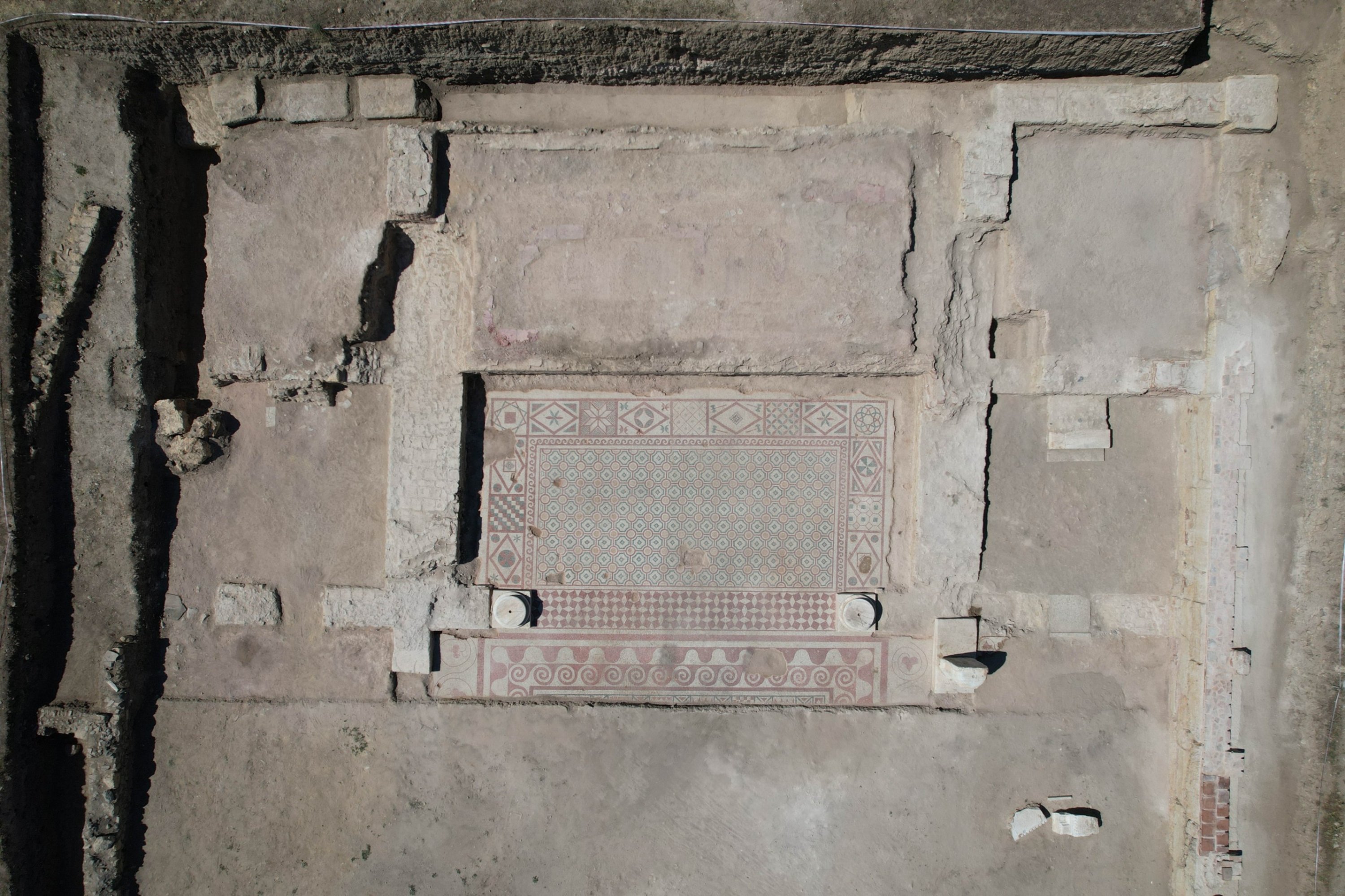
An aerial view of the excavation site at the ancient city of Pompeiopolis in the Taşköprü district of Kastamonu, northern Türkiye, Sept. 8, 2026. (AA Photo)
by Daily Sabah with AA Sep 08, 2026 12:26 pm

Türkiye's Culture and Tourism Minister Mehmet Nuri Ersoy has said archaeologists excavating the ancient city of Pompeiopolis in the Taşköprü district of Kastamonu have uncovered about 105 square meters (1,130 square feet) of well-preserved floor mosaics dating to the fourth century A.D., along with a head of Eros believed to date to the second half of the second century.

Ersoy made the announcement in a social media post on Tuesday about ongoing excavation, documentation and conservation work at the ancient site in the Black Sea region.

He said new traces spanning the Roman Imperial period through Late Antiquity were being uncovered at Pompeiopolis, highlighting discoveries made in the central nave of the site's basilica.

"We have uncovered approximately 105 square meters of very well-preserved floor mosaics dating to the fourth century A.D. and featuring geometric compositions," Ersoy said. "Moreover, the entire mosaic floor in the central nave has not yet been uncovered. Our excavations continue."
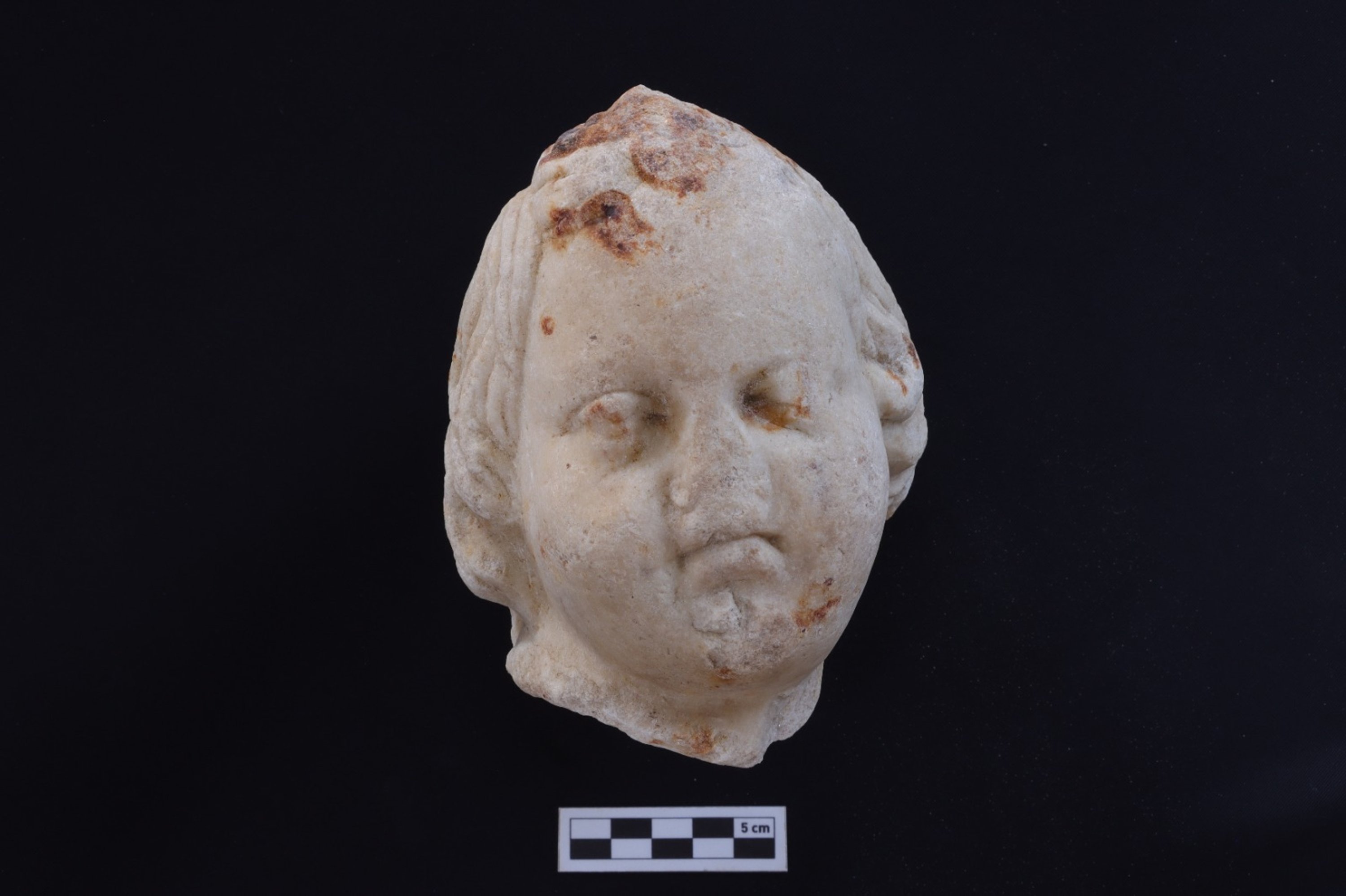
A head of Eros, the Greek god of love, discovered during excavations at the ancient city of Pompeiopolis in the Taşköprü district of Kastamonu, northern Türkiye, Sept. 8, 2026. (AA Photo)

He also announced the discovery of an Eros head dating to the second half of the second century A.D. as one of the notable finds from the 2026 excavation season.

Ersoy said the basilica's earliest construction phase is also believed to date to the second half of the second century. Ongoing excavation, documentation and conservation work is helping researchers build a more comprehensive picture of Pompeiopolis' urban and religious history, he said.

According to the Culture and Tourism Ministry, excavations at the basilica began for the first time in 2025 and have continued this year. Pompeiopolis was one of the major centers of the Paphlagonia region during the Roman Imperial period and served as a provincial capital.

Researchers believe the basilica's initial construction phase dates to around A.D. 150-160, based on its architectural characteristics, stratigraphic evidence and artifacts recovered during excavations.

The building subsequently underwent significant architectural and functional changes.

The Eros head discovered in the basilica's pastophorion, a room associated with the building's religious functions, is also dated to the second half of the second century A.D. The find offers new insights into the artistic and cultural environment of Pompeiopolis during the Roman Imperial period.

Pompeiopolis became an episcopal center in the fifth century A.D., underscoring its religious and administrative importance during Late Antiquity.

Architectural alterations, decorative elements and floor mosaics found in the basilica indicate that its later phase was connected to the Christianization of the city and its emergence as an episcopal center.

Conservation work on the mosaics uncovered during the 2026 excavations has been completed, with measures taken to preserve their current condition. However, archaeologists have yet to expose the entire mosaic floor in the central nave, and excavations are continuing to uncover the remaining sections.

The ongoing work at the Pompeiopolis Basilica is providing a more detailed understanding of the building's architectural and functional transformation from the Roman Imperial period through Late Antiquity.

Evidence from the basilica's earliest construction phase, the Eros head, Late Antique architectural elements and floor mosaics is helping researchers better understand the building's role in the urban and religious history of Pompeiopolis.

Excavation and conservation teams aim to further reveal the basilica's architectural layout and different phases of use, while documenting and preserving the remainder of its mosaic floors.


  • shortlink copied
  • Last Update: Sep 08, 2026 3:26 pm
    KEYWORDS
    archaeology kastamonu pompeiopolis excavations
    The Daily Sabah Newsletter
    Keep up to date with what’s happening in Turkey, it’s region and the world.
    You can unsubscribe at any time. By signing up you are agreeing to our Terms of Use and Privacy Policy. This site is protected by reCAPTCHA and the Google Privacy Policy and Terms of Service apply.
    No Image
    Water lilies dot Beyşehir Lake in Turkey's Konya
    PHOTOGALLERY
    • POLITICS
    • Diplomacy
    • Legislation
    • War On Terror
    • EU Affairs
    • News Analysis
    • TÜRKİYE
    • Istanbul
    • Education
    • Investigations
    • Minorities
    • Diaspora
    • World
    • Mid-East
    • Europe
    • Americas
    • Asia Pacific
    • Africa
    • Syrian Crisis
    • İslamophobia
    • Business
    • Automotive
    • Economy
    • Energy
    • Finance
    • Tourism
    • Tech
    • Defense
    • Transportation
    • News Analysis
    • Lifestyle
    • Health
    • Environment
    • Travel
    • Food
    • Fashion
    • Science
    • Religion
    • History
    • Feature
    • Expat Corner
    • Arts
    • Cinema
    • Music
    • Events
    • Portrait
    • Performing Arts
    • Reviews
    • Sports
    • Football
    • Basketball
    • Motorsports
    • Tennis
    • Opinion
    • Columns
    • Op-Ed
    • Reader's Corner
    • Editorial
    • Photo gallery
    • DS TV
    • Jobs
    • privacy
    • about us
    • contact us
    • RSS
    © Turkuvaz Haberleşme ve Yayıncılık 2021