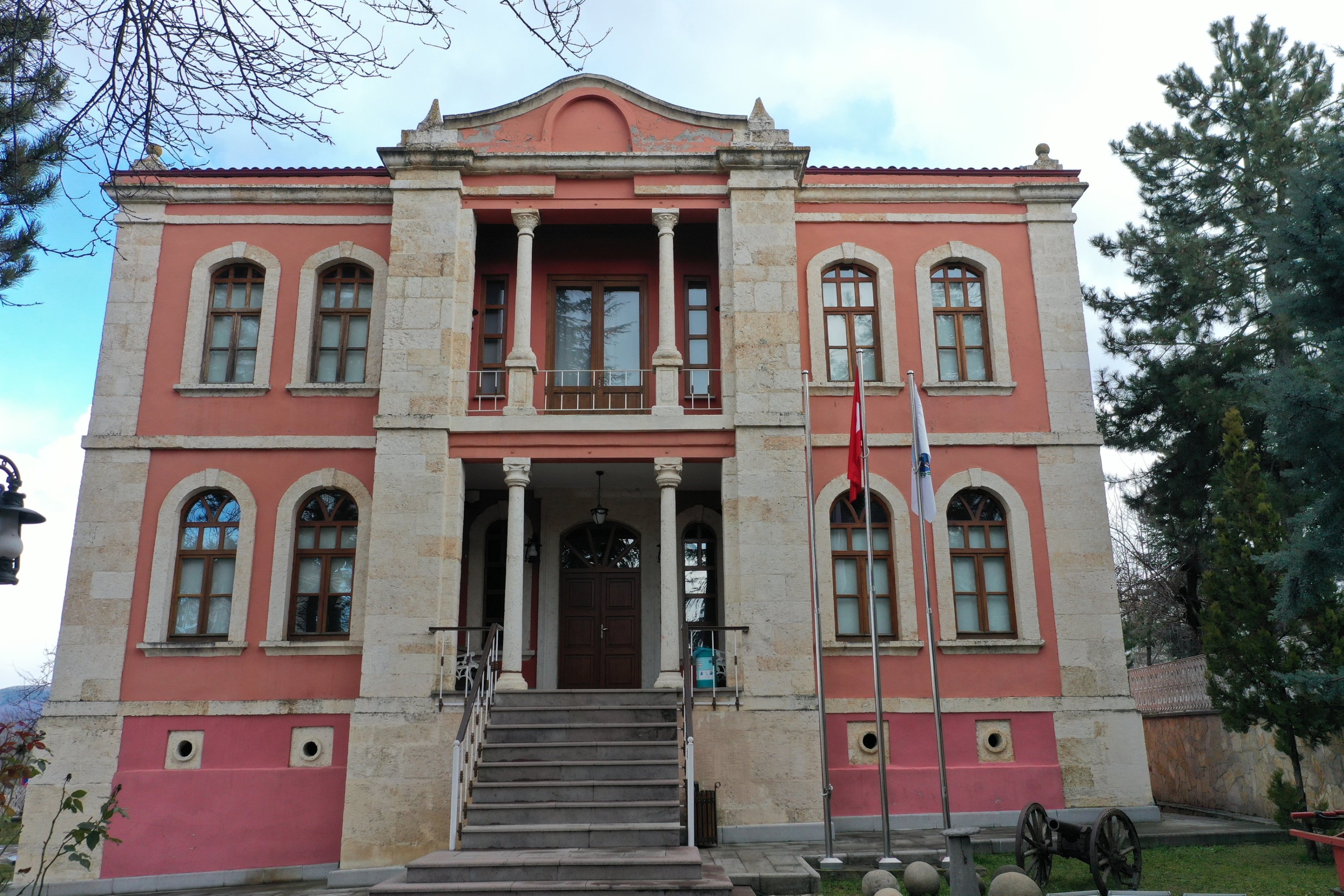
The Kent Tarihi Museum in Taşköprü in Türkiye's northern city of Kastamonu offers a glimpse into the history of Pompeiopolis, the ancient capital of the Paphlagonia region during the Roman era.
Originally built in the 1850s as the Redif Taburu Building, the structure was used by various institutions before being converted into a City Museum by the Taşköprü Municipality in 2017.
One of the museum's sections features an exhibition that uses geophysical and georadar methods to present the ancient city of Pompeiopolis, which dates back approximately 2,000 years.
Lütfi Erkut Gültekin, director of the museum, emphasized the significance of the museum in understanding Pompeiopolis's role in history. He explained to the Anadolu Agency (AA) that visitors can comprehensively understand the ancient city.
"To explore the capital of Paphlagonia, Pompeiopolis, the first place you should visit is the Taşköprü Municipality Kent Tarihi Museum. Here, we see an underground city visualization through geophysical and georadar methods. When you visit Pompeiopolis, you can understand exactly where you are from this room. Additionally, we explain why Pompeiopolis was the capital – its geographical location, strategic transit points, commercial routes, military significance, and the fact that it sits in the region’s lowest elevation valley. All these factors clarify why the city was established here," Gültekin said.
The museum also showcases the location of a villa in Pompeiopolis, one of the largest villas in Türkiye, along with other historical landmarks, such as the site of the Roman Theatre and the location where Aphrodite statues were found.
"The museum provides a summary of the region’s history, offering insights into what has happened in the entire Taşköprü area," Gültekin added.
As Pompeiopolis's history becomes more understood daily, Gültekin noted the museum has received positive feedback from visitors.
Associate professor Mevlüt Eliüşük from the Department of Archaeology at Karabük University is conducting excavations on behalf of the Ministry of Culture and Tourism.
"The museum is significant not only for local Turkish tourists but also as a vital source of foreign currency through international visitors, who we are targeting as our primary audience. We invite everyone to visit our museum and recommend they start their journey to discover the city from here," Gültekin concluded.