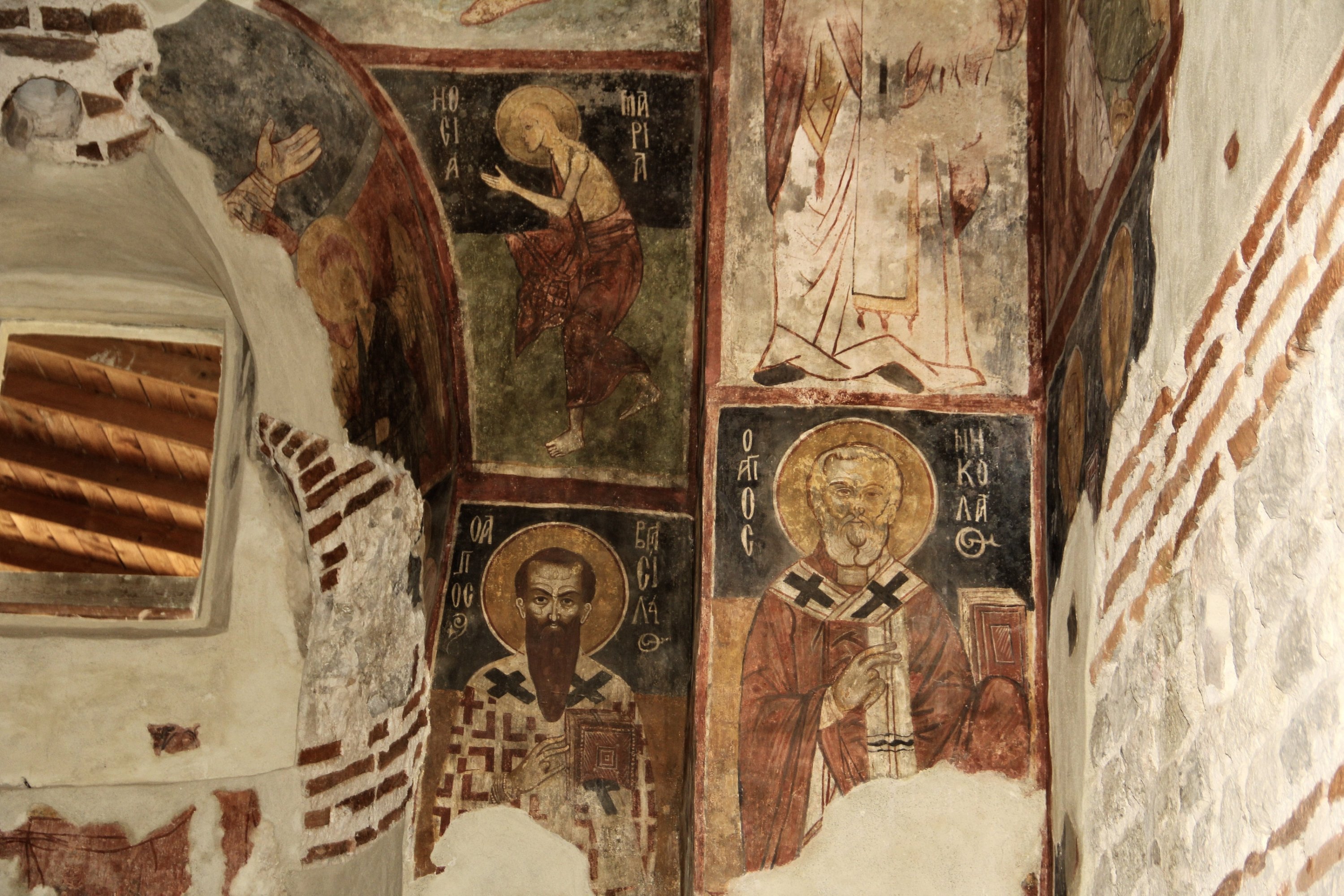
In Sinop, northern Türkiye, the 700-year-old historic church uncovered during excavations at the Balatlar Building Complex has been restored and now showcases wall paintings depicting scenes from both the Torah and the Bible, preserving traces of the past for present-day visitors.
The ongoing excavation of the Balatlar Building Complex, conducted with support from the Ministry of Culture and Tourism and Mimar Sinan Fine Arts University, has entered its 16th year.
So far, the excavations have uncovered many artifacts that shed light on the city’s history, including 1,600-year-old floor mosaics, a Roman Imperial bathhouse, sculpture fragments, various animal-shaped objects and numerous tombs.
Professor Gülgün Köroğlu, head of the Balatlar Building Complex excavation and a faculty member in the Art History Department at Mimar Sinan Fine Arts University, explained to Anadolu Agency (AA) that the Balatlar Building originally housed a Roman Imperial bath.
Parts of the original Roman building were later converted into a church. Köroğlu noted that the section they restored served as a church during four distinct periods.
The structure began functioning as a church in the 13th century and continued to be used as such until 1924.
Following the population exchange between Türkiye and Greece, when the Greek Orthodox community relocated to Greece, the church became privately owned. Köroğlu stated that until 2010, the building was used for purposes such as tobacco drying and as a workshop.
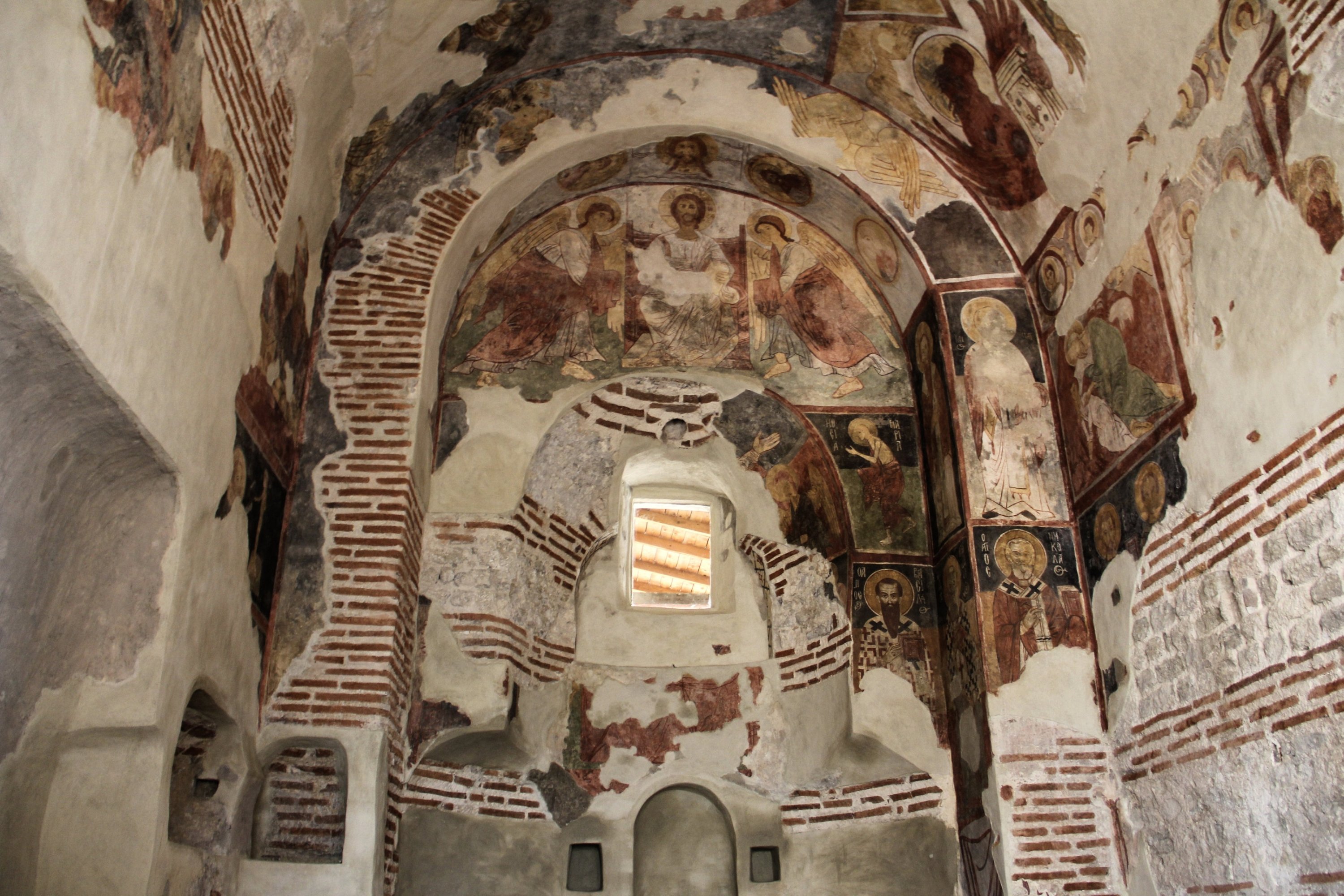
For the past 16 years, meticulous efforts have been underway to rediscover and restore the building and the project is nearing completion.
“We have restored the exterior and architectural elements over the past 16 years. The building no longer leaks water. The wall paintings were severely damaged, so we repaired and preserved them. We also constructed a protective roof,” she said.
The restoration of the church’s wall paintings has been completed, and the artworks are now under protection, while excavation continues in the graves located on the floor of the structure.
Köroğlu shared that they have succeeded in restoring and preserving the wall paintings illustrating the life of Jesus.
“At the top of the apse – the semicircular recess behind the altar – Jesus is depicted seated on a divine throne, conversing with Archangels Michael and Gabriel on either side. Below this, there is an image of Mary with one hand visible, shown with her arms outstretched as if embracing humanity. On the walls, we see religious officials with pilgrim badges. These figures represent key clergy who institutionalized Christianity, organized religious ceremonies and structured religious life. These are finely detailed icons, similar to portable paintings. We also see depictions of individual saints and female saints,” she explained.
The paintings also depict scenes from the Torah, such as the Prophet Abraham, including the episode of his sacrificing his son Isaac.
Köroğlu noted the strong theme of fear of the devil in Christianity, which is especially reflected in the paintings.
“The scenes particularly depict the defeat of the devil. Additionally, there are many representations of saints who heal illnesses. We also see ship graffiti. Why do people draw ship graffiti? Before embarking on long sea voyages, they pray for protection from storms and create these drawings as souvenirs. We find various such illustrations,” she said.