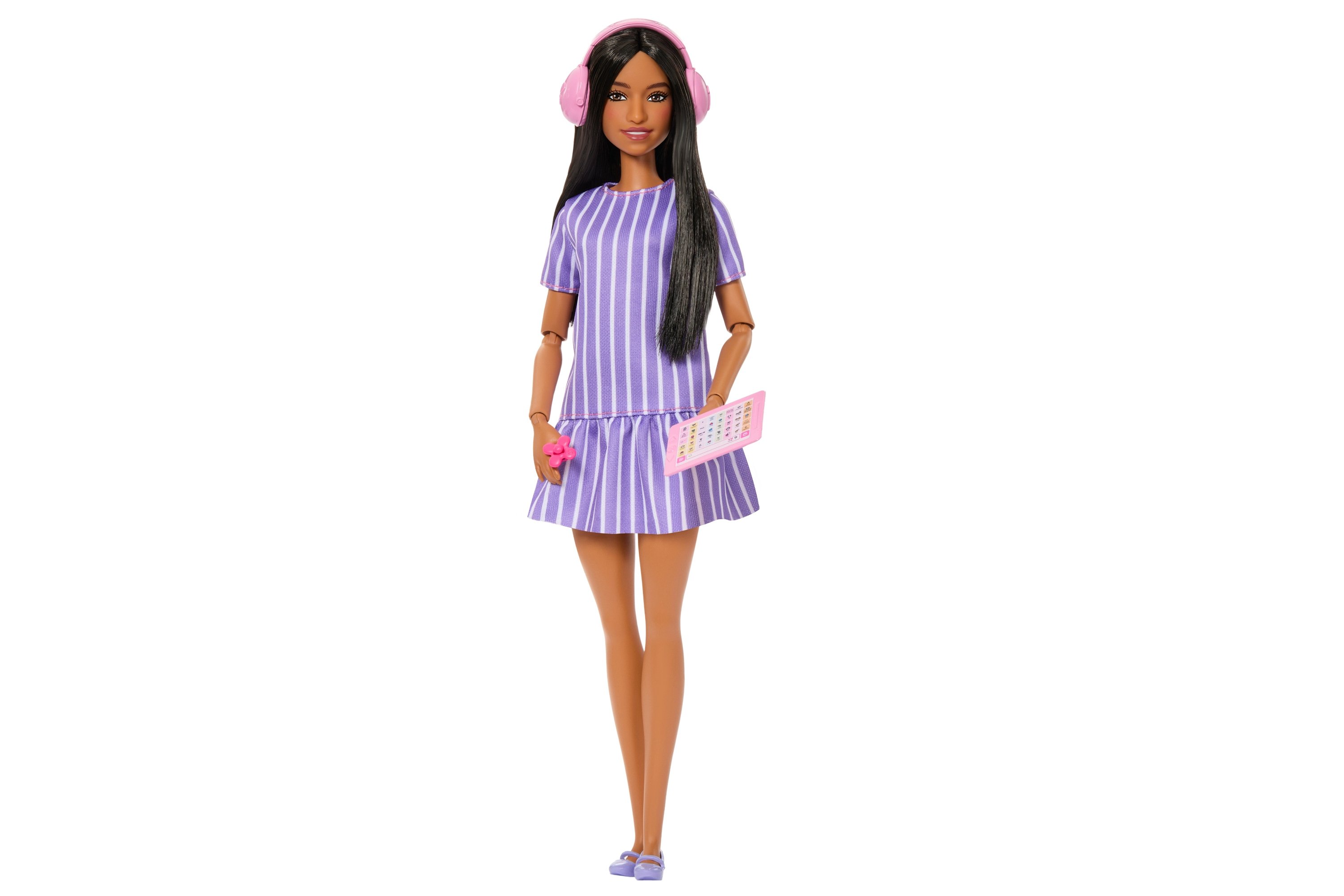
Mattel has introduced its first Barbie designed to represent autism, continuing its effort to expand diversity and inclusion across its popular doll range.
The Barbie line, which first introduced dolls with disabilities in 2019, already features Barbies with type 1 diabetes, Down syndrome and blindness, the U.S. company said in a statement late Sunday.
Autism is a complex and broad-spectrum neurodevelopmental disorder. It has multiple origins, primarily linked to a combination of predominantly genetic and environmental factors.
Mattel said it had developed its "first-ever autistic Barbie doll" with guidance from the Autistic Self Advocacy Network (ASAN), a disability rights organization seeking equal rights and greater visibility for autistic people.
The doll is designed "to represent common ways autistic people may experience, process, and communicate about the world," the El Segundo, California-based toymaker said.
Unlike traditional Barbie, the new doll has elbow and wrist joints, enabling it to make gestures some autistic people use to process sensory information or express excitement, Mattel said.
It was also designed with eyes gazing slightly to the side, "which reflects how some members of the autistic community may avoid direct eye contact."
The dolls come with a sensory stress-relief toy, noise-canceling headphones, and a tablet, the company said, adding that it has pledged to donate 1,000 of them to U.S. pediatric hospitals specializing in autism care.
Current scientific knowledge does not precisely identify all the causes of autism, which has left room for the circulation of numerous false theories, including alleged causal links with vaccines, excessive screen use, or taking paracetamol during pregnancy.