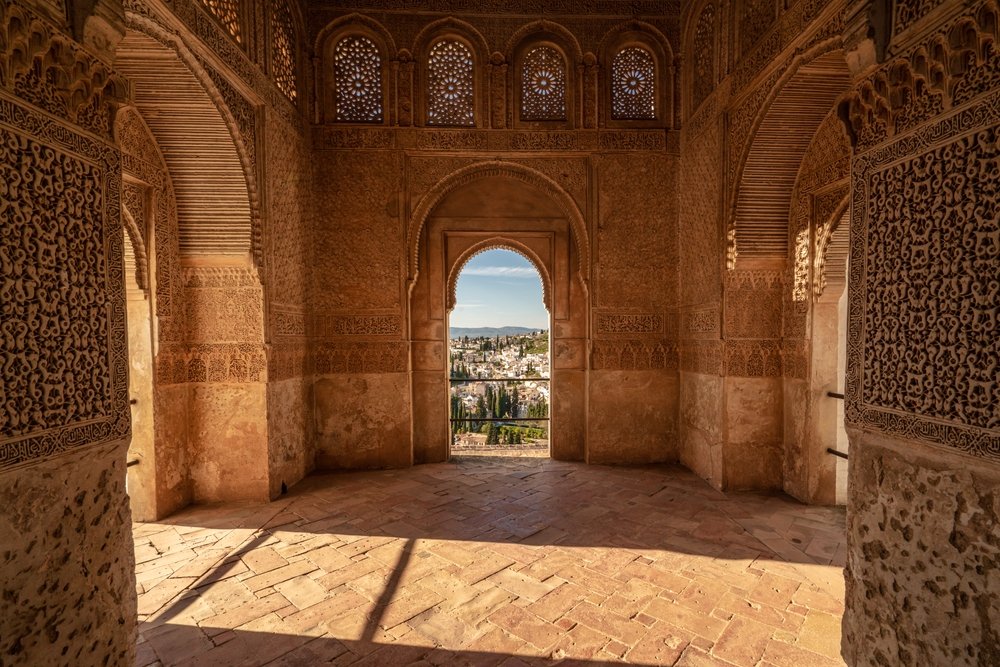
We have become remarkably skilled at constructing buildings that command the eye. Glass towers rise like polished screens, façades shift in color after sunset and algorithms can now generate forms that once existed only in the imagination. Yet, beneath this technological achievement lies a quieter question: as architecture becomes increasingly capable of producing images, can it still produce meaning?
A building is never merely a shelter. It is also an answer to a question every civilization has had to confront: what kind of beings are we?
For centuries, architecture answered that question through proportion, material, light and silence. Stone bore the marks of weather. Wood revealed its grain beneath the hand. Courtyards opened homes to the sky and the changing seasons. Fountains brought the sound of water into spaces of gathering and contemplation. Thresholds marked the passage from one world to another. These were not merely aesthetic choices. They reflected an understanding of human life as embodied, relational and finite.
Modern architecture has not forgotten beauty. It may, however, have forgotten intimacy.
The difference is subtle. A perfectly smooth surface can be beautiful without inviting the touch. A vast glass façade can offer spectacular views while leaving those inside strangely detached from the building itself. When every surface is optimized for efficiency, maintenance, speed and visual impact, architecture risks becoming another kind of interface: sleek, intelligent and increasingly difficult to remember.
But human beings do not inhabit spaces with their eyes alone.
We experience a room through temperature, sound, smell, texture and proportion. We remember the coolness of an old stone wall, the warmth of a wooden railing, the echo beneath a vaulted ceiling, the way sunlight falls across a worn floor. Such experiences remind us of something modern life often obscures: we are not disembodied minds moving through digital space. We are physical beings, dependent on light, air, touch, rhythm and place.
Perhaps this is where architecture can teach us something even more fundamental.
We did not create the world into which we were born.
Before the first architect drew a line, there was already stone beneath the ground, light above the horizon, water moving according to ancient rhythms, wood growing from the earth and air filling the lungs of every generation. Human beings can shape these materials, combine them and give them form, but we do not begin with nothing.
That distinction matters.
Modernity has given us extraordinary powers of construction, yet power can easily be mistaken for authorship. We design, calculate, manufacture and manipulate with unprecedented precision. But the more closely we look at the material world, the more clearly we encounter realities that precede our designs. The laws that govern light, the order within matter, the rhythms of nature and the conditions that make human creativity possible are not products of our invention.
Architecture, at its best, does not merely display what humanity can make. It also quietly reveals what humanity cannot.
A threshold polished by thousands of hands carries the traces of generations without the need for a written archive. A stone darkened by rain holds the memory of seasons. A wooden beam marked by age reminds us that everything material changes. The building becomes a witness. It does not simply stand in time; it bears the marks of time.
Human beings have always built as though matter could point beyond itself. The upward sweep of a dome, the ordered geometry of a courtyard, an opening deliberately turned toward the sky, the play of light across stone – these forms can awaken wonder because they suggest that the world is more than a collection of useful objects.
Beauty does not have to argue in order to transform us.
Sometimes, it simply makes us pause.
And in that pause, something important happens. The person who spends their days measuring, controlling and producing suddenly encounters something they cannot possess. A beam of sunlight enters a room without asking permission. The sky remains beyond ownership. A mountain does not need our admiration to exist. A stone carries within it a history older than any individual life.
Such moments can restore a forgotten posture: not domination, but reception; not possession, but gratitude.
This requires us to recover the idea that beauty can do more than entertain. Beauty can humble us. Proportion can restore a sense of order. Silence can make room for reflection. Light can remind us that we are receivers before we are creators.
If the world is received rather than self-created, perhaps its beauty should not be reduced to something merely available for consumption. The ordered world can become a sign. The harmony we perceive in proportion, light, matter and life can direct the mind beyond the object without requiring us to mistake the object for what lies beyond it.
This is where architecture touches something deeper than style.
The stone is not the meaning. The fountain is not the meaning. The light is not the meaning. Yet each can interrupt our assumption that the visible is all there is to reality.
The finest architecture, therefore, does not demand that we stop at the building. It can teach us to look beyond it.
When every city begins to resemble every other city, something more important than visual variety disappears. Cultural memory becomes thinner. Architecture has always carried the fingerprints of a civilization. A shaded passage can express hospitality and protection. A courtyard can create privacy without isolation. A public square can embody community. A fountain can turn movement into pause. A humble doorway can suggest that entering a place is not merely a physical act, but a social one.
This is why the future of architecture should not be framed as a choice between technology and tradition. Artificial intelligence, parametric design and advanced materials can help us create buildings that are more efficient, adaptive and environmentally responsible. The question is not whether machines should participate in design. They already do. The real question is whether the human being will remain the measure of what design is for – and whether we will remember that we are part of a reality we did not author.
The most intelligent building may not be the one that calculates the most variables. It may be the one that understands what cannot be reduced to a variable: why a person pauses beneath a tree, why sunlight through a window can alter a mood, why an old doorway can evoke a sense of belonging, and why a rough stone touched by the hand can feel more meaningful than a flawless surface.
Perhaps architecture’s deepest task is not to make us feel powerful.
Perhaps it is to make us attentive.
Attentive to matter. Attentive to one another. Attentive to time. Attentive to the limits of our own knowledge.
The buildings we remember most deeply are rarely those we merely admired on a screen. They are the ones we touched, entered, listened to and inhabited. They gave our bodies a place and, for a moment, gave our minds a sense of order.
A building may disappear from our photographic memory while remaining in the memory of our hands.
That is the paradox of stone.
It appears silent, heavy and permanent. Yet when shaped by human hands and inhabited across generations, it becomes a vessel for memory. It carries not only weight, but traces of encounter.
In a virtual world, architecture’s most important task may therefore be remarkably simple: to remind us that we are embodied, that we belong to a world we did not make and that our capacity to create exists within a reality greater than our designs.
Perhaps what architecture needs to recover is not an old style, but an old wisdom: that a place becomes meaningful when it awakens gratitude, wonder and belonging.
And perhaps that is why the oldest architectural traditions so often turned the human gaze upward, inward and beyond.
Not because stone itself possesses the sacred, but because stone, light, water and sky can remind us that existence is received before it is designed.
The world is not merely something to look at.
It is something to receive.
And what we receive with wonder may finally teach us the humility to recognize that reality is greater than our designs, our explanations and ourselves.