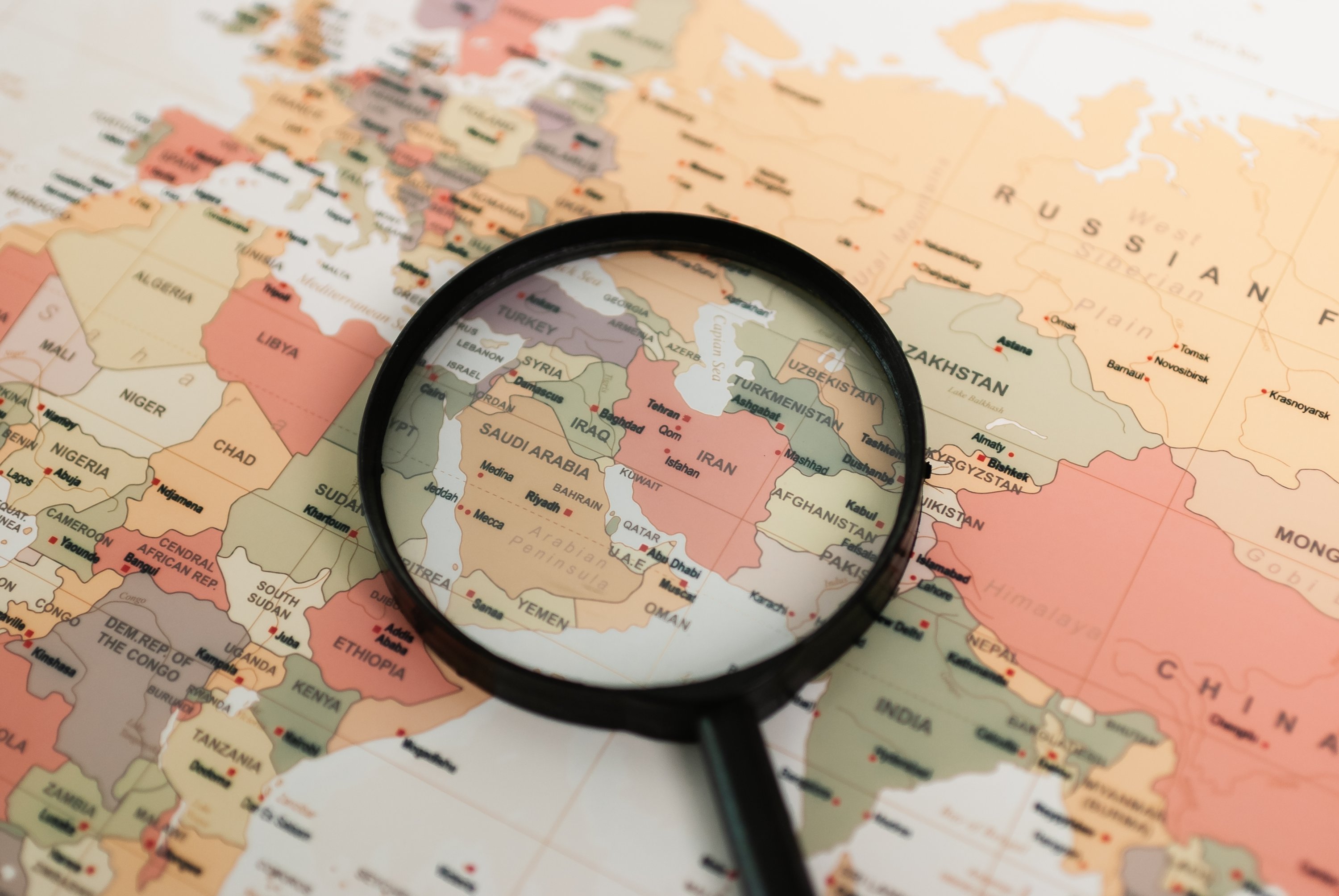
Across the world, many countries bear the names of the peoples who inhabit their lands. Names like Türkiye, Russia, Hungary, Albania, Mongolia, Bulgaria and the United Arab Emirates (UAE) directly reflect the identities of their native populations. But when we look deeper into the origins of many other countries’ names, we find echoes of humanity’s defining chapters – exploration, colonization, independence struggles and the legacy of the slave trade.
While some nations have changed their names to move away from colonial pasts, many continue to use names that reflect significant political and cultural milestones in human history.
The age of geographic discovery shaped not only the map but also the names of many lands. European explorers, eager to claim new territories, often replaced indigenous names with new ones inspired by their own languages and visions. For centuries, explorers dreamed of finding the "unknown southern land" – terra australis incognita in Latin – which eventually inspired the name Australia in the early 19th century.
New Zealand’s name, meanwhile, traces back to Dutch explorers who called it “Nieuw Zeeland,” after a region in their homeland, a name that slowly evolved into the one we know today.
When Italian navigator Christopher Columbus reached the Americas at the end of the 15th century, Europe’s fascination with this "New World" surged, shaping many names. In Venezuela, explorers noticed wooden houses built on stilts, reminiscent of Venice, Italy and so the country came to be known as “Little Venice,” or Venezuela.
Centuries later, Liberia’s name emerged from the Latin liber, meaning “free,” marking its foundation as a home for freed slaves from the U.S., reflecting a painful yet hopeful chapter of history.
The legacy of exploration extended beyond the Atlantic. Indonesia, long a Dutch colony in Southeast Asia, owes its name to the Greek words Indos (India) and nesoi (islands), together meaning “Indian islands.”
Several countries owe their names to prominent historical figures involved in their discovery, conquest, or governance. South America’s Colombia, for instance, directly honors Columbus. Similarly, the continent’s name, America, commemorates Amerigo Vespucci, the Italian navigator who identified the newly found lands as a separate continent.
Bolivia is named after Simon Bolivar, a revolutionary leader pivotal to South America’s fight for independence from Spain in the early 19th century.
This practice is not limited to the Americas. The Philippines carries the name of King Philip II of Spain. The Marshall Islands were named after British captain John Marshall. The Seychelles reflect the influence of French statesman Jean Moreau de Sechelles.
Even beyond Europe, names carry historical legacies. Mozambique’s name originates from an island once governed by Arab trader Musa bin Bik before the Portuguese arrival in the 16th century.
Colonial powers also named territories after abundant natural resources:
Argentina’s name stems from argentum, the Latin word for silver, a nod to the region’s early silver wealth.
Brazil’s name comes from the pau-brasil tree, a valuable timber that caught Portuguese explorers’ attention.
Cameroon’s name traces back to Rio dos Camaroes - the “River of Shrimp” – named by Portuguese colonizers for the shrimp-rich Wouri River.
Ivory Coast, or Cote d’Ivoire, reflects the historic ivory trade that Europeans established there in the 15th century.
Before colonization, Indigenous peoples had their own names for the lands they lived on and some of these have survived to this day. Canada likely derives from "kanata," a native word meaning “village” or “settlement.” Haiti’s name evolved from "ayiti," meaning “mountainous land,” preserving its Indigenous roots.
In West Africa, Ghana’s name means “warrior king,” a title historically used by local rulers long before European influence.
Some countries’ names highlight their geography rather than ethnicity. Sierra Leone, named by Portuguese explorers as Serra Leoa, meaning “Lion Mountains,” reflects the region’s topography. Montenegro, meaning “Black Mountain,” similarly describes the rugged landscape of the Balkans.
Languages like Portuguese, Latin and Arabic have also left their mark. Bahrain’s name means “two seas” in Arabic. Sudan comes from Bilad al-Sudan, or “land of the Black people.” The Comoros Islands were named after the Arabic word kamer, meaning “moon,” inspired by their crescent shape.