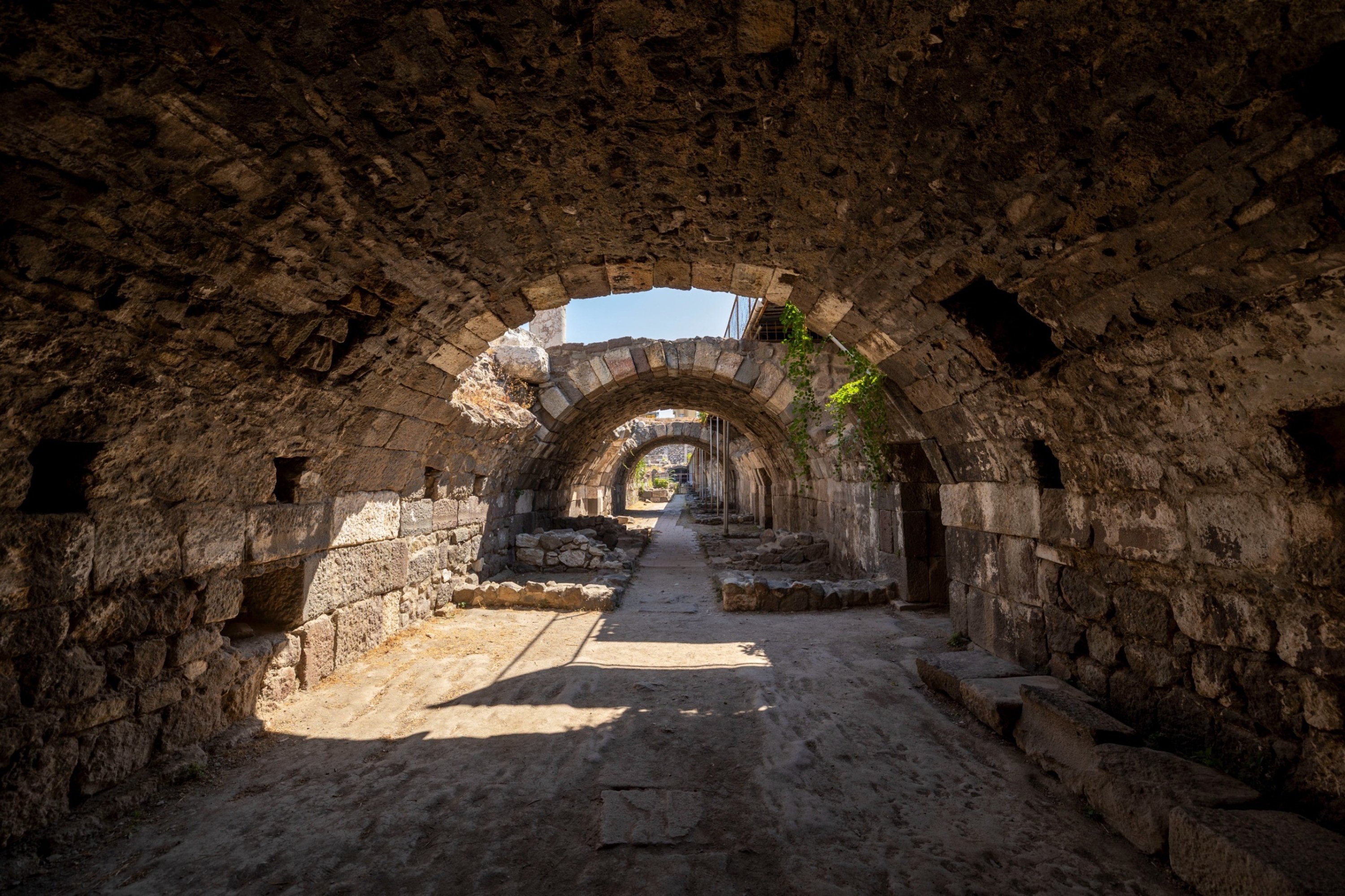
Archaeologists excavating the ancient city of Smyrna in the historic center of Türkiye's Izmir have uncovered three rooms dating to Late Antiquity, along with previously undocumented wall paintings, according to the Izmir Metropolitan Municipality.
The excavations at the agora of Smyrna are being conducted on behalf of Izmir Katip Çelebi University with permission from the Ministry of Culture and Tourism.
The three newly identified rooms were found as archaeologists continued excavating a mosaic floor uncovered last year. Two of the rooms have mosaic floors, while the third has a marble floor, the municipality said.
Excavations around the agora and the ancient theater of Smyrna also revealed wall paintings that archaeologists had not previously encountered at the site.
Professor Akın Ersoy, a faculty member in Izmir Katip Çelebi University’s Department of Turkish-Islamic Archaeology and head of the excavation, said the newly uncovered rooms share characteristics with the Terrace Houses at the ancient city of Ephesus.
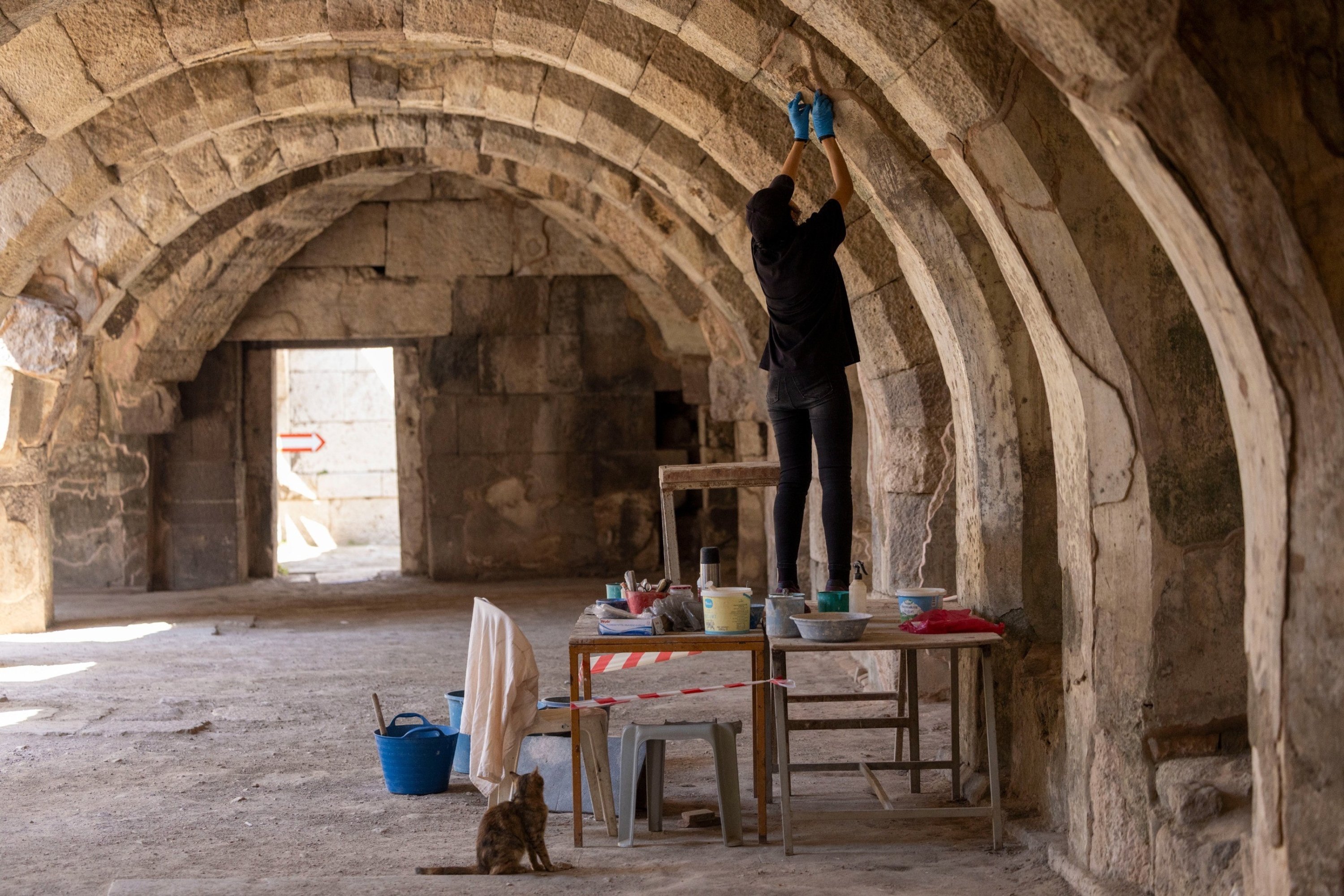
The structures may have served a public function, Ersoy said.
“We encountered wall paintings in these rooms for the first time,” Ersoy said. “We had never come across them before in the Smyrna Agora or around the theater.”
The rooms date to the fifth and sixth centuries A.D., a period known as Late Antiquity, Ersoy said.
The division of the Roman Empire in A.D. 395 and the spread of Christianity brought major changes to the structure of cities, he said. The new discoveries are providing information about how Smyrna changed during that period.
The excavations also traced part of an ancient water channel dating to the Roman period that is believed to have carried water for nearly 2,000 years.
Ersoy said Smyrna's water needs during the Roman period were met through channels connected to springs. Archaeologists have so far followed approximately 150 meters (492 feet) of the channel but have not yet located its source.
There may have been a spring near the Namazgah Bath and Kurşunlu Mosque, south of the agora, said Ersoy.
According to Ersoy, water traveled along the channel before reaching the agora of Smyrna.