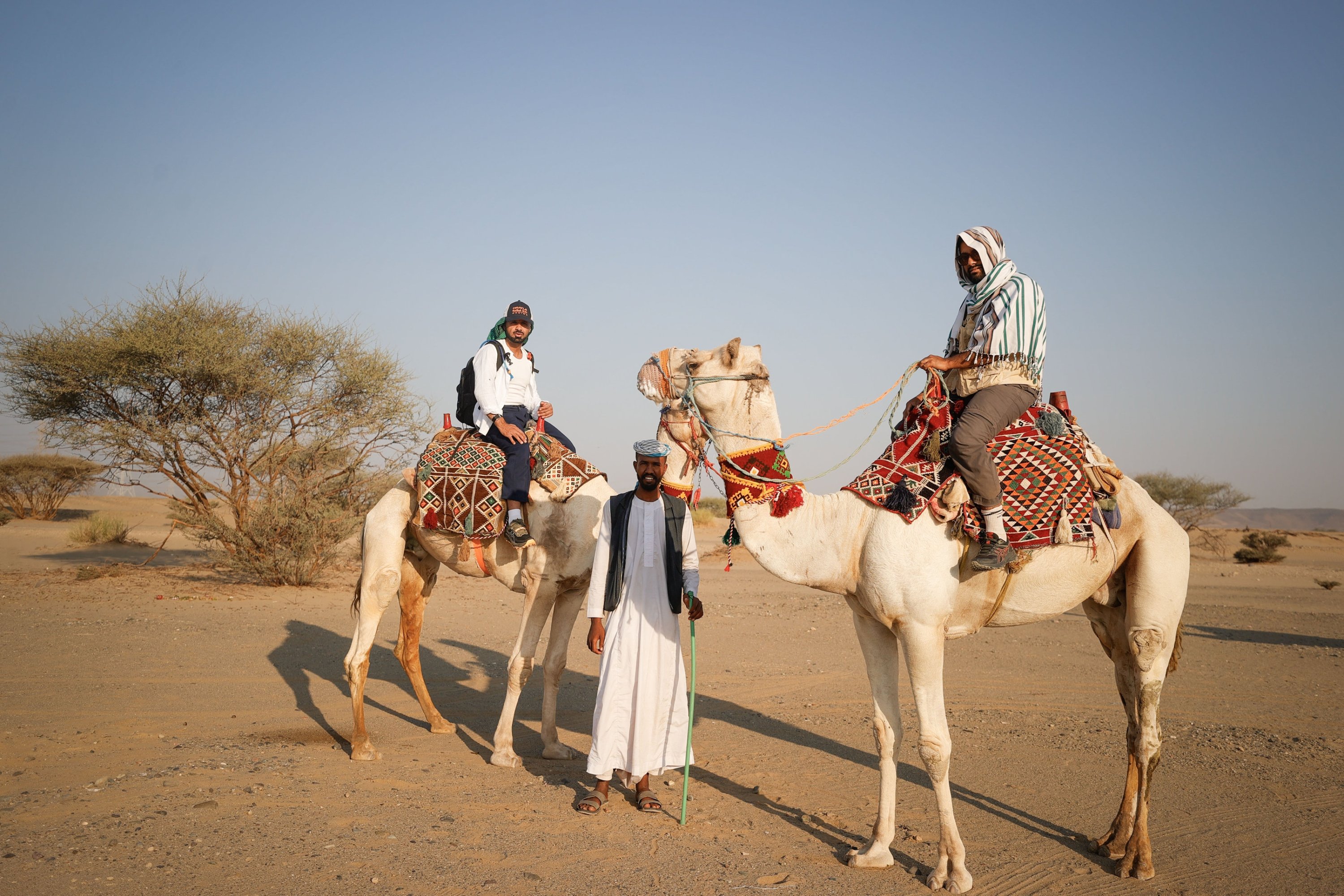
Muslims from different countries gathered to trace the path of Prophet Muhammad’s migration (Hijrah) from Mecca to Medina in 622. They completed a weeklong journey, experiencing the route’s historical and spiritual significance.
The expedition was organized by the U.K.-based Hijrah Hub, which arranged the journey along the Hijrah route with expert guides. Covering approximately 450 kilometers (279.6 miles) between Mecca and Medina, the team completed 315 kilometers along the traditional route. Participants alternated between walking, riding camels and traveling by vehicle to cover the distance.
Some 15 participants from around the world walked in the footsteps of Prophet Muhammad and his companions, visiting key locations along the route and gaining an immersive experience of the historical and spiritual significance of the Hijrah.
Upon reaching Medina after the challenging journey, the participants were warmly welcomed with roses and prayers.
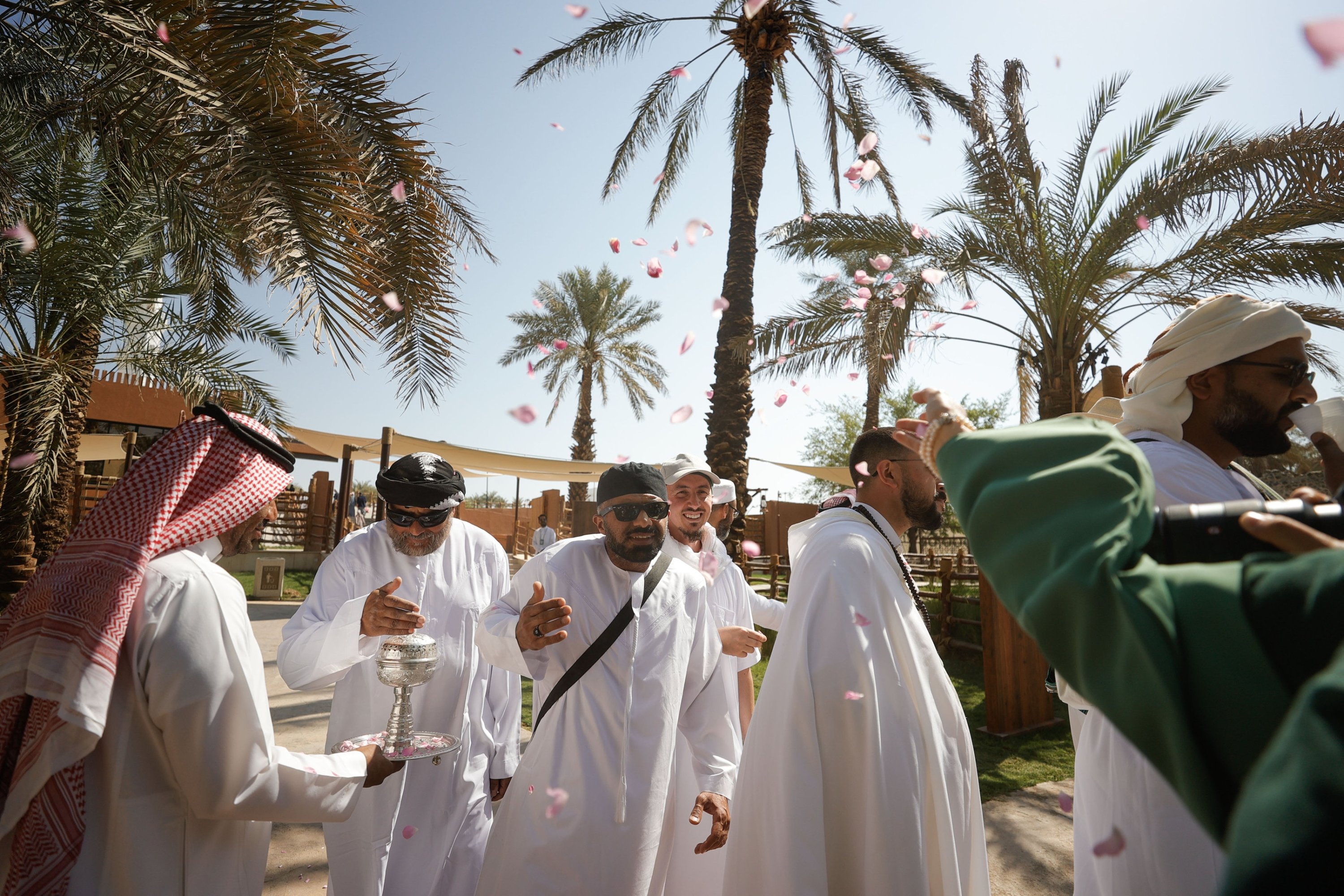
Their first stop in Medina was the Quba Mosque, where Prophet Muhammad stayed during his migration. As the first mosque in Islamic history and partially built by the Prophet himself, it holds profound spiritual significance.
The group then visited Al-Masjid an-Nabawi, the Prophet’s Mosque, which also houses the graves of Prophet Muhammad, Caliph Umar and Caliph Abu Bakr.
Waseem Mahmood, one of the founders of Hijrah Hub, shared his emotions with Anadolu Agency (AA) just before arriving in Medina. Mahmood described the journey as the most intense and profound of the three walks he had completed so far. “We rejoiced, cried, felt moved and celebrated. Now, I feel only excitement and gratitude. By stepping into the city of the Prophet, I wish to present this small pilgrimage and our intention to follow in his footsteps before Allah,” he said.
Telhat Sultan, who joined the journey from the U.K., reflected on the physical and mental benefits of the walk. Noting the busy pace of daily life, Sultan said the training walks allowed him to slow down, reflect and focus on what truly matters.
“I have type 1 diabetes, and astonishingly, I haven’t needed insulin for the past five days. Before this journey, I was injecting insulin four times daily. But walking through the desert, eating healthy foods and experiencing spiritual elevation helped me manage my condition without insulin,” Sultan explained.
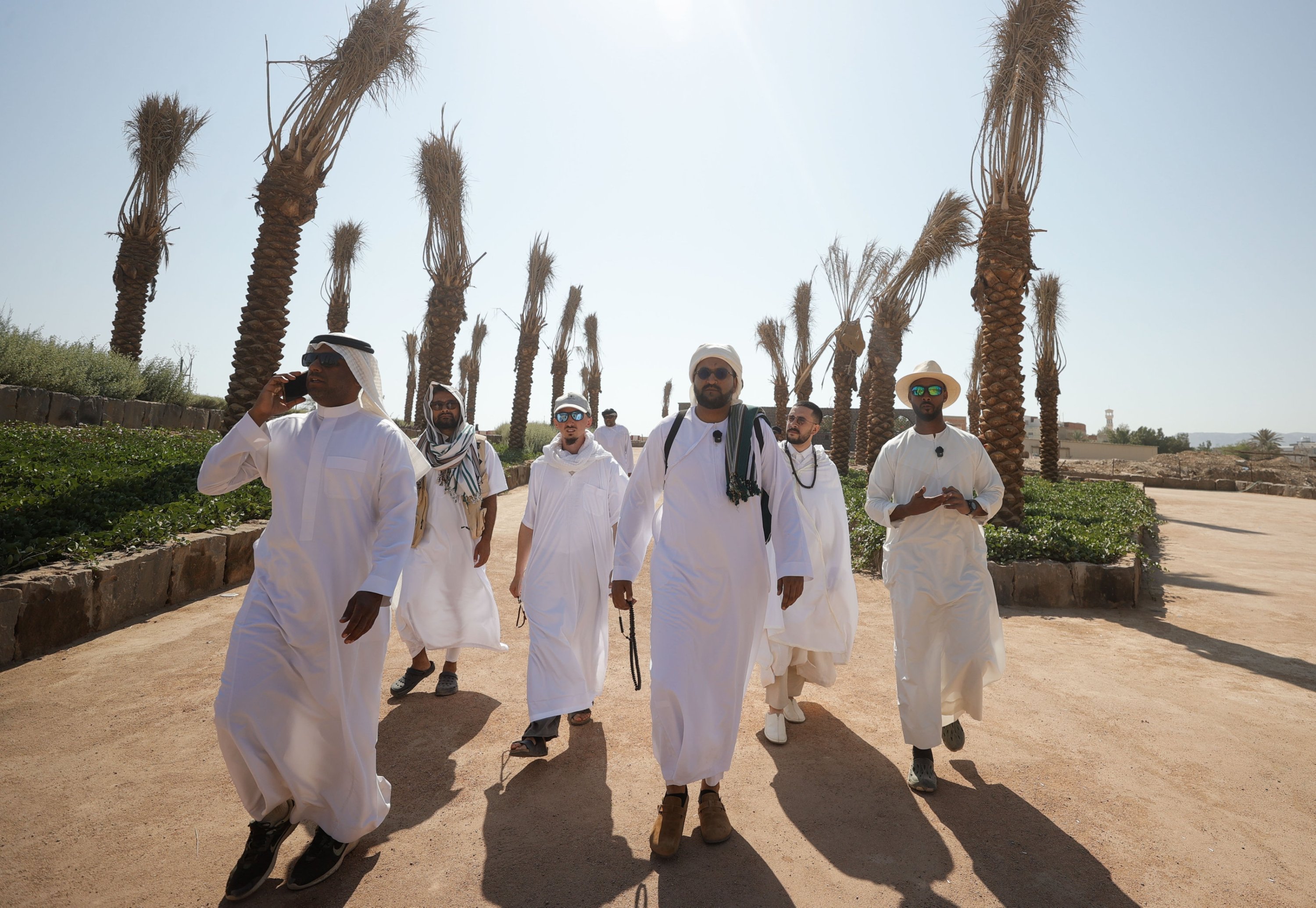
He added, “This experience is as spiritually valuable as Hajj and Umrah. I wish more people could have this opportunity because it offers countless benefits for the soul, body and mind.”
Another participant, Muhammed Settar, described the journey as an indescribable emotional experience. Excited to reach Medina, Settar said: “I woke up early, feeling real joy. We walked for days, spent long hours in the desert and slept in tents. There was immense blessing, brotherhood and sharing. We ate, prayed and walked together. It was a deep spiritual reflection. I felt detached from the world and connected to my soul. This journey marked a turning point in my life.”
Though sad that the journey ended, Settar was overjoyed to enter the city of the Prophet Muhammad. “We walked through mountains, valleys and deserts just as the Prophet did. Even for us, it was not easy, and yet, he had none of the conveniences we enjoyed, such as vehicles or prepared food. This deepened our love and respect for the Prophet,” he said.