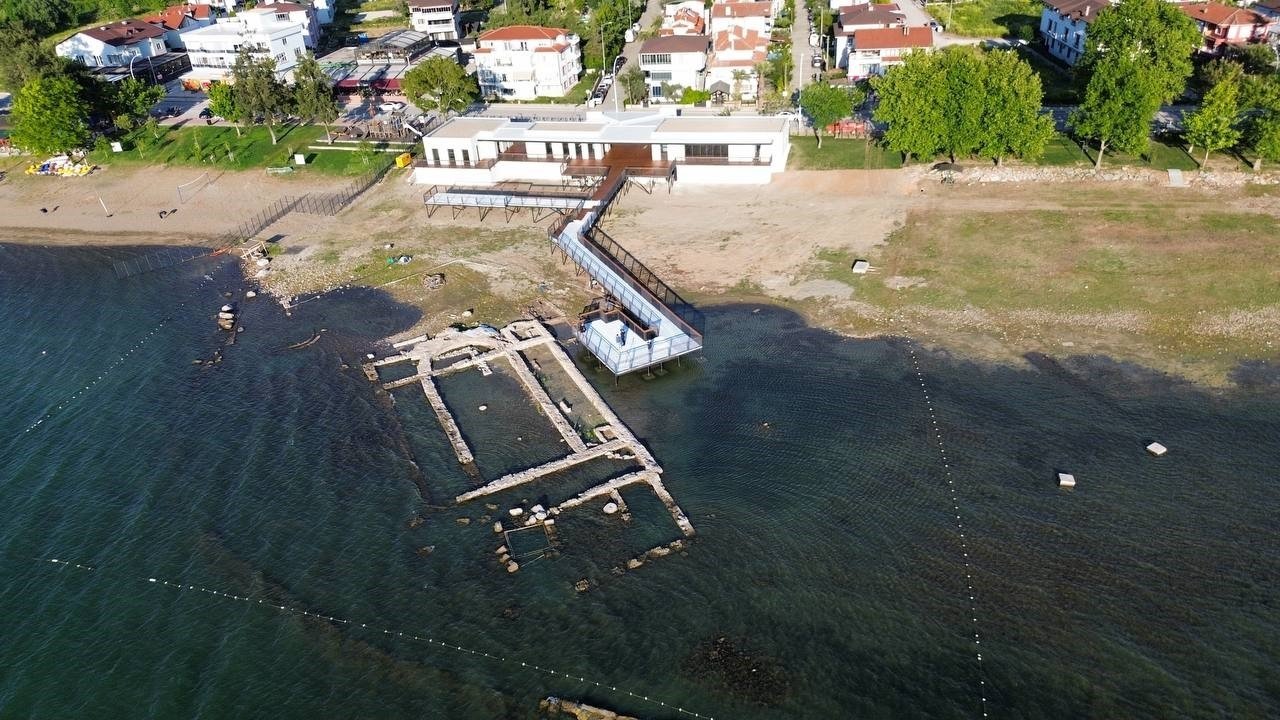
Soon, the small Turkish town of Iznik (Nicaea) will become the center of global Christian attention as Pope Leo XIV is set to visit from Nov. 27 to Nov. 30 to commemorate a council held nearly 1,700 years ago.
It was in Nicaea that the Nicene Creed was established as a decisive effort to unify the early Church and overcome its internal divisions. The pope hopes his visit will resonate with that same message of unity.
On Oct. 7, he declared: “It is a journey that Pope Francis wanted to make. For all Christians, it will be a moment of genuine unity in faith. This historic moment should not be missed. But it is not about looking back; it is about looking forward.”
Pope Francis, who died on April 21, 2025, had publicly expressed his wish for such a visit on June 28, 2024, when he received a delegation from at the Vatican.
In November 2024, he repeated his wish during a meeting with members of the International Theological Commission, stating: “I am thinking of going there (Nicaea); this council constitutes a milestone in the journey of the Church and also of all humanity.”
The story over Iznik goes back to 313 C.E., when Constantine I, the first Christian emperor, issued the Edict of Milan, legalizing Christianity across the Roman Empire. Christians were then able to practice their faith freely.
“There can be no doubt that, from 312 C.E. onward, Constantine favored the Christian Church and that he offered it considerable wealth. He clearly became deeply involved in the religious controversies of the age, and he favored Christians in the employ of the state,” historian Timothy E. Gregory wrote in his 2005 book "A History of Byzantium."
Twelve years after the Edict of Milan, the First Council of Nicaea convened in 325 C.E. It was the first universal Christian council, organized at the call of Constantine I. Bishops from different regions attended, and the result was the Nicene Creed - the first official declaration of Christian faith.
According to EBSCO, a research platform, “After the Bithynian kingdom had been bequeathed to the Romans (74), Nicomedia (Nicaea) was the capital of their province of Bithynia-Pontus; and in 29 it became the headquarters of the provincial assembly and its imperial cult.”
Nicaea was an important center of the Roman Empire, serving as a bridge between its eastern and western regions. Its location allowed easy access for bishops attending the council.
Dr. Paul Gavrilyuk, president of the International Orthodox Theological Association, confirmed during his visit to the Vatican in June that the council sought to heal divisions in the Church and restore unity, emphasizing that the meeting between the pope and the patriarch marked “incredibly important steps toward Church unity.”
“They succeeded in proclaiming one creed, and that is the Nicene-Constantinople Creed we still say at Mass and worship,” he added.
Just as the First Council of Nicaea sought to promote unity among Christians, recent popes have worked to strengthen ties between churches. Pope Francis, for example, maintained close communication with the representatives of the Orthodox doctrine throughout his 13-year papacy.
Before him, Popes Benedict XVI and John Paul II also addressed divisions. In 2009, Benedict XVI reached out to the Russian Orthodox Church, fostering dialogue and expressing hope for closer communion through a letter to Patriarch Kirill of Moscow.
During the Jubilee Year 2000, John Paul II issued a “Request for Pardon” for the sins and mistakes committed by Christians over the centuries, including the divisions that separated Christian communities. He recognized the violence and mistrust that had emerged in the name of religion and called on the faithful to seek healing and reconciliation.
Following the example of his predecessors, Pope Leo XIV expressed his commitment to bridging the historic divide, declaring: “I assure you of my desire to persevere in the effort to restore full visible communion between our churches.”
By returning to the land where Christian unity was first proclaimed, the upcoming visit to Nicaea is expected - as Pope Leo previously stated - to strengthen dialogue between the Eastern and Western Churches, draw global attention to Türkiye’s historical role in Christian heritage, and highlight the ongoing work of Church leaders in promoting unity.