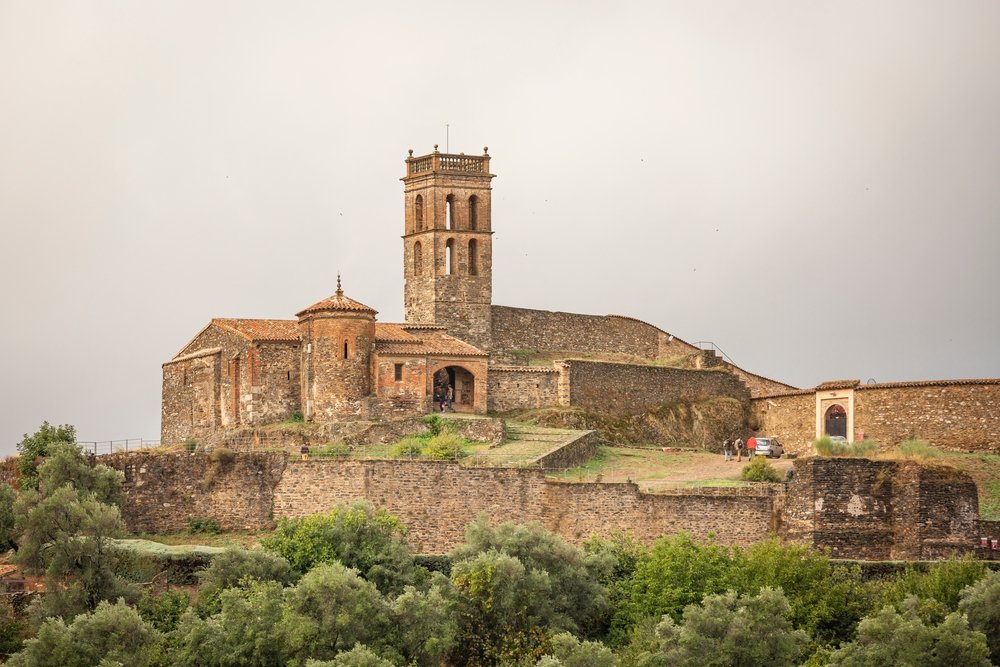
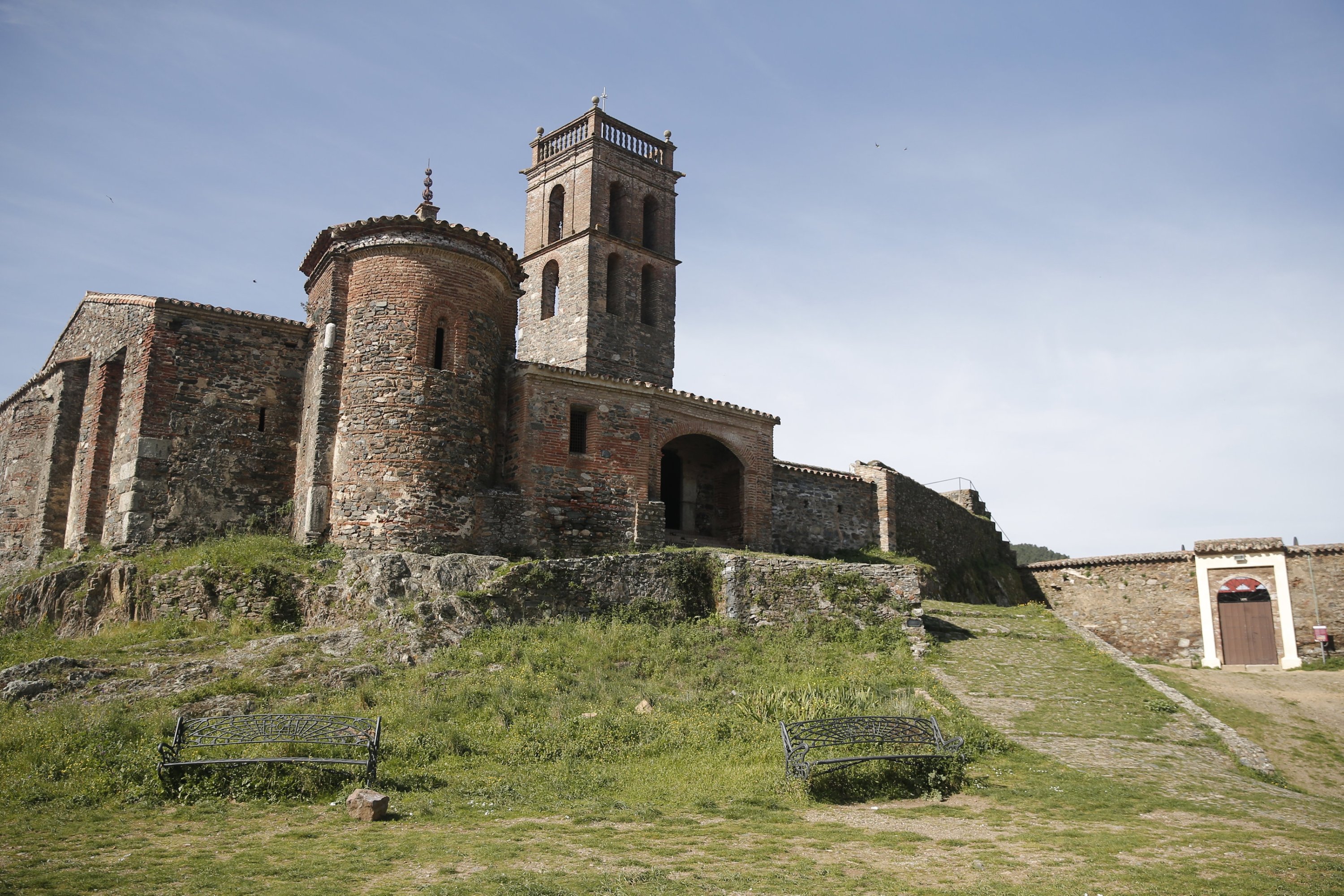
Perched on a hilltop in southwestern Spain, the Almonaster la Real Mosque stands as one of Europe’s oldest surviving rural mosques, carrying the legacy of Andalusia into the present day.
Built during the ninth and 10th centuries under Muslim rule in Andalusia (711-1492), the mosque remains almost completely intact. Historians say it was constructed during the reign of Abd al-Rahman III, one of the most influential rulers of Andalusia. Today, it is considered the only rural mosque in Spain that has survived for more than a millennium largely in its original design.
The mosque served a Muslim community for about four centuries before the town was captured by Christian forces in the 13th century. Although the building suffered damage and was later converted into a church, many traces of its Islamic past remain visible. Today, it stands as a major cultural landmark and one of the most treasured historical sites in the region.
Located above the small town of Almonaster la Real, which has a population of about 1,000 and lies within the province of Huelva, the mosque overlooks a vast natural park landscape. Its hilltop setting gives visitors sweeping views of the surrounding countryside and adds to its significance for both historians and modern Muslim visitors.
Spanish retiree Rafael Hernandez Mancha, a former high school teacher who discovered Islam 38 years ago, said he chose the mosque as the place to recite the Islamic declaration of faith.
Speaking to Anadolu Agency (AA), Hernandez said the building has an extraordinary atmosphere that makes every visit feel like a journey through time.
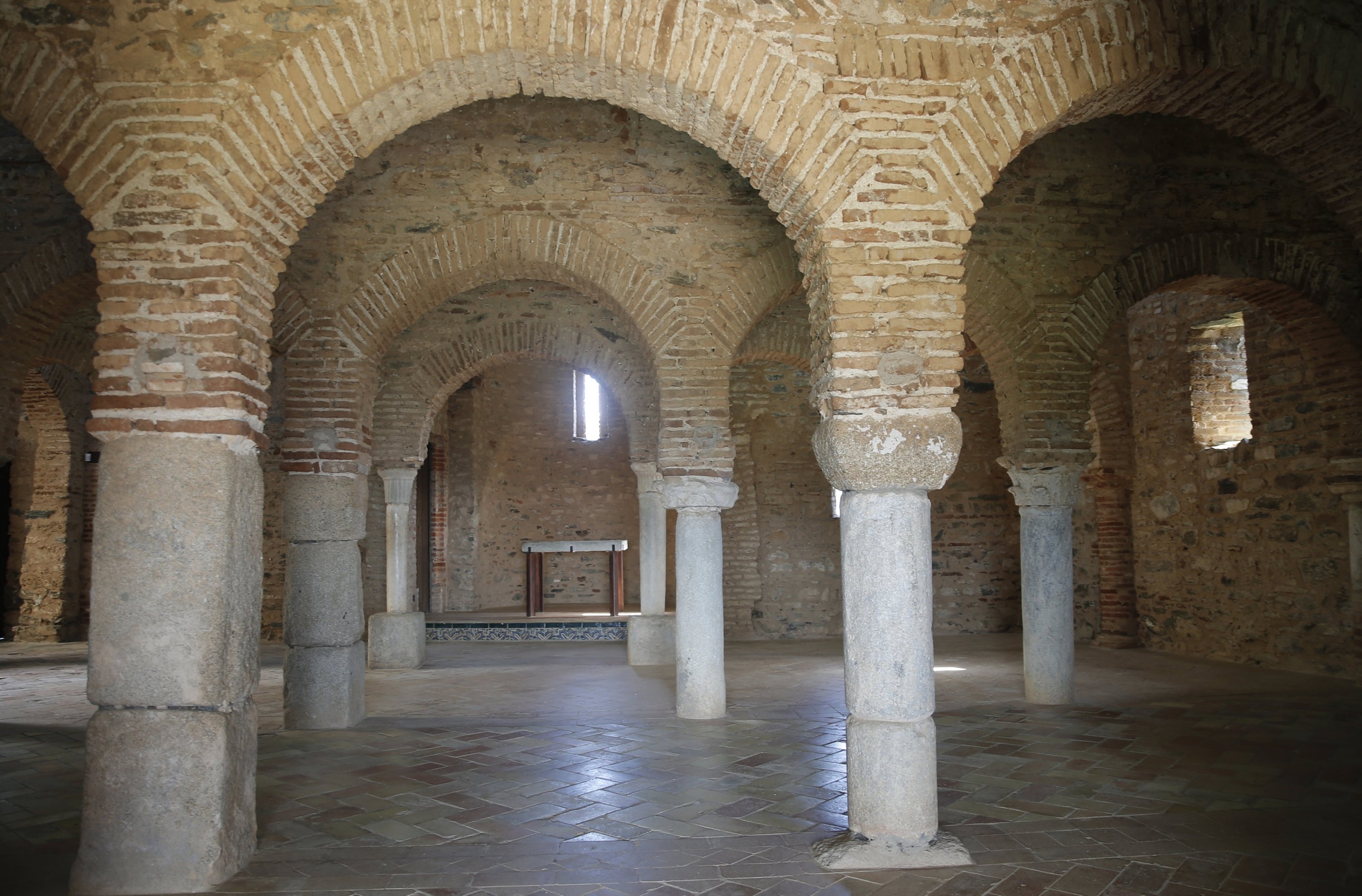
Near the entrance, a thousand-year-old inscription remains visible on one of the columns. The Arabic phrase reads: “La ilaha illallah, Muhammad rasulullah,” “There is no god but God and Muhammad is the messenger of God.”
Hernandez said he still becomes emotional reading the inscription, which has endured despite the passage of centuries.
After the fall of Muslim rule in Iberia, Catholic monarchs converted the mosque into a church, he said, pointing out architectural elements that were altered or damaged. He noted how Roman-era construction pieces used in the mosque, along with Visigothic materials and Umayyad-style horseshoe arches, were cut or modified during later renovations.
Hernandez also highlighted the lasting cultural impact of Andalusia.
“When you look at the Spanish dictionary, nearly 10% of the words are of Arabic origin,” he said.
He added that many place names in Spain also reflect that heritage, including Seville, Cordoba, Granada, Toledo and the Guadalquivir River.
Even modern Spanish surnames carry Arabic roots, he said. The last name of world No. 1 tennis player Carlos Alcaraz, for example, derives from an Arabic word meaning “cherry.”
Hernandez said Spain generally views its Islamic-era history in a positive light, noting that Arabic-derived names have recently become fashionable.
For residents of Almonaster la Real, the mosque remains a central gathering place.
“It is part of our daily lives. It’s as important as our home,” said Maria Jose Martin Anarte, the town council member responsible for tourism and cultural affairs.
More than 100,000 tourists visit the centuries-old mosque each year, Anarte said.
“The site is always open, and we have never experienced vandalism,” she added. “For the people of this region, it is a gift passed down to us, something we must protect and care for.”
Although the building does not host regular religious services, Anarte said Muslim visitors are welcome to pray there.
“There is no routine worship here linked to any specific religion,” she said. “But if any Muslim wishes to come, lay down a prayer mat and pray, there is absolutely no problem.”
For the past 25 years, the town has also hosted an annual Islamic Culture Conference (Jornadas de Cultura Islamica) each October. Scholars and specialists from cities such as Granada, Seville and Madrid give lectures and seminars, while music, gastronomy and other cultural events take place.
During the festival, Muslim visitors often gather at the mosque for communal prayers.
“The mosque is our cultural meeting place,” Anarte said.
She added that the town understands the significance of preserving a structure dating back to the 9th century.
“You can’t just look at a building like this from the outside,” she said. “As soon as you enter, it pulls you in.”