Daily Sabah logo

Politics
Diplomacy Legislation War On Terror EU Affairs Elections News Analysis
TÜRKİYE
Istanbul Education Investigations Minorities Expat Corner Diaspora
World
Mid-East Europe Americas Asia Pacific Africa Syrian Crisis Islamophobia
Business
Automotive Economy Energy Finance Tourism Tech Defense Transportation News Analysis
Lifestyle
Health Environment Travel Food Fashion Science Religion History Feature Expat Corner
Arts
Cinema Music Events Portrait Reviews Performing Arts
Sports
Football Basketball Motorsports Tennis
Opinion
Columns Op-Ed Reader's Corner Editorial
PHOTO GALLERY
JOBS ABOUT US RSS PRIVACY CONTACT US
© Turkuvaz Haberleşme ve Yayıncılık 2025

Daily Sabah - Latest & Breaking News from Turkey | Istanbul

  • Politics
    • Diplomacy
    • Legislation
    • War On Terror
    • EU Affairs
    • Elections
    • News Analysis
  • TÜRKİYE
    • Istanbul
    • Education
    • Investigations
    • Minorities
    • Expat Corner
    • Diaspora
  • World
    • Mid-East
    • Europe
    • Americas
    • Asia Pacific
    • Africa
    • Syrian Crisis
    • Islamophobia
  • Business
    • Automotive
    • Economy
    • Energy
    • Finance
    • Tourism
    • Tech
    • Defense
    • Transportation
    • News Analysis
  • Lifestyle
    • Health
    • Environment
    • Travel
    • Food
    • Fashion
    • Science
    • Religion
    • History
    • Feature
    • Expat Corner
  • Arts
    • Cinema
    • Music
    • Events
    • Portrait
    • Reviews
    • Performing Arts
  • Sports
    • Football
    • Basketball
    • Motorsports
    • Tennis
  • Gallery
  • Opinion
    • Columns
    • Op-Ed
    • Reader's Corner
    • Editorial
  • TV
  • Life
  • Health
  • Environment
  • Travel
  • Food
  • Fashion
  • Science
  • Religion
  • History
  • Feature
  • Expat Corner

A star is born: Fantastic images of ‘neighboring’ galaxies

by French Press Agency - AFP

PARIS Jul 19, 2021 - 1:01 pm GMT+3
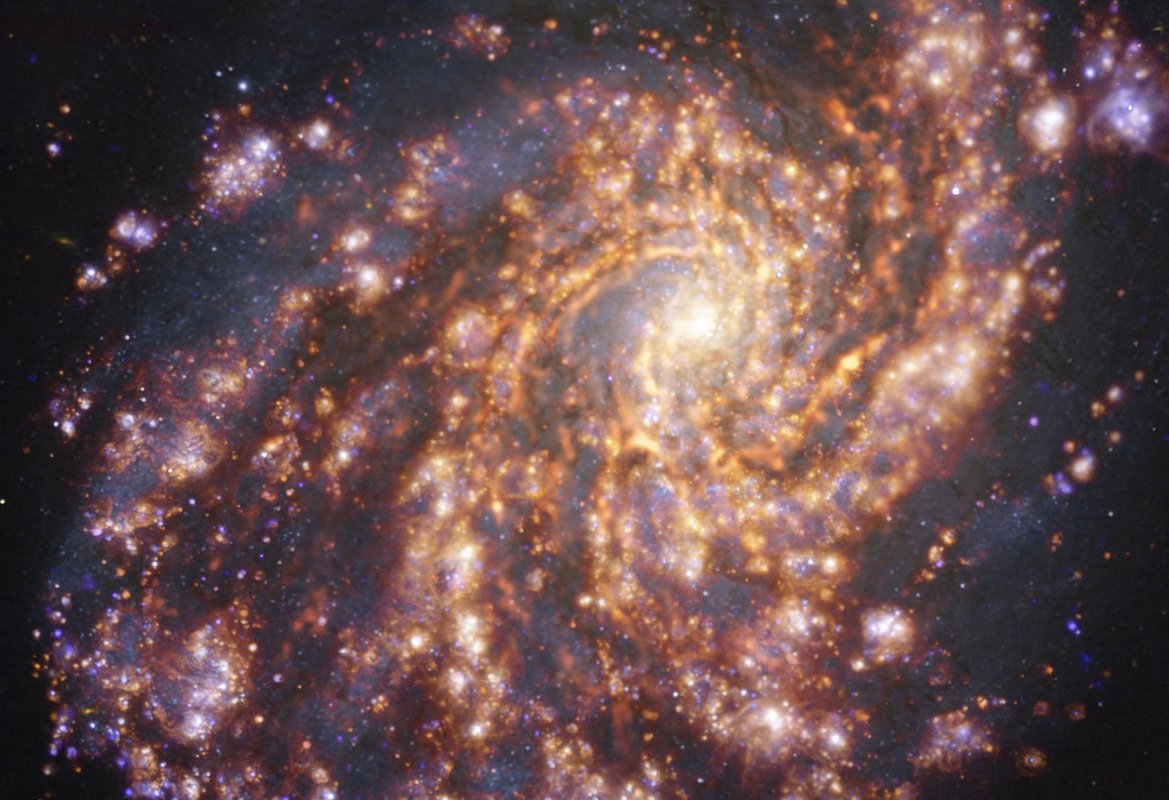
This image made available by the European Southern Observatory on July 16, 2021, and taken as part of the Physics at High Angular resolution in Nearby GalaxieS (PHANGS) project, which is making high-resolution observations of nearby galaxies with telescopes operating across the electromagnetic spectrum, shows the nearby galaxy NGC 4254,  obtained by combining observations taken with the Multi-Unit Spectroscopic Explorer (MUSE) on the ESO Very Large Telescope and with the Atacama Large Millimeter/submillimeter Array (ALMA), in which ESO is a partner.  (Photo by Handout / European Southern Observatory via AFP)
This image made available by the European Southern Observatory on July 16, 2021, and taken as part of the Physics at High Angular resolution in Nearby GalaxieS (PHANGS) project, which is making high-resolution observations of nearby galaxies with telescopes operating across the electromagnetic spectrum, shows the nearby galaxy NGC 4254, obtained by combining observations taken with the Multi-Unit Spectroscopic Explorer (MUSE) on the ESO Very Large Telescope and with the Atacama Large Millimeter/submillimeter Array (ALMA), in which ESO is a partner. (Photo by Handout / European Southern Observatory via AFP)
by French Press Agency - AFP Jul 19, 2021 1:01 pm

The process of how stars are born has been long wondered about by scientists across the world and is one of the biggest mysteries in the modern world.

Imagine multi-colored pinwheel fireworks, but on a galactic scale.

That is exactly what images of baby stars that European astronomers released Friday look like.

Taken from nearby galaxies by the European Southern Observatory's (ESO) Very Large Telescope, images of the swirls of light have allowed astronomers to pinpoint the locations of young stars with new precision, along with the warming gas crucial to their formation.

Scientists have long known that stars are born in clouds of gas, but what exactly triggers star formation – and how galaxies as a whole fit into the picture – remains largely unknown.

"For the first time, we are resolving individual units of star formation over a wide range of locations and environments in a sample that well represents different types of galaxies," said Eric Emsellem, an ESO astronomer.

"We can directly observe the gas that gives birth to stars, we see the young stars themselves, and we witness their evolution through various phases."
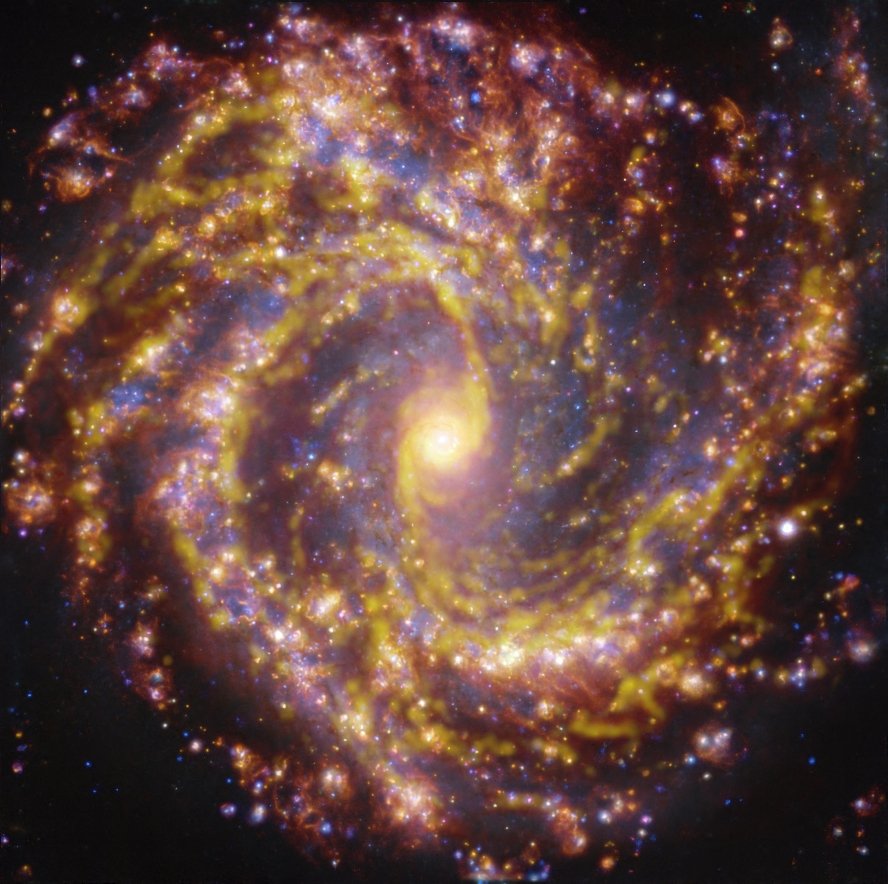
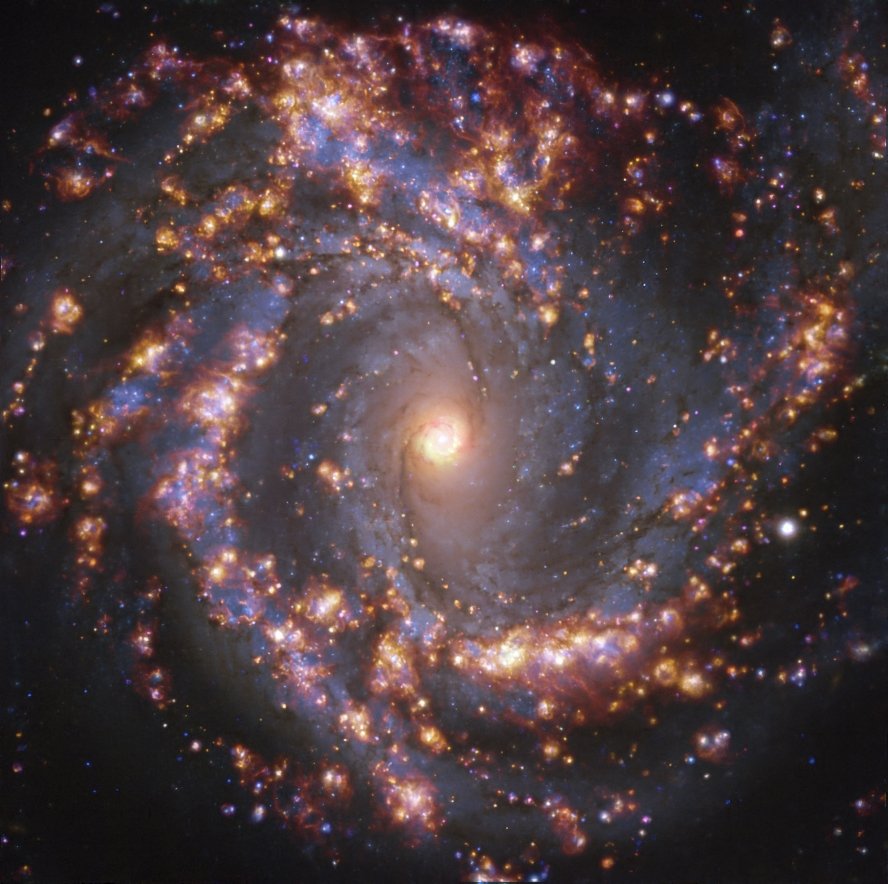
This image made available by the European Southern Observatory on July 16, 2021, and taken as part of the Physics at High Angular resolution in Nearby GalaxieS (PHANGS) project, which is making high-resolution observations shows the nearby galaxy NGC 4303 obtained by combining observations taken with the Multi-Unit Spectroscopic Explorer (MUSE) on the ESO Very Large Telescope and with the Atacama Large Millimeter/submillimeter Array (ALMA), in which ESO is a partner. (Photo by Handout / European Southern Observatory via AFP)

Emsellem and his team used the Multi-Unit Spectroscopic Explorer (MUSE) in conjunction with ESO's Very Large Telescope in Chile's Atacama Desert to trace the newborn stars as they illuminate and heat up surrounding gases.

By combining MUSE images with data from an array of 66 radio telescopes, also in the Chilean desert, astronomers will gain insights into the stellar nurseries of our neighboring galaxies.

"There are many mysteries we want to unravel," Kathryn Kreckel from the University of Heidelberg, said in a statement.

"Are stars more often born in specific regions of their host galaxies? If so, why? And after stars are born, how does their evolution influence the formation of new generations of stars?"

The news images – from 19 galaxies some five to 60 million light years from Earth – will help answer these questions, she said.

MUSE collects spectra – like "bar codes" that allow astronomers to unveil the properties and nature of cosmic objects – at every single location within its field of view, thus providing much richer information than traditional instruments.

The ESO is an intergovernmental astronomy organization in Europe and the world's most productive ground-based astronomical observatory.


  • shortlink copied
  • Last Update: Jul 19, 2021 2:38 pm
    KEYWORDS
    space&science galaxies european southern observatory
    The Daily Sabah Newsletter
    Keep up to date with what’s happening in Turkey, it’s region and the world.
    You can unsubscribe at any time. By signing up you are agreeing to our Terms of Use and Privacy Policy. This site is protected by reCAPTCHA and the Google Privacy Policy and Terms of Service apply.
    No Image
    In photos: Louisiana's Hog Bayou in all its stunning beauty
    PHOTOGALLERY
    • POLITICS
    • Diplomacy
    • Legislation
    • War On Terror
    • EU Affairs
    • News Analysis
    • TÜRKİYE
    • Istanbul
    • Education
    • Investigations
    • Minorities
    • Diaspora
    • World
    • Mid-East
    • Europe
    • Americas
    • Asia Pacific
    • Africa
    • Syrian Crisis
    • İslamophobia
    • Business
    • Automotive
    • Economy
    • Energy
    • Finance
    • Tourism
    • Tech
    • Defense
    • Transportation
    • News Analysis
    • Lifestyle
    • Health
    • Environment
    • Travel
    • Food
    • Fashion
    • Science
    • Religion
    • History
    • Feature
    • Expat Corner
    • Arts
    • Cinema
    • Music
    • Events
    • Portrait
    • Performing Arts
    • Reviews
    • Sports
    • Football
    • Basketball
    • Motorsports
    • Tennis
    • Opinion
    • Columns
    • Op-Ed
    • Reader's Corner
    • Editorial
    • Photo gallery
    • DS TV
    • Jobs
    • privacy
    • about us
    • contact us
    • RSS
    © Turkuvaz Haberleşme ve Yayıncılık 2021