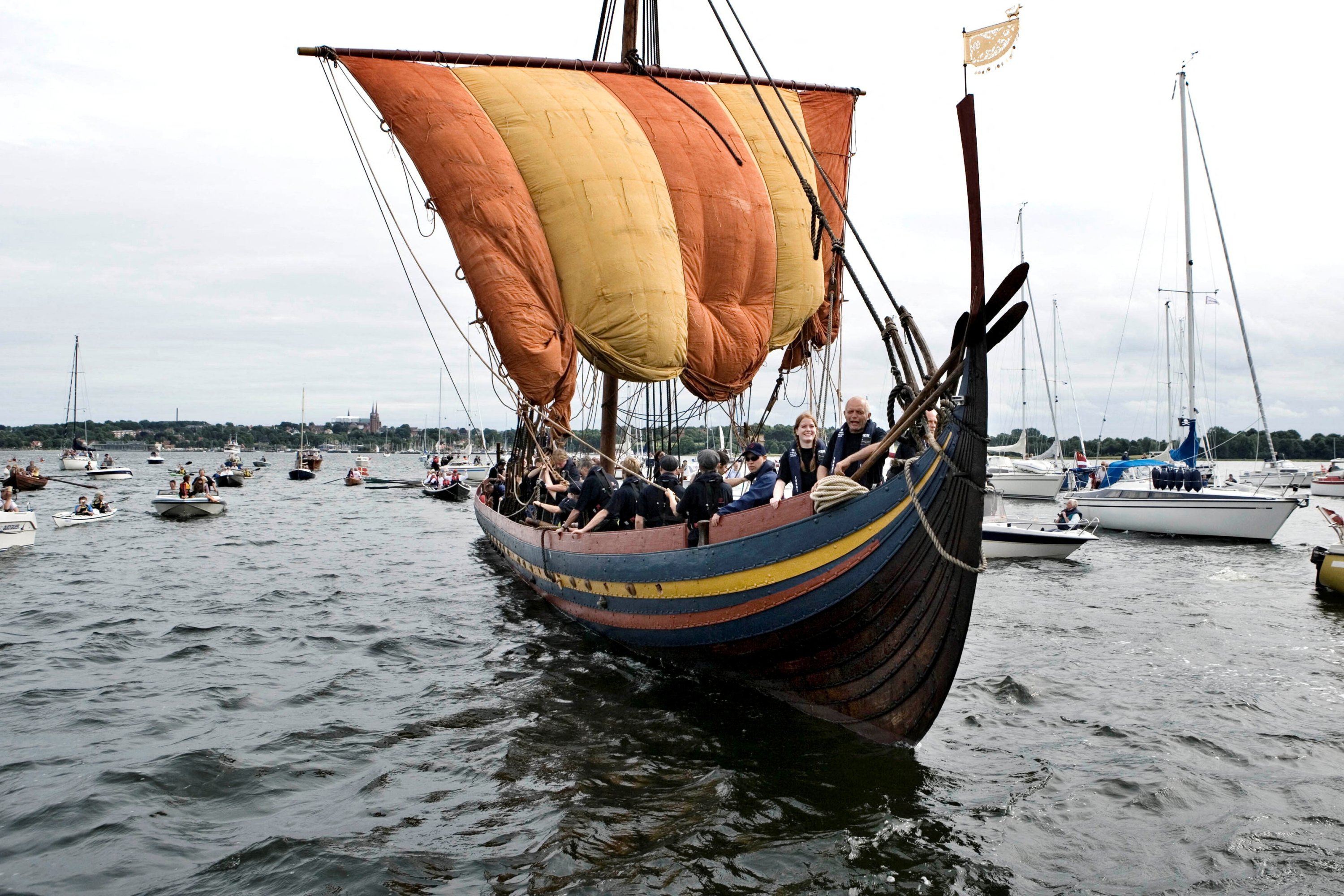
Everybody knows Scandinavians have Viking blood running through their veins but the extent to which that notion was actually true might be surprising as the Viking age – from the 8th to 11th century A.D. – it turns out has left a lasting mark on the genetics of today's Scandinavians, according to scientists who also documented the outsized genetic influence of women who arrived in the region amid conquests by Norsemen in Europe.
A study published on Thursday explored the genetic dynamics of people in Norway, Sweden and Denmark dating back two millennia based on 297 genomes from ancient human remains and data from 16,638 modern Scandinavian men and women.
The findings provided insight into migration patterns and gene flow during the Viking age when Norsemen journeyed from Scandinavia aboard timber longships, staged raids and monastic plundering across a wide region and even reached North America.
The study found that females from the eastern Baltic region and to a lesser extent the British and Irish isles contributed more to the gene pool of Scandinavia than the males from these regions during this period.
"We have no way to know with our data the number of women involved or if these women with east Baltic and British-Irish ancestries were in Scandinavia voluntarily or involuntarily," said molecular archaeologist Ricardo Rodriguez-Varela of Stockholm University's Center for Palaeogenetics, lead author of the study published in the journal Cell.
Historians have documented slave trading by the Vikings as the seafarers conquered many territories and developed extensive trading networks.
"Slaves is one group, of several, that could explain the patterns. We simply do not know exactly who these people were," added Center for Palaeogenetics molecular archaeologist and study co-author Anders Gotherstrom.
The Viking age extended from about 750 to 1050 A.D. An important early event was a devastating Viking raid in 793 on a Christian monastery on the English island of Lindisfarne, with later attacks at numerous sites including Paris and Constantinople and trade contacts all the way to the Middle East.
The study showed that British-Irish ancestry was widespread in Scandinavia starting during the Viking age. Ancestry from the eastern Baltic region – modern Lithuania and parts of western Russia and perhaps Ukraine – was found to be concentrated in central Sweden and in Gotland, Sweden's largest island. Ancestry from southern European locales like Sardinia was concentrated in people in southern Scandinavia.
"The Viking age is associated with a marked increase in the flow of goods, customs, technology and people to and from Scandinavia," Rodriguez-Varela said.
"It was Scandinavian societies, initially pagan but eventually Christian, that founded their economy on small farms, internal and external trade, and plundering. The Vikings were the first people to visit four continents," Gotherstrom added.
The genetic contribution of outsiders was found to have waned in Scandinavians after the Viking age.
The researchers wrote their findings offered "tentative evidence gene flow into Scandinavia of eastern Baltic ancestry and, to a lesser extent, also British-Irish ancestry was female-biased."
"The increase of eastern Baltic ancestry in these regions during the Viking age is consistent with historical sources attesting to contacts such as tributary relations and treaties. Therefore, we don't see any evidence with the present data to support that women were abducted and brought back during raids," Rodriguez-Varela said.
Men serving as Christian missionaries or monks also may have been arriving in Scandinavia during this period but may not have contributed much to the gene pool, the researchers added.
The oldest of the ancient genomes used in the study dated from the first century A.D. and the most recent from the 19th century. Some ancient genomes came from people who died aboard the large Swedish warship Kronan, sunk in a 1676 battle. Others came from Sandby borg, a fortress on the Swedish island of Oland where an apparent 5th-century massacre occurred, as well as from human remains inside ceremonial burials of Viking ships.
"Vikings were an interesting group of people, existing for some two-and-a-half centuries and impacting the world in ways we still need to understand," Gotherstrom said.