Daily Sabah logo

Politics
Diplomacy Legislation War On Terror EU Affairs Elections News Analysis
TÜRKİYE
Istanbul Education Investigations Minorities Expat Corner Diaspora
World
Mid-East Europe Americas Asia Pacific Africa Syrian Crisis Islamophobia
Business
Automotive Economy Energy Finance Tourism Tech Defense Transportation News Analysis
Lifestyle
Health Environment Travel Food Fashion Science Religion History Feature Expat Corner
Arts
Cinema Music Events Portrait Reviews Performing Arts
Sports
Football Basketball Motorsports Tennis
Opinion
Columns Op-Ed Reader's Corner Editorial
PHOTO GALLERY
JOBS ABOUT US RSS PRIVACY CONTACT US
© Turkuvaz Haberleşme ve Yayıncılık 2025

Daily Sabah - Latest & Breaking News from Turkey | Istanbul

  • Politics
    • Diplomacy
    • Legislation
    • War On Terror
    • EU Affairs
    • Elections
    • News Analysis
  • TÜRKİYE
    • Istanbul
    • Education
    • Investigations
    • Minorities
    • Expat Corner
    • Diaspora
  • World
    • Mid-East
    • Europe
    • Americas
    • Asia Pacific
    • Africa
    • Syrian Crisis
    • Islamophobia
  • Business
    • Automotive
    • Economy
    • Energy
    • Finance
    • Tourism
    • Tech
    • Defense
    • Transportation
    • News Analysis
  • Lifestyle
    • Health
    • Environment
    • Travel
    • Food
    • Fashion
    • Science
    • Religion
    • History
    • Feature
    • Expat Corner
  • Arts
    • Cinema
    • Music
    • Events
    • Portrait
    • Reviews
    • Performing Arts
  • Sports
    • Football
    • Basketball
    • Motorsports
    • Tennis
  • Gallery
  • Opinion
    • Columns
    • Op-Ed
    • Reader's Corner
    • Editorial
  • TV
  • Life
  • Health
  • Environment
  • Travel
  • Food
  • Fashion
  • Science
  • Religion
  • History
  • Feature
  • Expat Corner

Archaeologists discover fossils of Mini Cooper-sized sea turtle

by Reuters

Nov 18, 2022 - 12:40 pm GMT+3
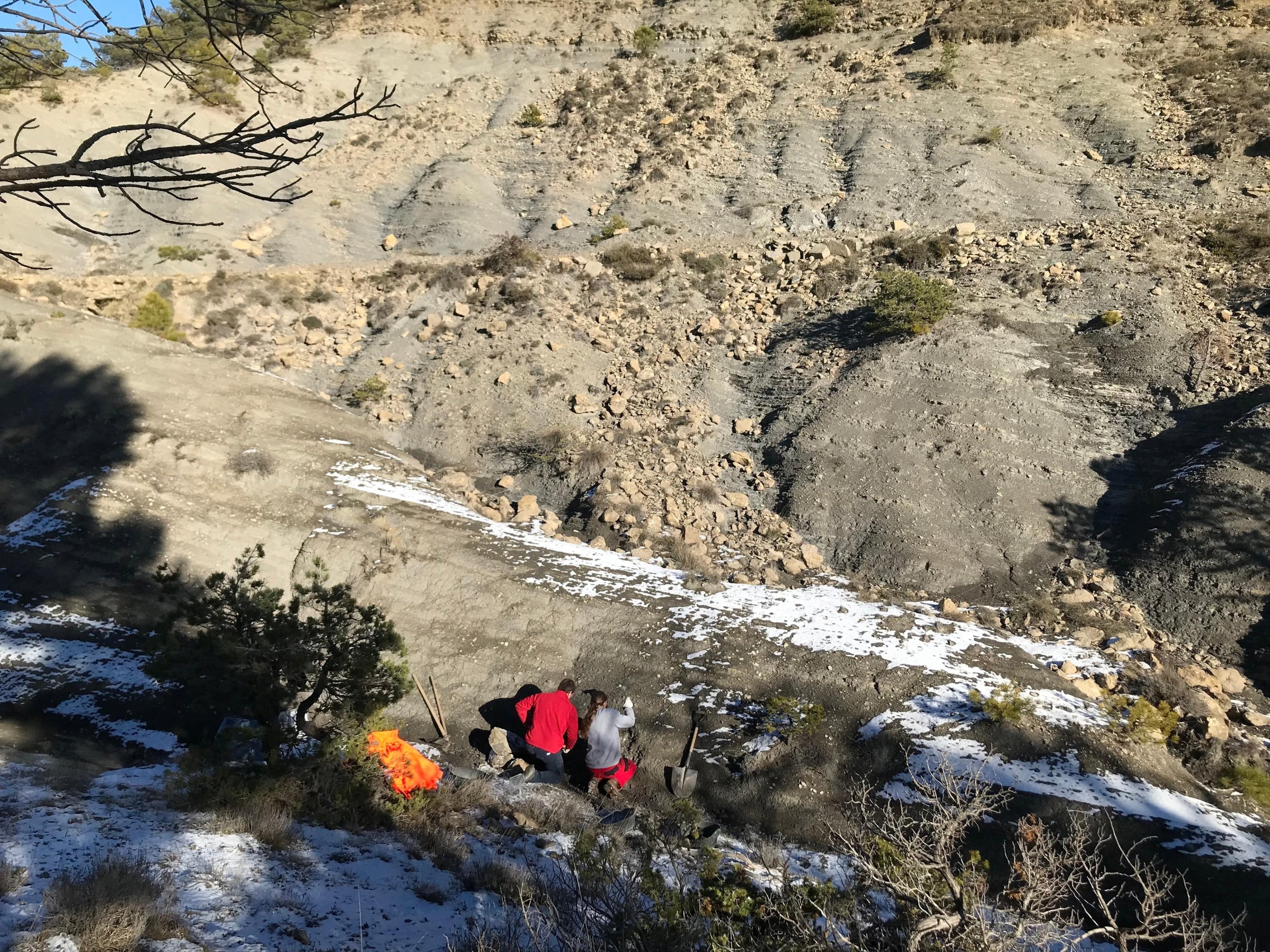
The excavation site where fossils of the large Cretaceous Period sea turtle Leviathanochelys aenigmatica were discovered in Catalonia's Alt Urgell county, northeastern Spain. (Reuters Photo)
by Reuters Nov 18, 2022 12:40 pm

Some 83 million years ago, in the seas along the coasts of an archipelago that came to be known as Europe, there lived one of the largest turtles on record, a reptile the size of a small car – a Mini Cooper to be precise – that braved dangerous waters.

Researchers on Thursday described remains discovered in northeastern Spain of a turtle named Leviathanochelys enigmatic that was about 3.7 meters (12 feet) long, weighed a bit under 2 tons and lived during the Cretaceous Period – the final chapter in the age of dinosaurs. It is Europe's biggest-known turtle.

It dwarfed today's largest turtle – the leatherback, which can reach 2 meters long and is known for marathon marine migrations. Leviathanochelys nearly matched the largest turtle on record – Archelon, which lived roughly 70 million years ago and reached about 4.6 meters long.

"Leviathanochelys was as long as a Mini Cooper while Archelon was the same size as a Toyota Corolla," said paleontologist and study co-author Albert Selles of the Institut Catala de Paleontologia (ICP), a research center affiliated with Universitat Autònoma de Barcelona.

It was good to be the size of a car, considering the hazardous traffic in the ancient Tethys Sea in which Leviathanochelys swam. Huge marine reptiles with powerful jaws called mosasaurs were the largest predators – some exceeding 15 meters in length. Various sharks and rays as well as long-necked fish-eating marine reptiles called plesiosaurs also lurked.

"Attacking an animal of the size of Leviathanochelys possibly only could have been done by large predators in the marine context. At that time, the large marine predators in the European zone were mainly sharks and mosasaurs," said Oscar Castillo, a student in a master's degree program in paleontology at Universitat Autonoma de Barcelona and lead author of the study published in the journal Scientific Reports.
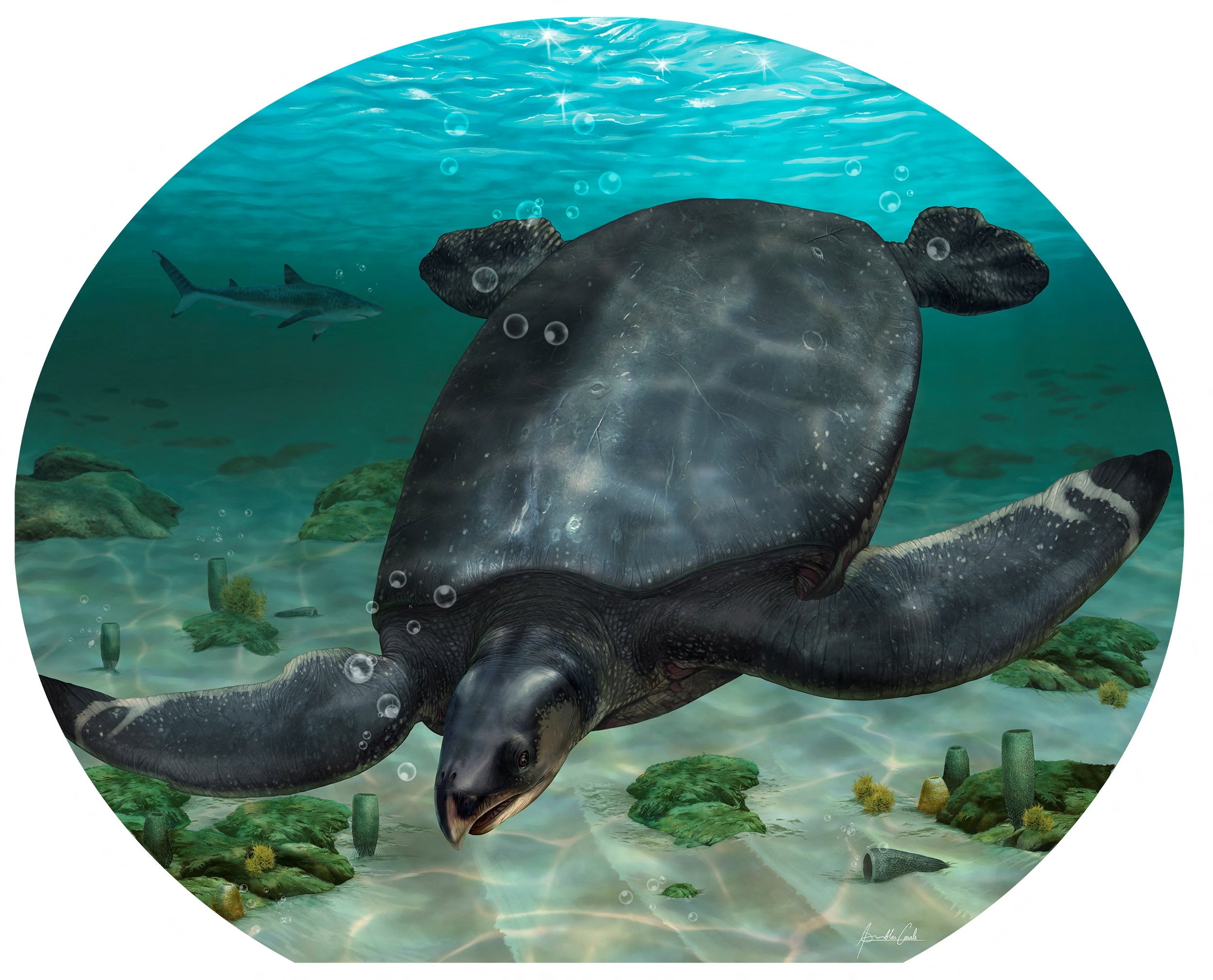
An illustrated reconstruction of the large Cretaceous Period sea turtle Leviathanochelys aenigmatica, which lived about 83 million years ago. (Reuters Photo)

"During the Cretaceous, there was a tendency in marine turtles to increase their body size. Leviathanochelys and Archelon might represent the apex of this process. The reason for this increase in body size has been hypothesized to be predatory pressures, but there might be other factors," Castillo added.

Other large turtles from Earth's past include Protostega and Stupendemys, both reaching about 4 meters long. Protostega was a Cretaceous sea turtle that lived about 85 million years ago and, like its later cousin Archelon, inhabited the large inland sea that at the time split North America in two. Stupendous prowled the lakes and rivers of northern South America about 7 to 13 million years ago during the Miocene Epoch.

Scientists unearthed the Leviathanochelys remains near the village of Coll de Nargo in Catalonia's Alt Urgell county after fossils protruding from the ground were spotted by a hiker in the Southern Pyrenees mountains. To date, they have found parts of the posterior portion of its carapace or shell, and most of the pelvic girdle, but no skull, tail or limbs.

The fossils indicated that it possessed a smooth carapace similar to leatherback turtles, with the shell itself about 2.35 meters long and 2.2 meters wide. Leviathanochelys appears built for the open ocean, returning to land only rarely – for instance to lay eggs.

The presence of a couple of bony bulges on the front side of the pelvis differs from any other known sea turtle, indicating that Leviathanochelys represents a newly discovered lineage. It shows that gigantism in marine turtles developed independently in separate Cretaceous lineages in North America and Europe.

Leviathanochelys enigmatic means "enigmatic leviathan turtle" owing to its large size and the curious shape of its pelvis which the researchers suspect was related to its respiratory system.

"Some pelagic (living in the open ocean) animals show a modification in their respiratory system to maximize their breathing capacity at great depths," Selles said.


  • shortlink copied
  • Last Update: Nov 18, 2022 3:39 pm
    KEYWORDS
    archaeology fossils dinosaurs sea turtles
    The Daily Sabah Newsletter
    Keep up to date with what’s happening in Turkey, it’s region and the world.
    You can unsubscribe at any time. By signing up you are agreeing to our Terms of Use and Privacy Policy. This site is protected by reCAPTCHA and the Google Privacy Policy and Terms of Service apply.
    No Image
    Mass testing, panic buying and lockdowns: Omicron overwhelms Hong Kong
    PHOTOGALLERY
    • POLITICS
    • Diplomacy
    • Legislation
    • War On Terror
    • EU Affairs
    • News Analysis
    • TÜRKİYE
    • Istanbul
    • Education
    • Investigations
    • Minorities
    • Diaspora
    • World
    • Mid-East
    • Europe
    • Americas
    • Asia Pacific
    • Africa
    • Syrian Crisis
    • İslamophobia
    • Business
    • Automotive
    • Economy
    • Energy
    • Finance
    • Tourism
    • Tech
    • Defense
    • Transportation
    • News Analysis
    • Lifestyle
    • Health
    • Environment
    • Travel
    • Food
    • Fashion
    • Science
    • Religion
    • History
    • Feature
    • Expat Corner
    • Arts
    • Cinema
    • Music
    • Events
    • Portrait
    • Performing Arts
    • Reviews
    • Sports
    • Football
    • Basketball
    • Motorsports
    • Tennis
    • Opinion
    • Columns
    • Op-Ed
    • Reader's Corner
    • Editorial
    • Photo gallery
    • DS TV
    • Jobs
    • privacy
    • about us
    • contact us
    • RSS
    © Turkuvaz Haberleşme ve Yayıncılık 2021