Daily Sabah logo

Politics
Diplomacy Legislation War On Terror EU Affairs Elections News Analysis
TÜRKİYE
Istanbul Education Investigations Minorities Expat Corner Diaspora
World
Mid-East Europe Americas Asia Pacific Africa Syrian Crisis Islamophobia
Business
Automotive Economy Energy Finance Tourism Tech Defense Transportation News Analysis
Lifestyle
Health Environment Travel Food Fashion Science Religion History Feature Expat Corner
Arts
Cinema Music Events Portrait Reviews Performing Arts
Sports
Football Basketball Motorsports Tennis
Opinion
Columns Op-Ed Reader's Corner Editorial
PHOTO GALLERY
JOBS ABOUT US RSS PRIVACY CONTACT US
© Turkuvaz Haberleşme ve Yayıncılık 2025

Daily Sabah - Latest & Breaking News from Turkey | Istanbul

  • Politics
    • Diplomacy
    • Legislation
    • War On Terror
    • EU Affairs
    • Elections
    • News Analysis
  • TÜRKİYE
    • Istanbul
    • Education
    • Investigations
    • Minorities
    • Expat Corner
    • Diaspora
  • World
    • Mid-East
    • Europe
    • Americas
    • Asia Pacific
    • Africa
    • Syrian Crisis
    • Islamophobia
  • Business
    • Automotive
    • Economy
    • Energy
    • Finance
    • Tourism
    • Tech
    • Defense
    • Transportation
    • News Analysis
  • Lifestyle
    • Health
    • Environment
    • Travel
    • Food
    • Fashion
    • Science
    • Religion
    • History
    • Feature
    • Expat Corner
  • Arts
    • Cinema
    • Music
    • Events
    • Portrait
    • Reviews
    • Performing Arts
  • Sports
    • Football
    • Basketball
    • Motorsports
    • Tennis
  • Gallery
  • Opinion
    • Columns
    • Op-Ed
    • Reader's Corner
    • Editorial
  • TV
  • Life
  • Health
  • Environment
  • Travel
  • Food
  • Fashion
  • Science
  • Religion
  • History
  • Feature
  • Expat Corner

California startup reveals space rover as next-gen 'moon buggy'

by Reuters

LOS ANGELES Mar 31, 2022 - 3:23 pm GMT+3
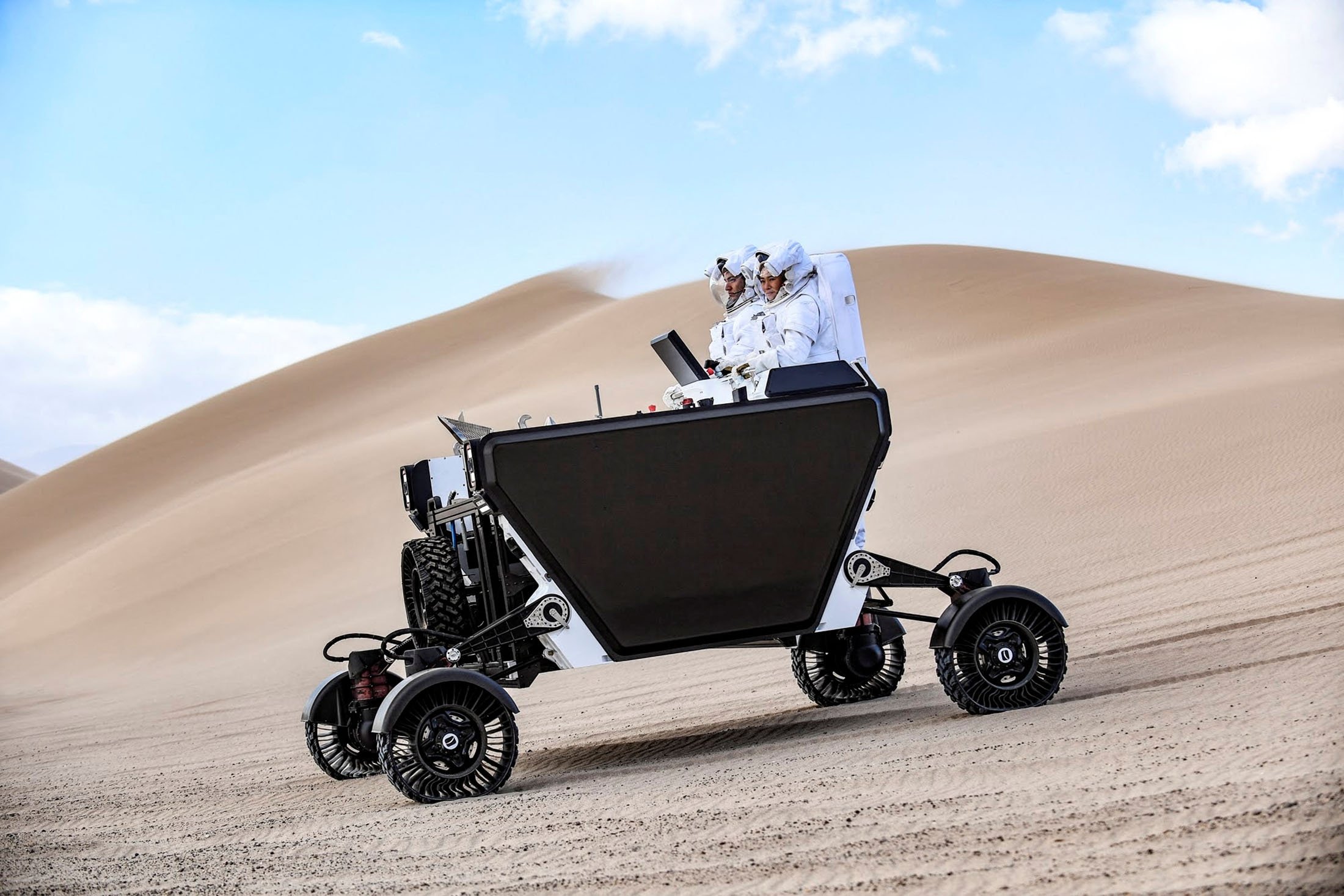
A prototype of Astrolab's Flex lunar rover, being tested in Death Valley National Park at the Dumont Dunes, California, U.S., Dec., 2021. (Reuters Photo)
by Reuters Mar 31, 2022 3:23 pm

It has been an exciting couple of years for space developments with numerous institutions exploring different ways to improve space travel, exploration and study. The latest of these have been a Los Angeles-based startup founded by a veteran spaceflight robotics engineer who unveiled its full-scale, working prototype for a next-generation lunar rover that is just as fast as NASA's old "moon buggy" but is designed to do much more.

The company, Venturi Astrolab Inc., released photos and video showing its Flexible Logistics and Exploration (FLEX) vehicle riding over the rugged California desert near Death Valley National Park during a five-day field test in December.

Astrolab executives say the four-wheeled, car-sized FLEX rover is designed for use in NASA's Artemis program, aimed at returning humans to the moon as early as 2025 and establishing a long-term lunar colony as a precursor to sending astronauts to Mars.

Unlike the 1970s Apollo-era moon buggies or the current generation of robotic Mars rovers tailored for specialized tasks and experiments, FLEX is designed as an all-purpose vehicle that can be driven by astronauts or by remote control.

Built around a modular payload system inspired by conventional containerized shipping, FLEX is versatile enough to be used for exploration, cargo delivery, site construction and other logistical work on the moon, the company says.
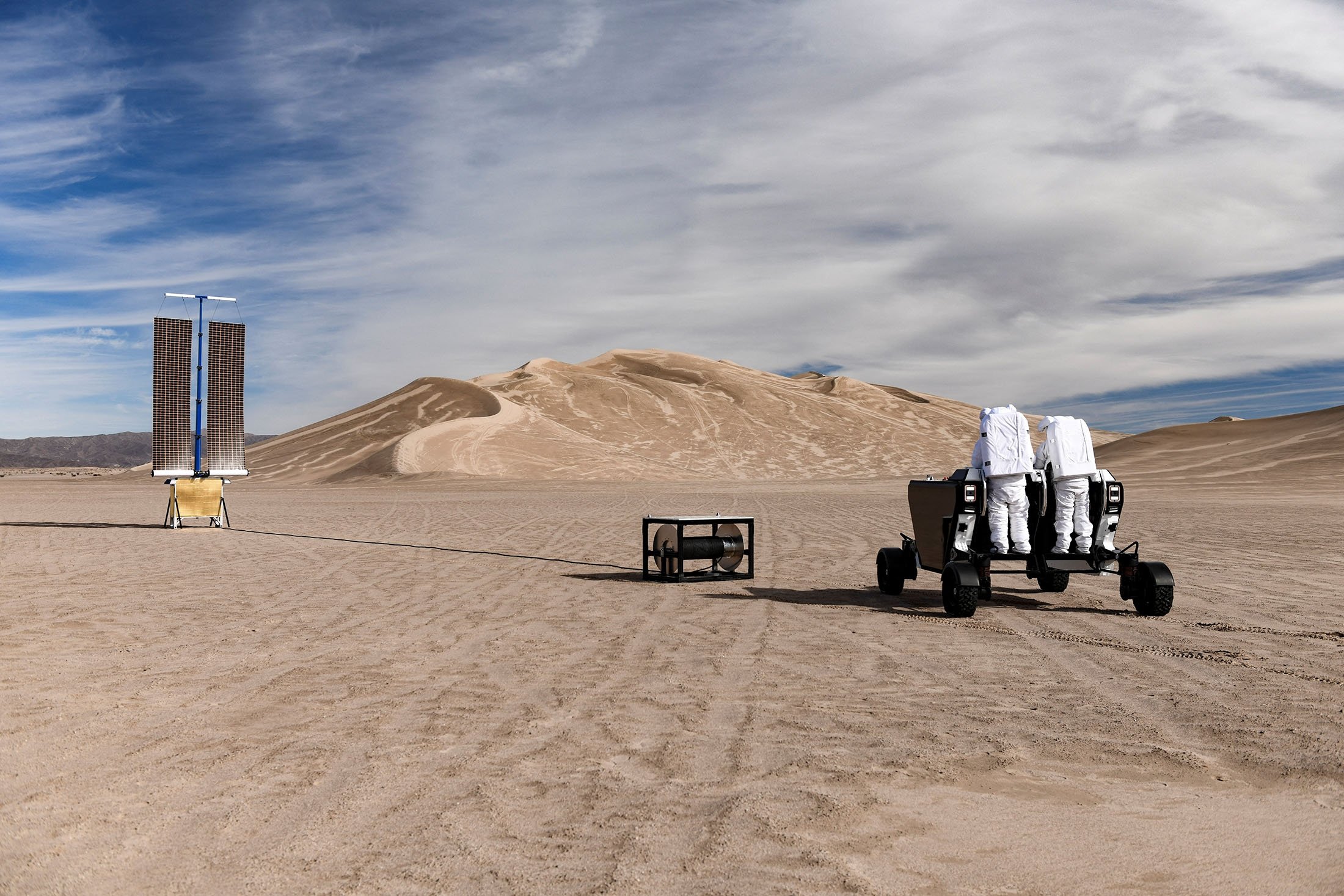
A prototype of Astrolab's Flex lunar rover, being tested in Death Valley National Park at the Dumont Dunes, California, U.S., Dec., 2021. (Reuters Photo)

"For humanity to truly live and operate in a sustained way off Earth, there needs to exist an efficient and economical network all the way from the launchpad to the ultimate outpost," Astrolab founder and CEO Jaret Matthews said in a statement announcing the rover's development.

Other aerospace companies have announced new lunar rover design concepts, "but so far I believe, we're the only ones who have produced a working prototype of this scale and capability," Matthews told Reuters in an interview on Wednesday.

If NASA adopts FLEX and its modular payload platform for Artemis, it would become the first passenger-capable rover to ply the lunar surface since Apollo 17, the last of six original United States manned missions to the moon, in December 1972.

Apollo 17's lunar roving vehicle set a moon speed record of 17.7 kilometers per hour (11 miles per hour). FLEX can move just as swiftly.

Apollo astronauts found "they spent just as much time off the ground as on it at that speed, so it's kind of a practical limit for the moon," where gravity is one-sixth that of Earth, said Matthews, a former rover engineer for NASA's Jet Propulsion Laboratory.

While Apollo LRVs carried up to two astronauts seated at its controls like a car, FLEX passengers – one or two at a time – ride standing in the back, driving the vehicle with a joystick.

The rover itself, with a Jeep-like wheelbase, weighs just over 500 kilograms (1,100 pounds) but has a 3,300-pound cargo capacity, about the same as a light-duty pickup truck.

With its solar-powered batteries fully charged, the vehicle can drive two astronauts for eight hours straight and has sufficient energy capacity to survive the extreme cold of a lunar night, up to 300 hours in total darkness, at the moon's south pole, Matthews said.

During the field test at the Dumont Dunes Off-Highway Recreation Area, the rover was piloted by retired Canadian astronaut and Astrolab advisory board member Chris Hadfield and MIT aerospace graduate student Michelle Lin.

Video showed the pair dressed in mock spacesuits riding on the vehicle over a sand dune and using it to set up a large, vertical solar array.

"It was huge fun to drive the FLEX," Hadfield said in the video.

  • shortlink copied
  • Last Update: Mar 31, 2022 6:23 pm
    KEYWORDS
    space space & science
    The Daily Sabah Newsletter
    Keep up to date with what’s happening in Turkey, it’s region and the world.
    You can unsubscribe at any time. By signing up you are agreeing to our Terms of Use and Privacy Policy. This site is protected by reCAPTCHA and the Google Privacy Policy and Terms of Service apply.
    No Image
    Iconic Summer Olympics moments throughout history
    PHOTOGALLERY
    • POLITICS
    • Diplomacy
    • Legislation
    • War On Terror
    • EU Affairs
    • News Analysis
    • TÜRKİYE
    • Istanbul
    • Education
    • Investigations
    • Minorities
    • Diaspora
    • World
    • Mid-East
    • Europe
    • Americas
    • Asia Pacific
    • Africa
    • Syrian Crisis
    • İslamophobia
    • Business
    • Automotive
    • Economy
    • Energy
    • Finance
    • Tourism
    • Tech
    • Defense
    • Transportation
    • News Analysis
    • Lifestyle
    • Health
    • Environment
    • Travel
    • Food
    • Fashion
    • Science
    • Religion
    • History
    • Feature
    • Expat Corner
    • Arts
    • Cinema
    • Music
    • Events
    • Portrait
    • Performing Arts
    • Reviews
    • Sports
    • Football
    • Basketball
    • Motorsports
    • Tennis
    • Opinion
    • Columns
    • Op-Ed
    • Reader's Corner
    • Editorial
    • Photo gallery
    • DS TV
    • Jobs
    • privacy
    • about us
    • contact us
    • RSS
    © Turkuvaz Haberleşme ve Yayıncılık 2021