Daily Sabah logo

Politics
Diplomacy Legislation War On Terror EU Affairs Elections News Analysis
TÜRKİYE
Istanbul Education Investigations Minorities Expat Corner Diaspora
World
Mid-East Europe Americas Asia Pacific Africa Syrian Crisis Islamophobia
Business
Automotive Economy Energy Finance Tourism Tech Defense Transportation News Analysis
Lifestyle
Health Environment Travel Food Fashion Science Religion History Feature Expat Corner
Arts
Cinema Music Events Portrait Reviews Performing Arts
Sports
Football Basketball Motorsports Tennis
Opinion
Columns Op-Ed Reader's Corner Editorial
PHOTO GALLERY
JOBS ABOUT US RSS PRIVACY CONTACT US
© Turkuvaz Haberleşme ve Yayıncılık 2026

Daily Sabah - Latest & Breaking News from Turkey | Istanbul

  • Politics
    • Diplomacy
    • Legislation
    • War On Terror
    • EU Affairs
    • Elections
    • News Analysis
  • TÜRKİYE
    • Istanbul
    • Education
    • Investigations
    • Minorities
    • Expat Corner
    • Diaspora
  • World
    • Mid-East
    • Europe
    • Americas
    • Asia Pacific
    • Africa
    • Syrian Crisis
    • Islamophobia
  • Business
    • Automotive
    • Economy
    • Energy
    • Finance
    • Tourism
    • Tech
    • Defense
    • Transportation
    • News Analysis
  • Lifestyle
    • Health
    • Environment
    • Travel
    • Food
    • Fashion
    • Science
    • Religion
    • History
    • Feature
    • Expat Corner
  • Arts
    • Cinema
    • Music
    • Events
    • Portrait
    • Reviews
    • Performing Arts
  • Sports
    • Football
    • Basketball
    • Motorsports
    • Tennis
  • Gallery
  • Opinion
    • Columns
    • Op-Ed
    • Reader's Corner
    • Editorial
  • TV
  • Life
  • Health
  • Environment
  • Travel
  • Food
  • Fashion
  • Science
  • Religion
  • History
  • Feature
  • Expat Corner

Galactic archaeology reveals Milky Way's turbulent origins

by Agence France-Presse - AFP

GRONINGEN, Netherlands Jul 30, 2026 - 10:26 am GMT+3
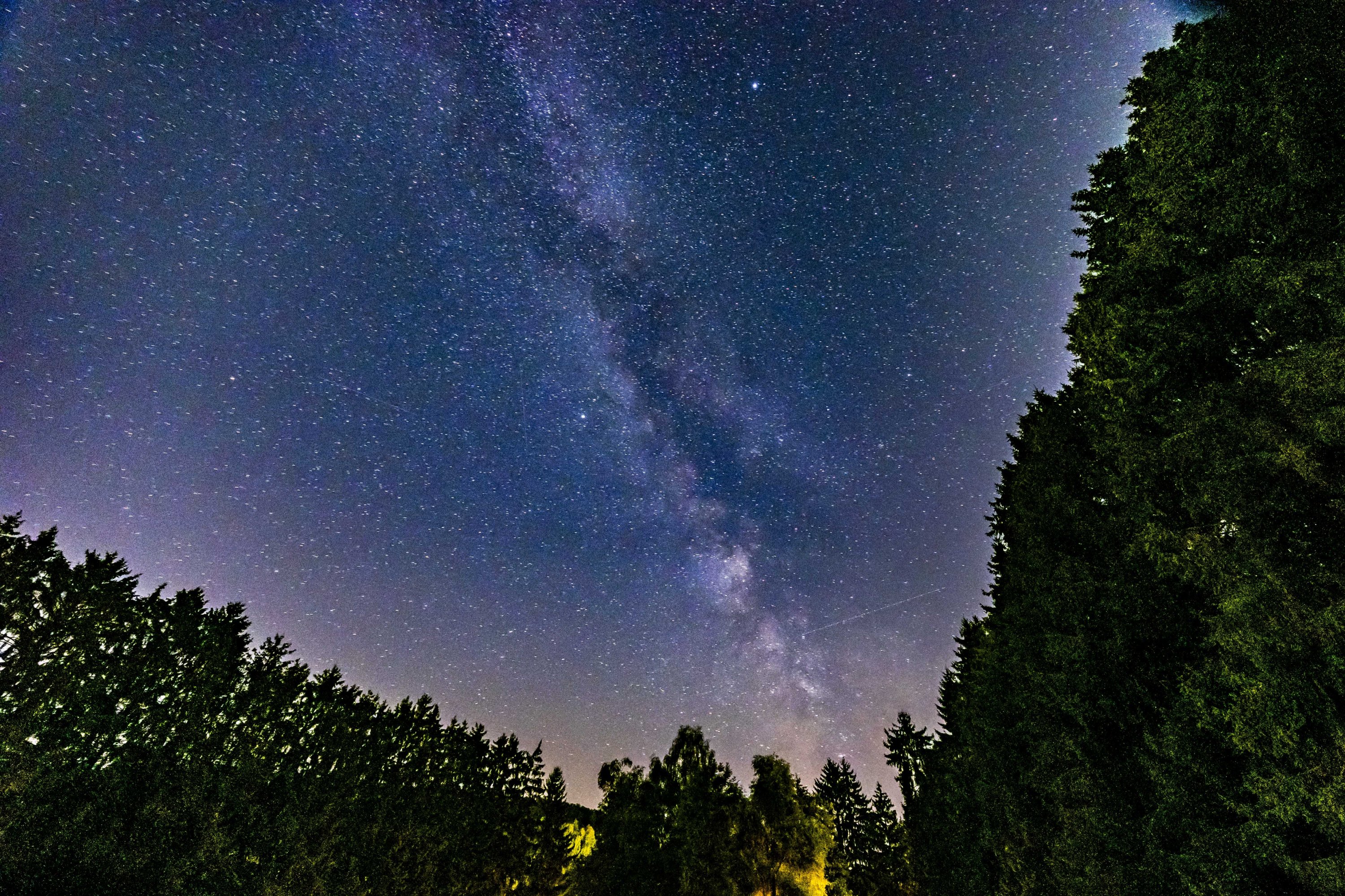
The Milky Way galaxy pictured arcing above the forest tree line in the Ardennes mountains, Chanxhe village, Belgium, July 20, 2026. (Getty Images Photo)
by Agence France-Presse - AFP Jul 30, 2026 10:26 am

Amina Helmi's passion for the Milky Way is clear as soon as one steps into her small office at the University of Groningen, in the north of the Netherlands.

Alongside family photos and piled-up dissertations with impenetrable titles sits a bowl stacked with the chocolates named after the star system she has spent her career studying.

Digging into the Milky Way's violent past has earned this 55-year-old astronomer, originally from Argentina, the Kavli Prize, widely seen as the Nobel Prize of astrophysics.

Helmi is a world expert in a field known as galactic archaeology, which aims to decipher what has happened to our galaxy in the past and get a glimpse of its future by using stars as "cosmic fossils."

"We can measure, for example, the amount of chemicals in the stars," Helmi told Agence France-Presse (AFP) in an interview.

"This works as a kind of DNA of a star in the sense that they preserve information of where they were born and in which environment."

Forget the typical image of an astronomer with eyes glued to a telescope scanning the celestial sphere.

Helmi fixes her eyes on vast catalogues of data - sometimes with two billion lines of information – containing precious information about the stars.

The European Space Agency's Gaia mission, which aimed to form a three-dimensional map of the Milky Way, was a key turning point for Helmi's research.

"That measured the motions of about one and a half billion stars over a much larger volume than before," said Helmi, who contributed to the mission herself.

"It wasn't just the huge number of objects, but also how accurately we could measure the motions, how precisely."

'Speechless'

The data from the Gaia mission allowed Helmi and her team to piece together the events that changed our home galaxy forever.

Around 10 billion years ago, well before our Sun and the stars we can see today were born, a dwarf galaxy, Gaia-Enceladus, collided with what was the Milky Way at the time.

The two galaxies fused, and the stars now present are part of a halo that surrounds our home galaxy.

New stars were also created as a consequence of the cosmic collision, creating a "puffed up" disk that is a feature of the Milky Way, she said.

The discovery proved that the Milky Way was formed from a series of crashes with other galaxies, not via a smooth and steady growth as previously thought.

The work earned Helmi a share of the Kavli Prize, along with Vasily Belokurov (University of Cambridge) and Rodrigo Ibata (University of Strasbourg).

Helmi also won a share of the $1 million prize fund, a medal and a citation, due to be presented in September at a ceremony organized by the Norwegian Academy of Science and Letters in Oslo.

The trio of scientists were praised for "uncovering the fossil evidence of past mergers proving that the Milky Way galaxy was built through hierarchical accretion."

Helmi admitted to being "totally speechless" when she found out she was to receive the coveted award.

"To me, this is indeed the biggest there is. And it's just absolutely unbelievable," she told AFP.

"I think also for our field, which is relatively young but has grown enormously in the last years, this is also a very nice recognition."

What does the future hold? Helmi is looking forward to poring over more data from the Gaia mission as well as working on new ways to model the huge data sets.

And what does the Milky Way's turbulent past tell us about the future?

"Nothing much has happened" since then, said Helmi.

"So you could say it's been a wild youth and now a quiet, restful adulthood."

  • shortlink copied
  • KEYWORDS
    galactic archaeology milky way astronomy
    The Daily Sabah Newsletter
    Keep up to date with what’s happening in Turkey, it’s region and the world.
    You can unsubscribe at any time. By signing up you are agreeing to our Terms of Use and Privacy Policy. This site is protected by reCAPTCHA and the Google Privacy Policy and Terms of Service apply.
    No Image
    Russia detains over 5,000 in single day for protesting Ukraine war
    PHOTOGALLERY
    • POLITICS
    • Diplomacy
    • Legislation
    • War On Terror
    • EU Affairs
    • News Analysis
    • TÜRKİYE
    • Istanbul
    • Education
    • Investigations
    • Minorities
    • Diaspora
    • World
    • Mid-East
    • Europe
    • Americas
    • Asia Pacific
    • Africa
    • Syrian Crisis
    • İslamophobia
    • Business
    • Automotive
    • Economy
    • Energy
    • Finance
    • Tourism
    • Tech
    • Defense
    • Transportation
    • News Analysis
    • Lifestyle
    • Health
    • Environment
    • Travel
    • Food
    • Fashion
    • Science
    • Religion
    • History
    • Feature
    • Expat Corner
    • Arts
    • Cinema
    • Music
    • Events
    • Portrait
    • Performing Arts
    • Reviews
    • Sports
    • Football
    • Basketball
    • Motorsports
    • Tennis
    • Opinion
    • Columns
    • Op-Ed
    • Reader's Corner
    • Editorial
    • Photo gallery
    • DS TV
    • Jobs
    • privacy
    • about us
    • contact us
    • RSS
    © Turkuvaz Haberleşme ve Yayıncılık 2021