Daily Sabah logo

Politics
Diplomacy Legislation War On Terror EU Affairs Elections News Analysis
TÜRKİYE
Istanbul Education Investigations Minorities Expat Corner Diaspora
World
Mid-East Europe Americas Asia Pacific Africa Syrian Crisis Islamophobia
Business
Automotive Economy Energy Finance Tourism Tech Defense Transportation News Analysis
Lifestyle
Health Environment Travel Food Fashion Science Religion History Feature Expat Corner
Arts
Cinema Music Events Portrait Reviews Performing Arts
Sports
Football Basketball Motorsports Tennis
Opinion
Columns Op-Ed Reader's Corner Editorial
PHOTO GALLERY
JOBS ABOUT US RSS PRIVACY CONTACT US
© Turkuvaz Haberleşme ve Yayıncılık 2025

Daily Sabah - Latest & Breaking News from Turkey | Istanbul

  • Politics
    • Diplomacy
    • Legislation
    • War On Terror
    • EU Affairs
    • Elections
    • News Analysis
  • TÜRKİYE
    • Istanbul
    • Education
    • Investigations
    • Minorities
    • Expat Corner
    • Diaspora
  • World
    • Mid-East
    • Europe
    • Americas
    • Asia Pacific
    • Africa
    • Syrian Crisis
    • Islamophobia
  • Business
    • Automotive
    • Economy
    • Energy
    • Finance
    • Tourism
    • Tech
    • Defense
    • Transportation
    • News Analysis
  • Lifestyle
    • Health
    • Environment
    • Travel
    • Food
    • Fashion
    • Science
    • Religion
    • History
    • Feature
    • Expat Corner
  • Arts
    • Cinema
    • Music
    • Events
    • Portrait
    • Reviews
    • Performing Arts
  • Sports
    • Football
    • Basketball
    • Motorsports
    • Tennis
  • Gallery
  • Opinion
    • Columns
    • Op-Ed
    • Reader's Corner
    • Editorial
  • TV
  • Life
  • Health
  • Environment
  • Travel
  • Food
  • Fashion
  • Science
  • Religion
  • History
  • Feature
  • Expat Corner

Gigantic Greenlandic crater formed 58 million years ago: Study

by Reuters

WASHINGTON Mar 10, 2022 - 6:16 pm GMT+3
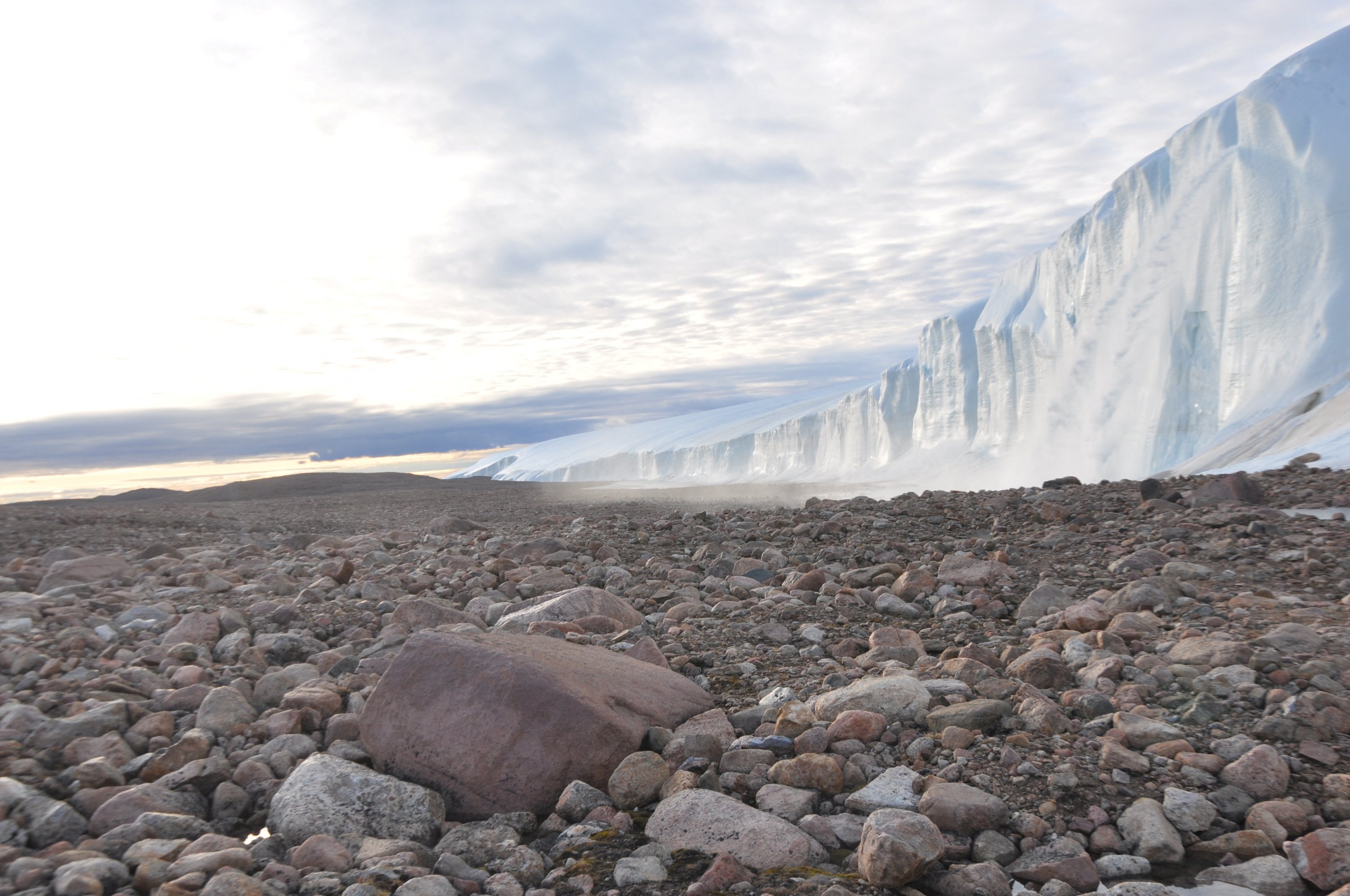
The site of field work at the edge of the Greenland Ice Sheet where scientists studied the age of the 31-kilometer-wide Hiawatha impact crater that is buried under ice 1-kilometer thick in 2019. (Reuters Photo)
by Reuters Mar 10, 2022 6:16 pm

Even scientists can sometimes get it wrong, or rather incomplete, as researchers revealed that an immense crater located in northwestern Greenland under a thick sheet of ice first spotted in 2015, was in fact much older – tens of millions of years older – than the 13,000 years figure that was previously proposed. How much exactly? Well, scientists believe it was formed by a meteorite impact 58 million years ago.

Scientists said on Wednesday they used two different dating methods on sand and rock left over from the impact to determine when the crater – about 31 kilometers (19 miles) wide – was formed. They found that the meteorite – roughly 1.5 to 2 kilometers (1 to 1.25 miles) in diameter – struck Greenland about 8 million years after a larger asteroid impact at Mexico's Yucatan Peninsula wiped out the dinosaurs.

The crater lies beneath Greenland's Hiawatha Glacier, covered by an ice sheet 1-kilometer (0.62-mile) deep. It had remained undetected until airborne ice-penetrating radar data tipped off scientists about its existence.

It is one of Earth's 25 largest-known impact craters. Over the eons, Earth has been hit by space rocks innumerable times, though gradual changes in the planet's surface have erased or obscured many of the craters.

Greenland at the time – during the Paleocene Epoch – was not the icy place it is today, and instead was covered with temperate rain forests populated by a variety of trees and inhabited by some of the mammals that became Earth's dominant land animals after the dinosaurs – aside from their bird descendants – went extinct.

The meteorite released millions of times more energy than an atomic bomb, leaving a crater big enough to swallow the city of Washington.

"The impact would have devastated the local region," said Swedish Museum of Natural History geologist Gavin Kenny, lead author of the research published in the journal Science Advances.

"The air blast from the impact would have knocked down most trees within tens to hundreds of kilometers, and the thermal blast from the impact would have ignited trees up to hundreds of kilometers from the site of impact, starting enormous forest fires," Kenny added.

The impact also would have triggered regional seismic shaking while ash from the forest fires and dust and molten rock that had been violently ejected into the atmosphere would have rained down, yielding a thick blanket of debris, Kenny said.

As bad as it was, it did not approach the scale of calamity wrought by the asteroid – estimated at 12 kilometers (7.5 miles) wide – that struck 66 million years ago, erasing three quarters of Earth's species and initiating a global climate catastrophe.

"Whether the impact had a long-lasting effect on the global climate is currently unclear, but unlikely in my opinion," said geology professor and study co-author Michael Storey of the Natural History Museum of Denmark.

Some scientists had hypothesized that the impact occurred after the Greenland Ice Sheet formed 2.6 million years ago and perhaps even as recently as about 13,000 years ago to initiate a documented cold period.

The researchers used two dating methods based on radioactive decay – the transformation of atoms of one element into atoms of another element. Because the ice-encased crater is inaccessible, they tested sand from rocks superheated by the impact and minerals called shocked zircons contained in pebbles – all scooped up from a river carrying material from the crater out of the glacier. Both methods yielded the same age results.

"Thus, the impact did not happen – or cause a climate-change event – in the time of humans as had been proposed and speculated previously," Kenny said.

"Impacts of this size occur only every few million years so we don't need to be very worried about such an impact happening anytime soon," Kenny added.


  • shortlink copied
  • Last Update: Mar 10, 2022 7:53 pm
    KEYWORDS
    meteorite crater meteor
    The Daily Sabah Newsletter
    Keep up to date with what’s happening in Turkey, it’s region and the world.
    You can unsubscribe at any time. By signing up you are agreeing to our Terms of Use and Privacy Policy. This site is protected by reCAPTCHA and the Google Privacy Policy and Terms of Service apply.
    No Image
    From Antalya with love: Christmas wreaths made by Turkish women
    PHOTOGALLERY
    • POLITICS
    • Diplomacy
    • Legislation
    • War On Terror
    • EU Affairs
    • News Analysis
    • TÜRKİYE
    • Istanbul
    • Education
    • Investigations
    • Minorities
    • Diaspora
    • World
    • Mid-East
    • Europe
    • Americas
    • Asia Pacific
    • Africa
    • Syrian Crisis
    • İslamophobia
    • Business
    • Automotive
    • Economy
    • Energy
    • Finance
    • Tourism
    • Tech
    • Defense
    • Transportation
    • News Analysis
    • Lifestyle
    • Health
    • Environment
    • Travel
    • Food
    • Fashion
    • Science
    • Religion
    • History
    • Feature
    • Expat Corner
    • Arts
    • Cinema
    • Music
    • Events
    • Portrait
    • Performing Arts
    • Reviews
    • Sports
    • Football
    • Basketball
    • Motorsports
    • Tennis
    • Opinion
    • Columns
    • Op-Ed
    • Reader's Corner
    • Editorial
    • Photo gallery
    • DS TV
    • Jobs
    • privacy
    • about us
    • contact us
    • RSS
    © Turkuvaz Haberleşme ve Yayıncılık 2021