Daily Sabah logo

Politics
Diplomacy Legislation War On Terror EU Affairs Elections News Analysis
TÜRKİYE
Istanbul Education Investigations Minorities Expat Corner Diaspora
World
Mid-East Europe Americas Asia Pacific Africa Syrian Crisis Islamophobia
Business
Automotive Economy Energy Finance Tourism Tech Defense Transportation News Analysis
Lifestyle
Health Environment Travel Food Fashion Science Religion History Feature Expat Corner
Arts
Cinema Music Events Portrait Reviews Performing Arts
Sports
Football Basketball Motorsports Tennis
Opinion
Columns Op-Ed Reader's Corner Editorial
PHOTO GALLERY
JOBS ABOUT US RSS PRIVACY CONTACT US
© Turkuvaz Haberleşme ve Yayıncılık 2025

Daily Sabah - Latest & Breaking News from Turkey | Istanbul

  • Politics
    • Diplomacy
    • Legislation
    • War On Terror
    • EU Affairs
    • Elections
    • News Analysis
  • TÜRKİYE
    • Istanbul
    • Education
    • Investigations
    • Minorities
    • Expat Corner
    • Diaspora
  • World
    • Mid-East
    • Europe
    • Americas
    • Asia Pacific
    • Africa
    • Syrian Crisis
    • Islamophobia
  • Business
    • Automotive
    • Economy
    • Energy
    • Finance
    • Tourism
    • Tech
    • Defense
    • Transportation
    • News Analysis
  • Lifestyle
    • Health
    • Environment
    • Travel
    • Food
    • Fashion
    • Science
    • Religion
    • History
    • Feature
    • Expat Corner
  • Arts
    • Cinema
    • Music
    • Events
    • Portrait
    • Reviews
    • Performing Arts
  • Sports
    • Football
    • Basketball
    • Motorsports
    • Tennis
  • Gallery
  • Opinion
    • Columns
    • Op-Ed
    • Reader's Corner
    • Editorial
  • TV
  • Life
  • Health
  • Environment
  • Travel
  • Food
  • Fashion
  • Science
  • Religion
  • History
  • Feature
  • Expat Corner

Huge prehistoric 'Dragon of Death' fossil found in Argentina

by Reuters

BUENOS AIRES May 23, 2022 - 11:44 pm GMT+3
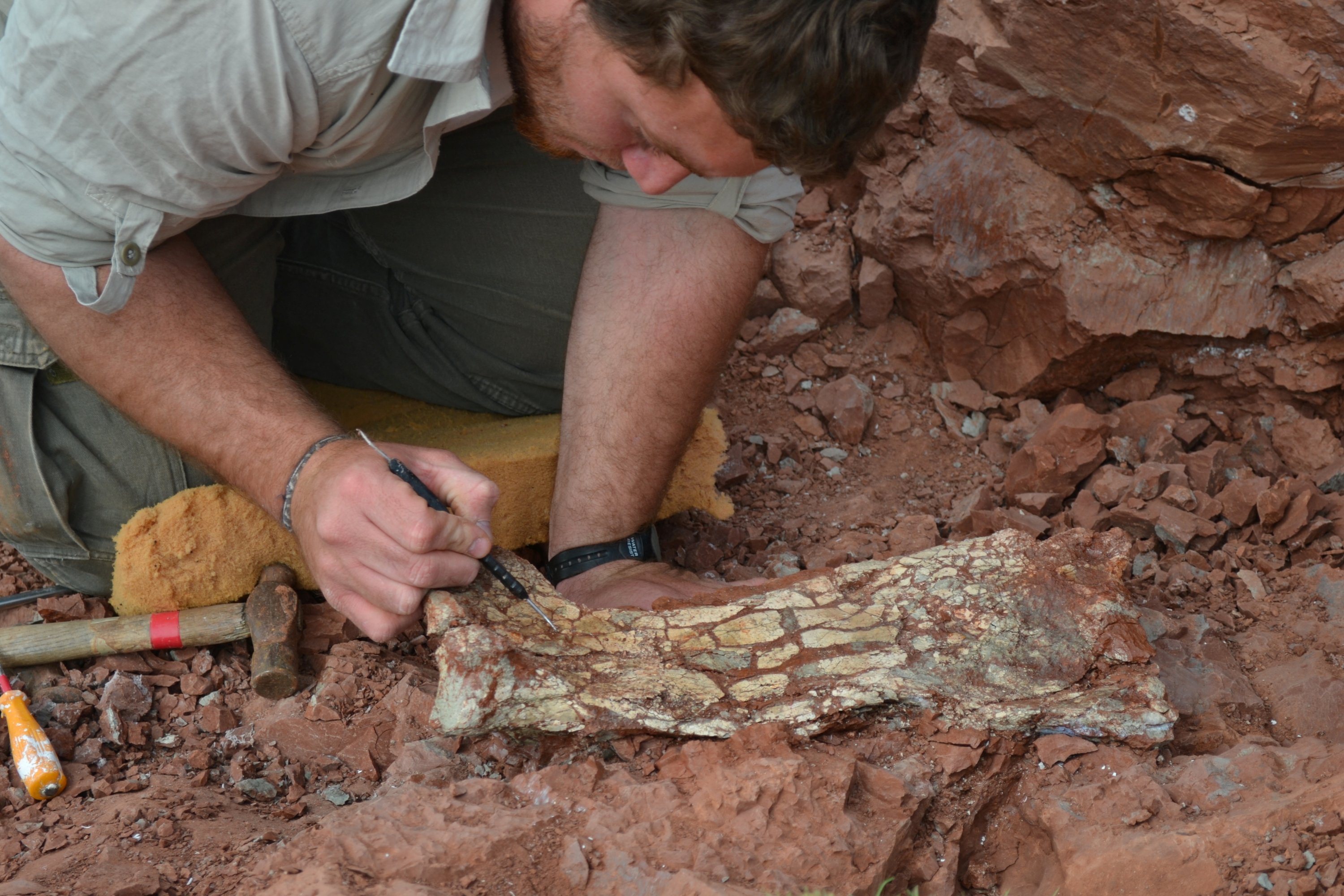
A paleontologist works on the excavation of bones and fossils that belonged to a newly discovered species of pterosaurs, Thanatosdrakon Amaru, in Agua del Padrillo, Mendoza, Argentina, Aug. 9, 2012. This picture was taken on Aug. 9, 2012. (Leonardo Ortiz David-Universidad de Cuyo/Handout via Reuters)
by Reuters May 23, 2022 11:44 pm

Scientists in Argentina have discovered the 86 million-year-old fossilized remains of a huge ancient flying reptile nicknamed "The Dragon of Death" that lived alongside the dinosaurs. The find provides insight into the predator, whose body was as long as a yellow school bus.

The new specimen of ancient flying reptile, or pterosaur, measured around 30 feet (9 meters) long and researchers say it predated birds as among the first creatures on Earth to use wings to hunt its prey from prehistoric skies.

The team of paleontologists discovered the fossils of the newly coined Thanatosdrakon Amaru in the Andes mountains in Argentina's western Mendoza province. They found that the rocks preserving the reptile's remains dated back 86 million years to the Cretaceous period.

The estimated date means these fearsome flying reptiles lived at least some 20 million years before an asteroid impact on what is now Mexico's Yucatan peninsula wiped out about three-quarters of life on the planet about 66 million years ago.

Project leader Leonardo Ortiz said in an interview over the weekend that the fossil's never-before-seen characteristics required a new genus and species name, with the latter combining ancient Greek words for death (thanatos) and dragon (drakon).

"It seemed appropriate to name it that way," said Ortiz. "It's the dragon of death."

The reptile would likely have been a frightening sight. Researchers, who published their study last April in the scientific journal Cretaceous Research, said the fossil's huge bones classify the new species as the largest pterosaur yet discovered in South America and one of the largest found anywhere.

"We don't have a current record of any close relative that even has a body modification similar to these beasts," said Ortiz.


  • shortlink copied
  • KEYWORDS
    fossils argentina flying reptile dragon of death
    The Daily Sabah Newsletter
    Keep up to date with what’s happening in Turkey, it’s region and the world.
    You can unsubscribe at any time. By signing up you are agreeing to our Terms of Use and Privacy Policy. This site is protected by reCAPTCHA and the Google Privacy Policy and Terms of Service apply.
    Byblos, Lebanon
    10 oldest continuously inhabited cities in the world
    PHOTOGALLERY
    • POLITICS
    • Diplomacy
    • Legislation
    • War On Terror
    • EU Affairs
    • News Analysis
    • TÜRKİYE
    • Istanbul
    • Education
    • Investigations
    • Minorities
    • Diaspora
    • World
    • Mid-East
    • Europe
    • Americas
    • Asia Pacific
    • Africa
    • Syrian Crisis
    • İslamophobia
    • Business
    • Automotive
    • Economy
    • Energy
    • Finance
    • Tourism
    • Tech
    • Defense
    • Transportation
    • News Analysis
    • Lifestyle
    • Health
    • Environment
    • Travel
    • Food
    • Fashion
    • Science
    • Religion
    • History
    • Feature
    • Expat Corner
    • Arts
    • Cinema
    • Music
    • Events
    • Portrait
    • Performing Arts
    • Reviews
    • Sports
    • Football
    • Basketball
    • Motorsports
    • Tennis
    • Opinion
    • Columns
    • Op-Ed
    • Reader's Corner
    • Editorial
    • Photo gallery
    • DS TV
    • Jobs
    • privacy
    • about us
    • contact us
    • RSS
    © Turkuvaz Haberleşme ve Yayıncılık 2021