Scientists have transplanted laboratory-grown human brain tissue into bioengineered mice in what they call an important advance for studying human brain development that may speed research into the causes and mechanisms of devastating disorders such as profound autism, epilepsy, cerebral palsy and schizophrenia.
The researchers said the human tissue replicated key features of brain development including formation of functional neural networks after being transplanted into mice engineered to lack most of their own cerebral cortex, the brain's outermost layer. They said this is significant because living human brain tissue is essentially inaccessible for research purposes for ethical reasons.
"This gives us a way to study human neural tissue across several levels, from genes and individual cell types to circuits and functional consequences in an animal. We can begin to ask how disease-associated human genetic changes alter neural development and circuitry and whether potential treatments can prevent or correct those changes," said Stanford University neuroscientist Sergiu Pasca, senior author of the study published on Wednesday in the journal Nature.
The researchers in laboratory dishes fashioned miniaturized, three-dimensional "organoids" designed to reproduce key cell types and developmental features of the human cerebral cortex. This part of the brain governs higher-level functioning such as cognition, language, attention and decision-making.
They did so by reprogramming skin or blood cells to become stem cells capable of transforming into almost any cell type in the body.
In bioengineering the mice, the scientists employed a genetic strategy that blocked development of most of the cells that normally give rise to the cerebral cortex and the hippocampus, a brain structure crucial for memory formation.
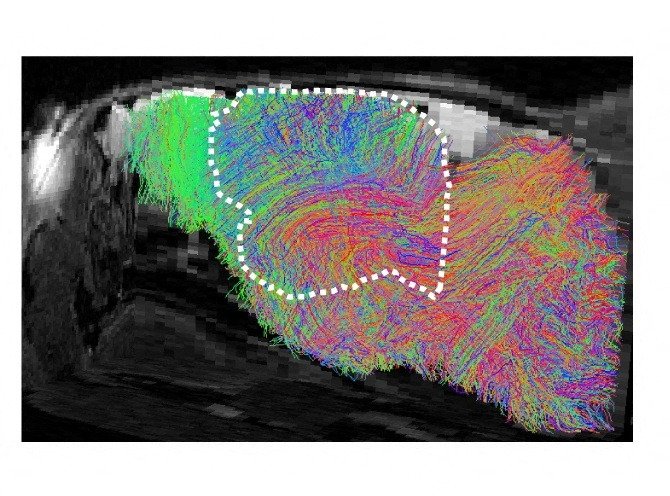
"The space normally occupied by the mouse cortex allowed us to transplant human cortical organoids shortly after birth and gave the human tissue room to grow extensively," Pasca said. "In these mice, the human grafts generated a broad diversity of cortical cell types and established functional connections throughout the mouse nervous system."
The kinds of cortical cells generated included a rare type, called von Economo neurons, considered vulnerable in some forms of dementia.Y
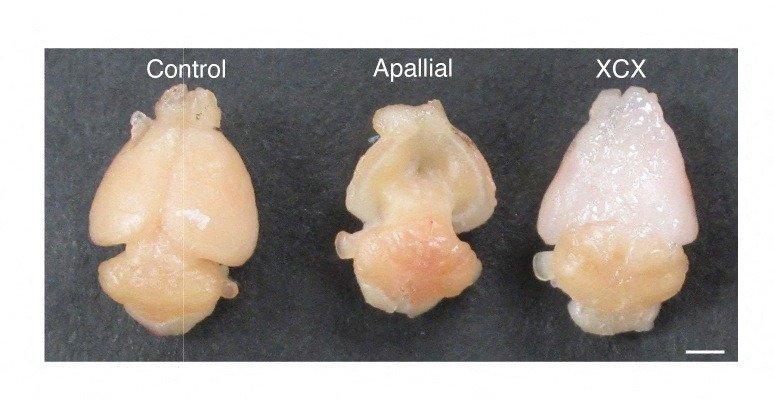
"One point I would emphasize is the terminology," Pasca said. "Descriptions such as humanized mice, mice with human brains or mini-brains are not accurate representations of what we have created. These animals retain a mouse nervous system, but they contain a larger volume of human cortical tissue that develops, integrates and forms connections within it."
The researchers called them "xenocortical" mice, referring to the "foreign" transplanted human cortical tissue.
"Cortical organoids give us an experimental window into human brain development and disease. They are not miniature brains and do not reproduce the full complexity of the human brain, but they allow us to study human neural cell types and developmental processes that would otherwise be extremely difficult to access," Pasca said.
This approach could be especially useful for studying disorders that begin during brain development such as autism, epilepsy, schizophrenia and cerebral palsy, as well as environmental injuries such as oxygen deprivation occurring around the time of birth, according to the researchers.
They exposed the mice to oxygen deprivation as a first application of this research model.
The developing human brain can be highly vulnerable to oxygen deprivation. When it occurs during pregnancy or around birth, it can have major neurological consequences including contributing to cerebral palsy and increasing the risk of epilepsy or autism, Pasca said. But mice can be resilient to levels of oxygen deprivation that injure human neural tissue.
"In the xenocortical mice, a period of low oxygen caused substantial injury to human cortical cells and was accompanied by abnormalities in gait and motor coordination," Pasca said, while ordinary lab mice experienced no such effects from low oxygen.
The researchers said the experiments adhered to ethical guidelines focused on two issues in particular.
"The first is animal welfare: the scientific question has to justify the use of animals, suffering must be minimized and experiments should only be performed when the information cannot adequately be obtained with alternative approaches," Pasca said.
"The second is whether introducing increasingly complex human neural tissue into an animal nervous system could lead to unexpected, emergent or novel properties that would require additional ethical consideration," Pasca said.
The bioengineered mice looked like ordinary laboratory mice as they moved around and explored their environment, but had deficits in fine motor coordination and differences in memory abilities.
"We also have to weigh the cost of not doing this work," Pasca said, noting that neurological and psychiatric disorders affect nearly one in five people even as scientific understanding remains limited and effective treatments remain lacking for many of these conditions.