Daily Sabah logo

Politics
Diplomacy Legislation War On Terror EU Affairs Elections News Analysis
TÜRKİYE
Istanbul Education Investigations Minorities Expat Corner Diaspora
World
Mid-East Europe Americas Asia Pacific Africa Syrian Crisis Islamophobia
Business
Automotive Economy Energy Finance Tourism Tech Defense Transportation News Analysis
Lifestyle
Health Environment Travel Food Fashion Science Religion History Feature Expat Corner
Arts
Cinema Music Events Portrait Reviews Performing Arts
Sports
Football Basketball Motorsports Tennis
Opinion
Columns Op-Ed Reader's Corner Editorial
PHOTO GALLERY
JOBS ABOUT US RSS PRIVACY CONTACT US
© Turkuvaz Haberleşme ve Yayıncılık 2025

Daily Sabah - Latest & Breaking News from Turkey | Istanbul

  • Politics
    • Diplomacy
    • Legislation
    • War On Terror
    • EU Affairs
    • Elections
    • News Analysis
  • TÜRKİYE
    • Istanbul
    • Education
    • Investigations
    • Minorities
    • Expat Corner
    • Diaspora
  • World
    • Mid-East
    • Europe
    • Americas
    • Asia Pacific
    • Africa
    • Syrian Crisis
    • Islamophobia
  • Business
    • Automotive
    • Economy
    • Energy
    • Finance
    • Tourism
    • Tech
    • Defense
    • Transportation
    • News Analysis
  • Lifestyle
    • Health
    • Environment
    • Travel
    • Food
    • Fashion
    • Science
    • Religion
    • History
    • Feature
    • Expat Corner
  • Arts
    • Cinema
    • Music
    • Events
    • Portrait
    • Reviews
    • Performing Arts
  • Sports
    • Football
    • Basketball
    • Motorsports
    • Tennis
  • Gallery
  • Opinion
    • Columns
    • Op-Ed
    • Reader's Corner
    • Editorial
  • TV
  • Life
  • Health
  • Environment
  • Travel
  • Food
  • Fashion
  • Science
  • Religion
  • History
  • Feature
  • Expat Corner

Jurassic giants: Sauropod dinosaurs had many lineages

by Reuters

WASHINGTON May 10, 2023 - 10:20 am GMT+3
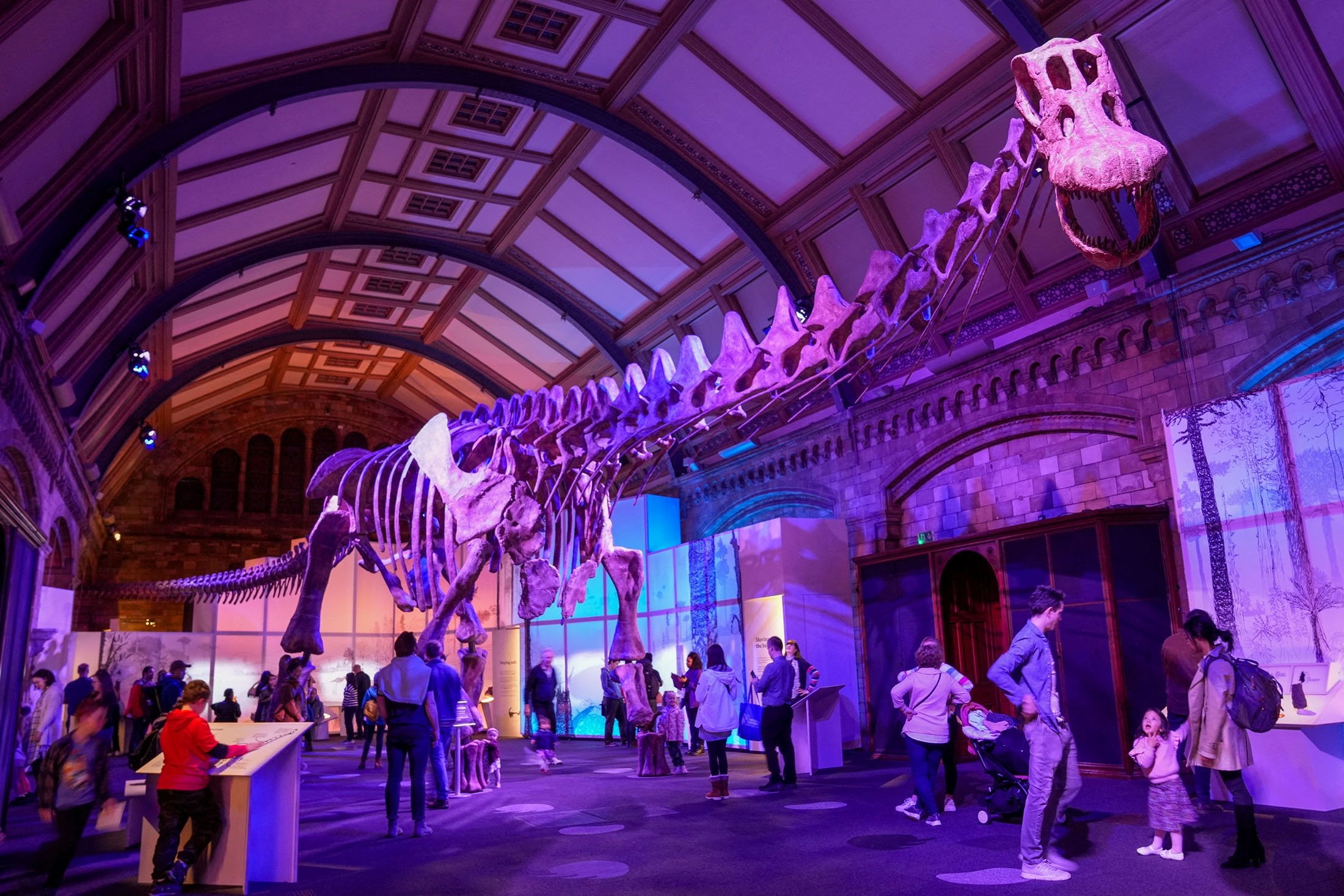
Museum visitors walk beneath the skeleton of Patagotitan mayorum at Natural History Museum in London, U.K., April 1, 2023. (Reuters Photo)
by Reuters May 10, 2023 10:20 am

Everyone remembers the first time they saw a sauropod in the 1993 classic "Jurassic Park" – those majestic, familiar plant-eating dinosaurs with long necks, long tails, and four pillar-like legs. They were once upon a time, the biggest land animals in Earth's history, reaching 30 to 36 meters (100 to 120 feet) long and weighing as much as a tractor-trailer.

A new study has calculated for the first time the number of different sauropod lineages that achieved whopping proportions – 36 of them in about 100 million years bridging the Jurassic and Cretaceous periods. There was no one-size-fits-all evolutionary strategy to become immense, with these lineages distinct from one another despite sharing a general body plan.

"Sauropods aren't just the largest animals ever to walk the Earth. They earned that title independently over 30 times throughout their evolutionary history," said paleontologist Mike D'Emic of Adelphi University in New York, author of the study published in the journal Current Biology.

The heavyweight champion was Argentinosaurus, which lived about 95 million years ago in – you guessed it – Argentina, and weighed about 76 metric tons. Next were Brachiosaurus, at 63 metric tons, and Barosaurus, at 60 metric tons, both living approximately 150 million years ago in western North America.

They were followed by several tied at around 48 metric tons: Notocolossus, Dreadnoughtus and Patagotitan – all from Argentina – as well as Yunmenglong, from central China, and Australotitan, from Australia.

Sauropods were topped in size only by certain filter-feeding whales, with today's blue whale the biggest at roughly 150 metric tons.

Based on limb bone dimensions, D'Emic calculated body mass estimates for about 190 of the approximately 250 known sauropod species.
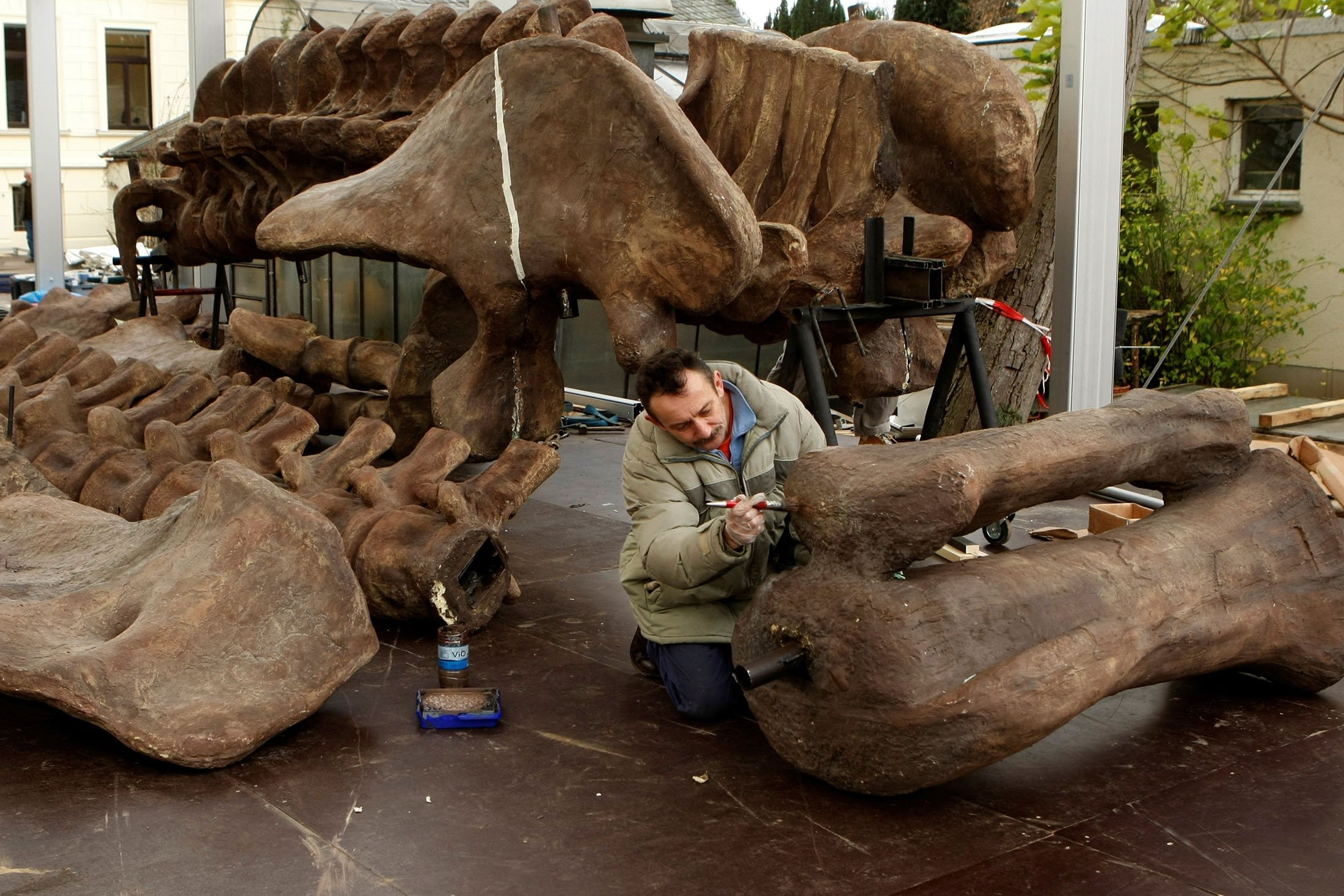
A worker prepares parts of the skeleton of an Argentinosaurus at the Museum Koenig in Bonn, Germany, Nov. 25, 2009. (Reuters Photo)

The study focused upon sauropod lineages that produced species exceeding the size of any other land animals on record, with that benchmark set by the biggest mammals such as elephant relatives Palaeoloxodon and Mammut and rhino relative Paraceratherium, between 17 to 25 metric tons.

D'Emic identified 45 species from 36 sauropod lineages that beat those.

Sauropods arose around 200 million years ago. The first species to reach superlative size was Xinjiangtitan, which lived about 165 million years ago in China. The last was Alamosaurus, which lived in the southwestern United States just before the asteroid strike 66 million years ago that doomed the dinosaurs, aside from their bird descendants.

"Some had necks that mirrored their tails in length, while others had necks that look impossibly long for their bodies, and others had stubbier, more robust necks. Some were slender, like a giraffe, and others were stocky like a rhinoceros," D'Emic said.

"The biggest sauropods varied: in terms of diet, which we know because their teeth and skulls are different shapes; in terms of growth rates and metabolism, which we know from looking at their fossils under the microscope; and in terms of how air-filled their bones were. Like birds today, some of their bones were hollow to save weight, and their chest cavities would have been filled with big air sacs," D'Emic added.

The findings contradict a 19th-century hypothesis that animal lineages increase body size gradually over time.

Size offered benefits for sauropods, which competed for resources with other plant-eating dinosaurs and faced dangerous meat-eating dinosaurs.

"There are several advantages for being large, such as being less subject to predation once you've grown to adult size, the ability to reach food that other animals can't, and the ability to have a wider geographic range so that if there is a food shortage or habitat loss in one region, you can migrate to another," D'Emic said.

"I think it's amazing that we are still learning so much about these animals," D'Emic said. "There are about 10 new sauropod species discovered each year. Most people think that the important or giant discoveries were made a hundred years ago, but we are living in the golden age of discovery for paleontology right now."


  • shortlink copied
  • Last Update: May 10, 2023 12:45 pm
    KEYWORDS
    dinosaurs jurassic science sauropod
    The Daily Sabah Newsletter
    Keep up to date with what’s happening in Turkey, it’s region and the world.
    You can unsubscribe at any time. By signing up you are agreeing to our Terms of Use and Privacy Policy. This site is protected by reCAPTCHA and the Google Privacy Policy and Terms of Service apply.
    No Image
    Let's take a selfie: 'Youseum' in Sweden's Stockholm makes you the exhibit
    PHOTOGALLERY
    • POLITICS
    • Diplomacy
    • Legislation
    • War On Terror
    • EU Affairs
    • News Analysis
    • TÜRKİYE
    • Istanbul
    • Education
    • Investigations
    • Minorities
    • Diaspora
    • World
    • Mid-East
    • Europe
    • Americas
    • Asia Pacific
    • Africa
    • Syrian Crisis
    • İslamophobia
    • Business
    • Automotive
    • Economy
    • Energy
    • Finance
    • Tourism
    • Tech
    • Defense
    • Transportation
    • News Analysis
    • Lifestyle
    • Health
    • Environment
    • Travel
    • Food
    • Fashion
    • Science
    • Religion
    • History
    • Feature
    • Expat Corner
    • Arts
    • Cinema
    • Music
    • Events
    • Portrait
    • Performing Arts
    • Reviews
    • Sports
    • Football
    • Basketball
    • Motorsports
    • Tennis
    • Opinion
    • Columns
    • Op-Ed
    • Reader's Corner
    • Editorial
    • Photo gallery
    • DS TV
    • Jobs
    • privacy
    • about us
    • contact us
    • RSS
    © Turkuvaz Haberleşme ve Yayıncılık 2021