Daily Sabah logo

Politics
Diplomacy Legislation War On Terror EU Affairs Elections News Analysis
TÜRKİYE
Istanbul Education Investigations Minorities Expat Corner Diaspora
World
Mid-East Europe Americas Asia Pacific Africa Syrian Crisis Islamophobia
Business
Automotive Economy Energy Finance Tourism Tech Defense Transportation News Analysis
Lifestyle
Health Environment Travel Food Fashion Science Religion History Feature Expat Corner
Arts
Cinema Music Events Portrait Reviews Performing Arts
Sports
Football Basketball Motorsports Tennis
Opinion
Columns Op-Ed Reader's Corner Editorial
PHOTO GALLERY
JOBS ABOUT US RSS PRIVACY CONTACT US
© Turkuvaz Haberleşme ve Yayıncılık 2025

Daily Sabah - Latest & Breaking News from Turkey | Istanbul

  • Politics
    • Diplomacy
    • Legislation
    • War On Terror
    • EU Affairs
    • Elections
    • News Analysis
  • TÜRKİYE
    • Istanbul
    • Education
    • Investigations
    • Minorities
    • Expat Corner
    • Diaspora
  • World
    • Mid-East
    • Europe
    • Americas
    • Asia Pacific
    • Africa
    • Syrian Crisis
    • Islamophobia
  • Business
    • Automotive
    • Economy
    • Energy
    • Finance
    • Tourism
    • Tech
    • Defense
    • Transportation
    • News Analysis
  • Lifestyle
    • Health
    • Environment
    • Travel
    • Food
    • Fashion
    • Science
    • Religion
    • History
    • Feature
    • Expat Corner
  • Arts
    • Cinema
    • Music
    • Events
    • Portrait
    • Reviews
    • Performing Arts
  • Sports
    • Football
    • Basketball
    • Motorsports
    • Tennis
  • Gallery
  • Opinion
    • Columns
    • Op-Ed
    • Reader's Corner
    • Editorial
  • TV
  • Life
  • Health
  • Environment
  • Travel
  • Food
  • Fashion
  • Science
  • Religion
  • History
  • Feature
  • Expat Corner

Looking out for Armageddon: Studies to protect Earth from asteroids

by Anadolu Agency

ANKARA Jul 04, 2022 - 9:36 am GMT+3
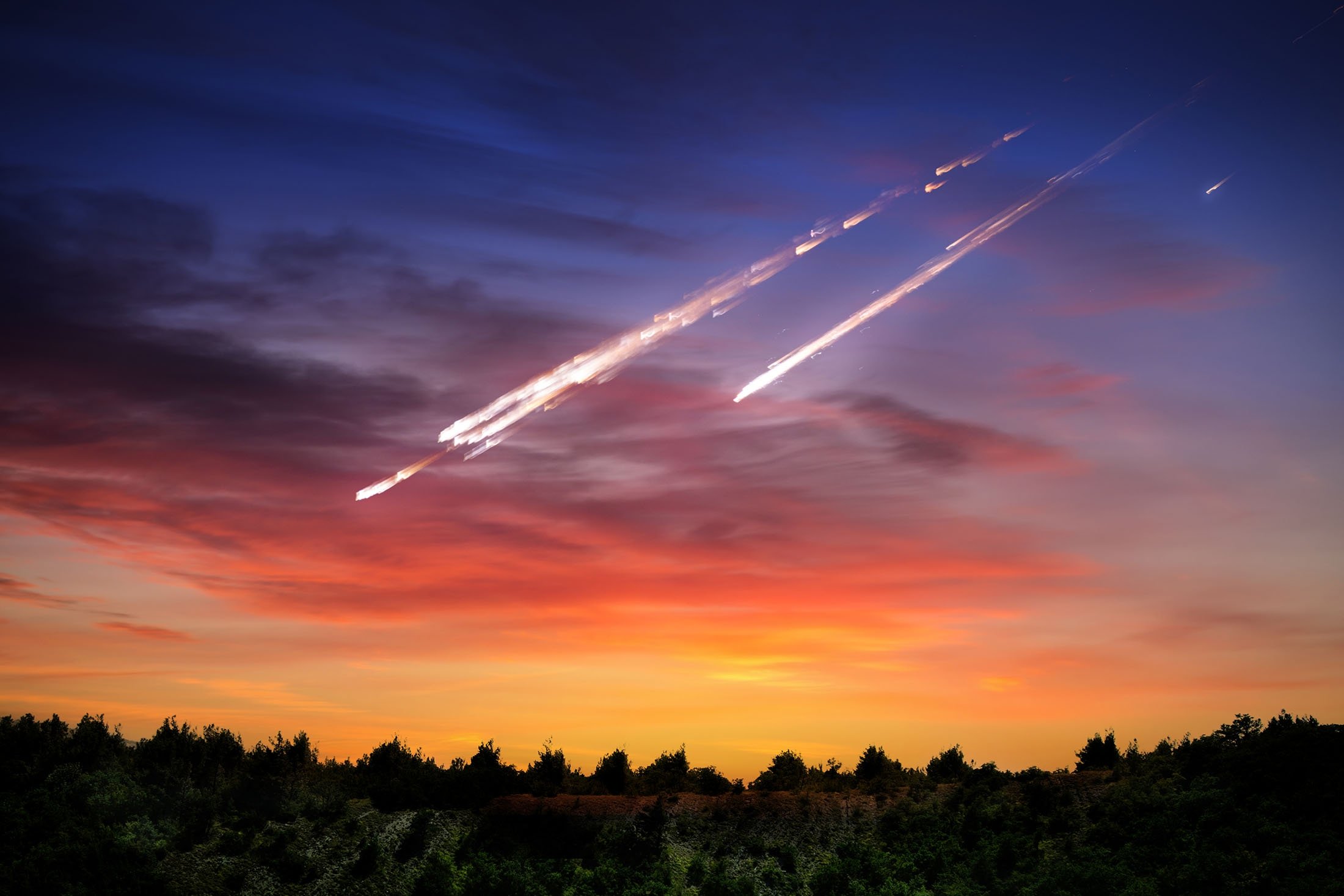
Scientists closely monitor near-Earth asteroids with the aim of reducing the possibility of collisions that could cause great damage to life. (Shutterstock Photo)
by Anadolu Agency Jul 04, 2022 9:36 am

Asteroids have been a big part of popular culture for decades and there have been numerous techniques used in science-fiction to divert planet-killers from their trajectory toward Earth, but some actually come close to scientists' real plans

If you have seen Adam McKay's anxiety-inducing 2021 flick "Don't Look Up" starring Leonardo DiCaprio and Jennifer Lawrence, then you can imagine the importance of closely monitoring and understanding near-Earth asteroids with the aim of reducing the possibility of collisions that could cause great damage to life and the natural environment, as in the extinction of the dinosaurs in the past.

Studies continue unabated on asteroids, which are leftovers from the formation of our solar system about 4.6 billion years ago and have the potential to hit the Earth.

In December 2016, the United Nations General Assembly adopted a resolution declaring June 30 International Asteroid Day, which aims to raise public awareness about the asteroid impact hazard and to inform the public about the crisis communication actions to be taken at the global level in case of a credible near-Earth object threat, according to the U.N.'s website.

Smaller than planets, most of the asteroids in the solar system are located in the asteroid belt roughly between the orbits of Jupiter and Mars. But some of them can leave orbit and be thrown into the inner solar system and even enter the Earth's orbit.

Darting in space

In November last year, the National Aeronautics and Space Administration (NASA), the United States space agency, began its first test mission of a planetary defense system by launching a spacecraft that is intended to strike an asteroid with the hopes of causing a measurable change in its trajectory.

The Double Asteroid Redirection Test (DART) was launched aboard a SpaceX rocket from Vandenberg Space Force Base in central California.

The spacecraft is intended to intentionally collide with an asteroid at such a speed that it will change the asteroid’s rotation speed and direction of motion by a level that is measurable by land-based telescopes.

The spacecraft will cruise for about one year until it reaches its target – a pair of asteroids known as Didymos – and will crash into the smaller one, Dimorphos, at nearly 24,140 kilometers (15,000 miles) per hour, or 6 kilometers (4 miles) per second. NASA stresses that the mission is just a test and that the asteroids are not a threat to Earth.

It is expected to reach Didymos between Sept. 26 and Oct. 1, 2022.

Psyche mission

According to NASA's official website, the Psyche mission is a journey to a unique metal-rich asteroid orbiting the sun between Mars and Jupiter.

With a wealth of precious metals such as gold, platinum, nickel, copper, cobalt, iridium and radium, the asteroid Psyche was discovered in 1852.

The importance of the mission is that Psyche offers a unique window into the violent history of collisions and accretion that created terrestrial planets.

NASA has halted its planned 2022 launch attempt of the Psyche asteroid mission due to the late delivery of the spacecraft's flight software and testing equipment.

The mission aims to explore the asteroid in detail for the first time. Experts predict that the mission will extend to 2023 or 2024 and the vehicle will arrive on Psyche in 2029 or 2030.

Potential hazard

The potential hazard of asteroids at the beginning of the 20th century revealed what damage even a small-sized asteroid could cause if it hit the Earth.

Recorded as the most significant asteroid impact in recent Earth history, on June 30, 1908, an asteroid 40 meters (131 feet) in diameter crashed into the Tunguska region of Siberia, destroying a forest the size of a large city.

In the resulting fires, 2,000 kilometers (1,242 miles) of forest area in the East Siberian taiga were destroyed.

The event inspired the adoption of June 30 as International Asteroid Day by the U.N. in 2016.

  • shortlink copied
  • Last Update: Jul 04, 2022 11:02 am
    KEYWORDS
    space asteroid interstellar object space mission planetary defense
    The Daily Sabah Newsletter
    Keep up to date with what’s happening in Turkey, it’s region and the world.
    You can unsubscribe at any time. By signing up you are agreeing to our Terms of Use and Privacy Policy. This site is protected by reCAPTCHA and the Google Privacy Policy and Terms of Service apply.
    No Image
    In photos: Netanyahu’s 12-year reign of terror and corruption
    PHOTOGALLERY
    • POLITICS
    • Diplomacy
    • Legislation
    • War On Terror
    • EU Affairs
    • News Analysis
    • TÜRKİYE
    • Istanbul
    • Education
    • Investigations
    • Minorities
    • Diaspora
    • World
    • Mid-East
    • Europe
    • Americas
    • Asia Pacific
    • Africa
    • Syrian Crisis
    • İslamophobia
    • Business
    • Automotive
    • Economy
    • Energy
    • Finance
    • Tourism
    • Tech
    • Defense
    • Transportation
    • News Analysis
    • Lifestyle
    • Health
    • Environment
    • Travel
    • Food
    • Fashion
    • Science
    • Religion
    • History
    • Feature
    • Expat Corner
    • Arts
    • Cinema
    • Music
    • Events
    • Portrait
    • Performing Arts
    • Reviews
    • Sports
    • Football
    • Basketball
    • Motorsports
    • Tennis
    • Opinion
    • Columns
    • Op-Ed
    • Reader's Corner
    • Editorial
    • Photo gallery
    • DS TV
    • Jobs
    • privacy
    • about us
    • contact us
    • RSS
    © Turkuvaz Haberleşme ve Yayıncılık 2021