Daily Sabah logo

Politics
Diplomacy Legislation War On Terror EU Affairs Elections News Analysis
TÜRKİYE
Istanbul Education Investigations Minorities Expat Corner Diaspora
World
Mid-East Europe Americas Asia Pacific Africa Syrian Crisis Islamophobia
Business
Automotive Economy Energy Finance Tourism Tech Defense Transportation News Analysis
Lifestyle
Health Environment Travel Food Fashion Science Religion History Feature Expat Corner
Arts
Cinema Music Events Portrait Reviews Performing Arts
Sports
Football Basketball Motorsports Tennis
Opinion
Columns Op-Ed Reader's Corner Editorial
PHOTO GALLERY
JOBS ABOUT US RSS PRIVACY CONTACT US
© Turkuvaz Haberleşme ve Yayıncılık 2026

Daily Sabah - Latest & Breaking News from Turkey | Istanbul

  • Politics
    • Diplomacy
    • Legislation
    • War On Terror
    • EU Affairs
    • Elections
    • News Analysis
  • TÜRKİYE
    • Istanbul
    • Education
    • Investigations
    • Minorities
    • Expat Corner
    • Diaspora
  • World
    • Mid-East
    • Europe
    • Americas
    • Asia Pacific
    • Africa
    • Syrian Crisis
    • Islamophobia
  • Business
    • Automotive
    • Economy
    • Energy
    • Finance
    • Tourism
    • Tech
    • Defense
    • Transportation
    • News Analysis
  • Lifestyle
    • Health
    • Environment
    • Travel
    • Food
    • Fashion
    • Science
    • Religion
    • History
    • Feature
    • Expat Corner
  • Arts
    • Cinema
    • Music
    • Events
    • Portrait
    • Reviews
    • Performing Arts
  • Sports
    • Football
    • Basketball
    • Motorsports
    • Tennis
  • Gallery
  • Opinion
    • Columns
    • Op-Ed
    • Reader's Corner
    • Editorial
  • TV
  • Life
  • Health
  • Environment
  • Travel
  • Food
  • Fashion
  • Science
  • Religion
  • History
  • Feature
  • Expat Corner

New galaxy map provides clues to universe’s dark matter mystery

by Associated Press

New York Jan 28, 2026 - 10:54 am GMT+3
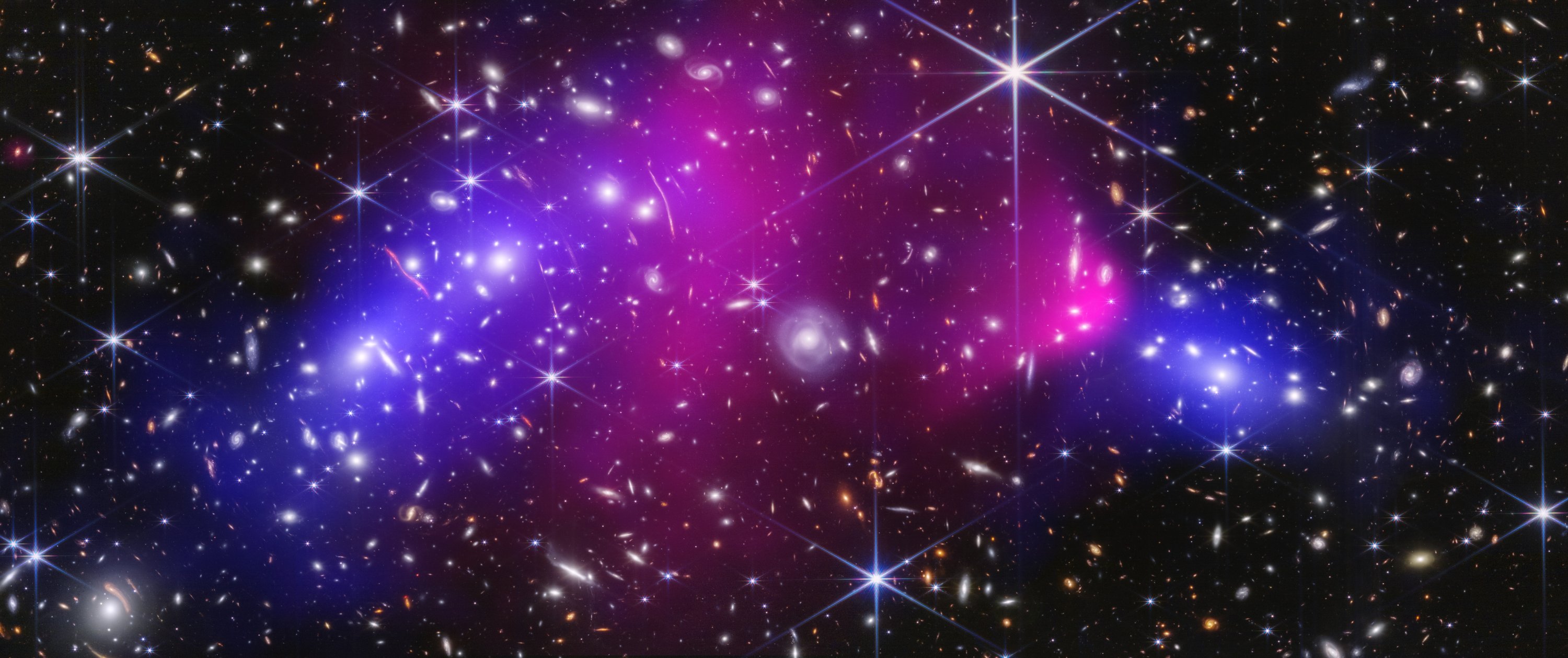
This NASA image shows two massive galaxy clusters previously captured by NASA's James Webb Space Telescope and Chandra X-ray Observatory, with areas of possible dark matter in blue. (AP Photo)
by Associated Press Jan 28, 2026 10:54 am

A new high-resolution map of distant galaxies may help scientists understand a mysterious invisible substance that helps hold the universe together.

The ordinary matter all around us – stars, planets and people – makes up just 5% of the universe. For decades, researchers have hoped to demystify what's known as dark matter, a material that comprises just over a quarter of our universe. Another equally mysterious force called dark energy makes up the rest.

Dark matter doesn't absorb or give off light, so scientists can't study it directly. But they can observe how its gravity warps and bends the star stuff around it - for example, the light from distant galaxies. By studying these distortions across large swathes of the universe, scientists can get closer to unmasking dark matter and its various hiding places.

The latest map, created with images from NASA's James Webb Space Telescope, is the most detailed yet over such a large patch of sky. It has twice the resolution of previous attempts using the Hubble Space Telescope and captures hundreds of thousands of galaxies over the past 10 billion years.

"Now, we can see everything more clearly,” said study author Diana Scognamiglio with NASA's Jet Propulsion Laboratory.

The latest map, published Monday in the journal Nature Astronomy, includes information on new galaxy clusters and the strands of dark matter that connect them. Piece by piece, these structures help form the skeleton of the universe. Scientists can study this map to see how dark matter has clumped up over billions of years.

Dark matter doesn't have much of an impact on your midday lunch order or your nightly bedtime ritual. But it silently passes through your body all the time and has shaped the universe.

As humans, we're naturally curious to know more about where we come from and that story can’t be told without dark matter, said astrophysicist Rutuparna Das with the Harvard-Smithsonian Center for Astrophysics

"Our home is the universe and we want to understand what the nature of it is,” said Das, who was not involved with the new study.


  • shortlink copied
  • KEYWORDS
    nasa scientists galaxies dark matter universe dark energy webb telescope
    The Daily Sabah Newsletter
    Keep up to date with what’s happening in Turkey, it’s region and the world.
    You can unsubscribe at any time. By signing up you are agreeing to our Terms of Use and Privacy Policy. This site is protected by reCAPTCHA and the Google Privacy Policy and Terms of Service apply.
    No Image
    Amazon tribes grant rare access to Xingu chief’s funeral rite Kuarup
    PHOTOGALLERY
    • POLITICS
    • Diplomacy
    • Legislation
    • War On Terror
    • EU Affairs
    • News Analysis
    • TÜRKİYE
    • Istanbul
    • Education
    • Investigations
    • Minorities
    • Diaspora
    • World
    • Mid-East
    • Europe
    • Americas
    • Asia Pacific
    • Africa
    • Syrian Crisis
    • İslamophobia
    • Business
    • Automotive
    • Economy
    • Energy
    • Finance
    • Tourism
    • Tech
    • Defense
    • Transportation
    • News Analysis
    • Lifestyle
    • Health
    • Environment
    • Travel
    • Food
    • Fashion
    • Science
    • Religion
    • History
    • Feature
    • Expat Corner
    • Arts
    • Cinema
    • Music
    • Events
    • Portrait
    • Performing Arts
    • Reviews
    • Sports
    • Football
    • Basketball
    • Motorsports
    • Tennis
    • Opinion
    • Columns
    • Op-Ed
    • Reader's Corner
    • Editorial
    • Photo gallery
    • DS TV
    • Jobs
    • privacy
    • about us
    • contact us
    • RSS
    © Turkuvaz Haberleşme ve Yayıncılık 2021