Daily Sabah logo

Politics
Diplomacy Legislation War On Terror EU Affairs Elections News Analysis
TÜRKİYE
Istanbul Education Investigations Minorities Expat Corner Diaspora
World
Mid-East Europe Americas Asia Pacific Africa Syrian Crisis Islamophobia
Business
Automotive Economy Energy Finance Tourism Tech Defense Transportation News Analysis
Lifestyle
Health Environment Travel Food Fashion Science Religion History Feature Expat Corner
Arts
Cinema Music Events Portrait Reviews Performing Arts
Sports
Football Basketball Motorsports Tennis
Opinion
Columns Op-Ed Reader's Corner Editorial
PHOTO GALLERY
JOBS ABOUT US RSS PRIVACY CONTACT US
© Turkuvaz Haberleşme ve Yayıncılık 2025

Daily Sabah - Latest & Breaking News from Turkey | Istanbul

  • Politics
    • Diplomacy
    • Legislation
    • War On Terror
    • EU Affairs
    • Elections
    • News Analysis
  • TÜRKİYE
    • Istanbul
    • Education
    • Investigations
    • Minorities
    • Expat Corner
    • Diaspora
  • World
    • Mid-East
    • Europe
    • Americas
    • Asia Pacific
    • Africa
    • Syrian Crisis
    • Islamophobia
  • Business
    • Automotive
    • Economy
    • Energy
    • Finance
    • Tourism
    • Tech
    • Defense
    • Transportation
    • News Analysis
  • Lifestyle
    • Health
    • Environment
    • Travel
    • Food
    • Fashion
    • Science
    • Religion
    • History
    • Feature
    • Expat Corner
  • Arts
    • Cinema
    • Music
    • Events
    • Portrait
    • Reviews
    • Performing Arts
  • Sports
    • Football
    • Basketball
    • Motorsports
    • Tennis
  • Gallery
  • Opinion
    • Columns
    • Op-Ed
    • Reader's Corner
    • Editorial
  • TV
  • Life
  • Health
  • Environment
  • Travel
  • Food
  • Fashion
  • Science
  • Religion
  • History
  • Feature
  • Expat Corner

New pollution height: Researchers find 'terrifying' plastic rocks

by Reuters

TRINDADE ISLAND, Brazil Mar 20, 2023 - 1:41 pm GMT+3
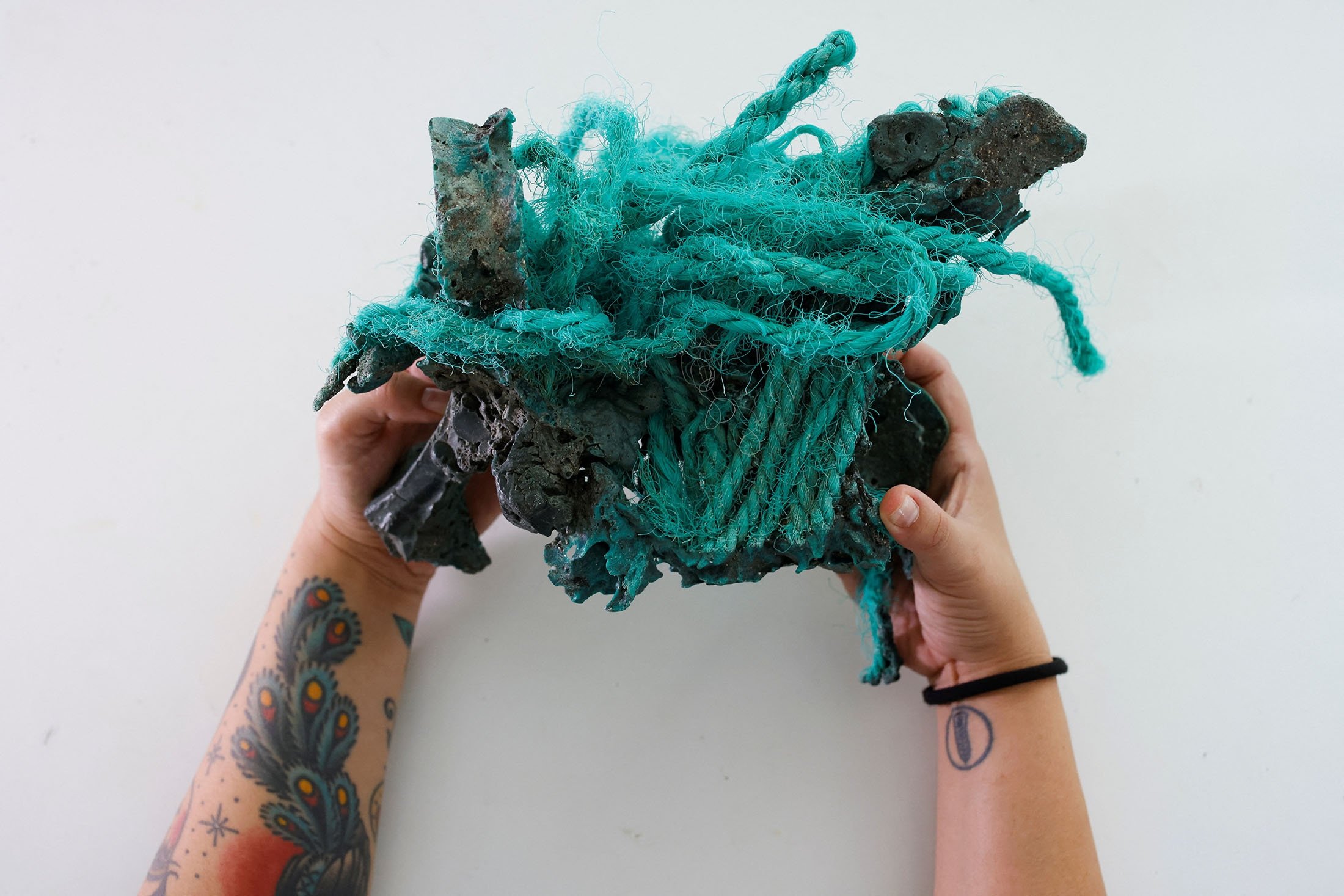
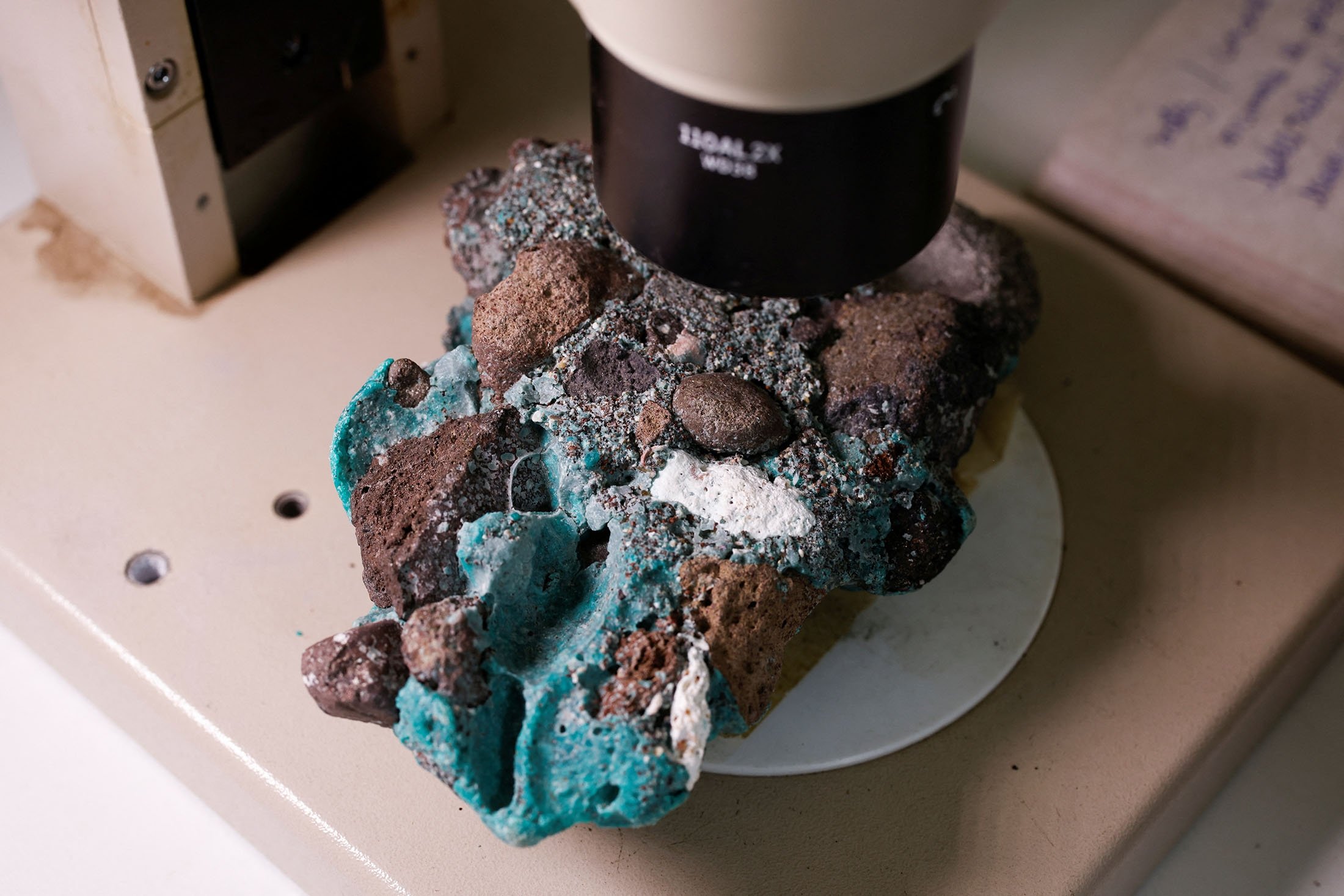
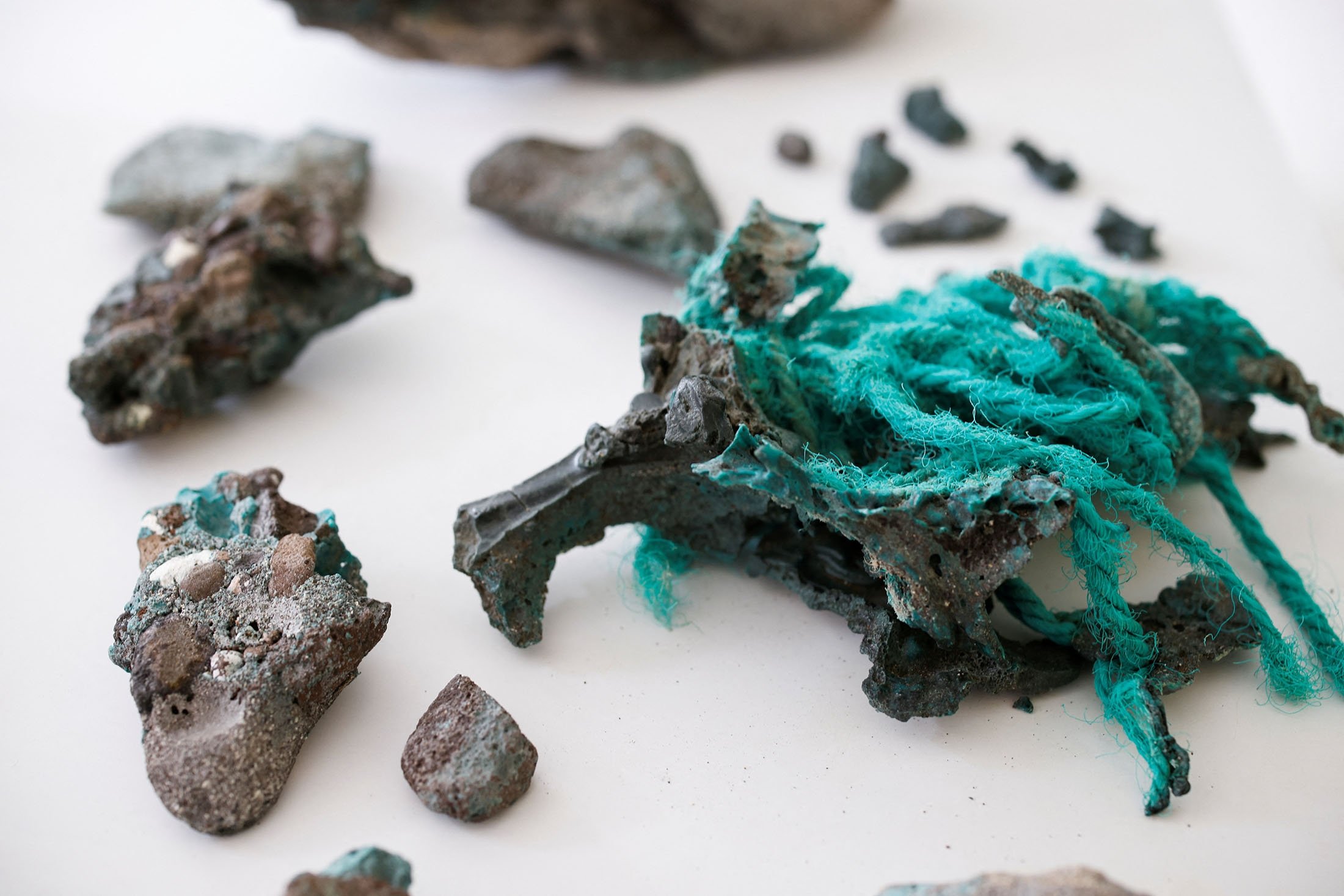
"Plastic rocks" found on Trindade Island are seen at a laboratory, in Curitiba, state of Parana, Brazil, March 7, 2023. (Reuters Photo)
by Reuters Mar 20, 2023 1:41 pm

Pollution of the Earth has reached a new milestone as it now affects its geology, scientists have revealed after the discovery of rocks made from plastic debris in the remote turtle refuge of Brazil's volcanic Trindade Island sparked new alarm.

Melted plastic has become intertwined with rocks on the island, located 1,140 kilometers (708 miles) from the southeastern state of Espirito Santo, which researchers say is evidence of humans' growing influence over the earth's geological cycles.

"This is new and terrifying at the same time because pollution has reached geology," said Fernanda Avelar Santos, a geologist at the Federal University of Parana.

Santos and her team ran chemical tests to find out what kind of plastics are in the rocks called "plastiglomerates" because they are made of a mixture of sedimentary granules and other debris held together by plastic.

"We identified (the pollution) mainly comes from fishing nets, which is very common debris on Trinidade Island's beaches," Santos said. "The (nets) are dragged by the marine currents and accumulate on the beach. When the temperature rises, this plastic melts and becomes embedded with the beach's natural material."
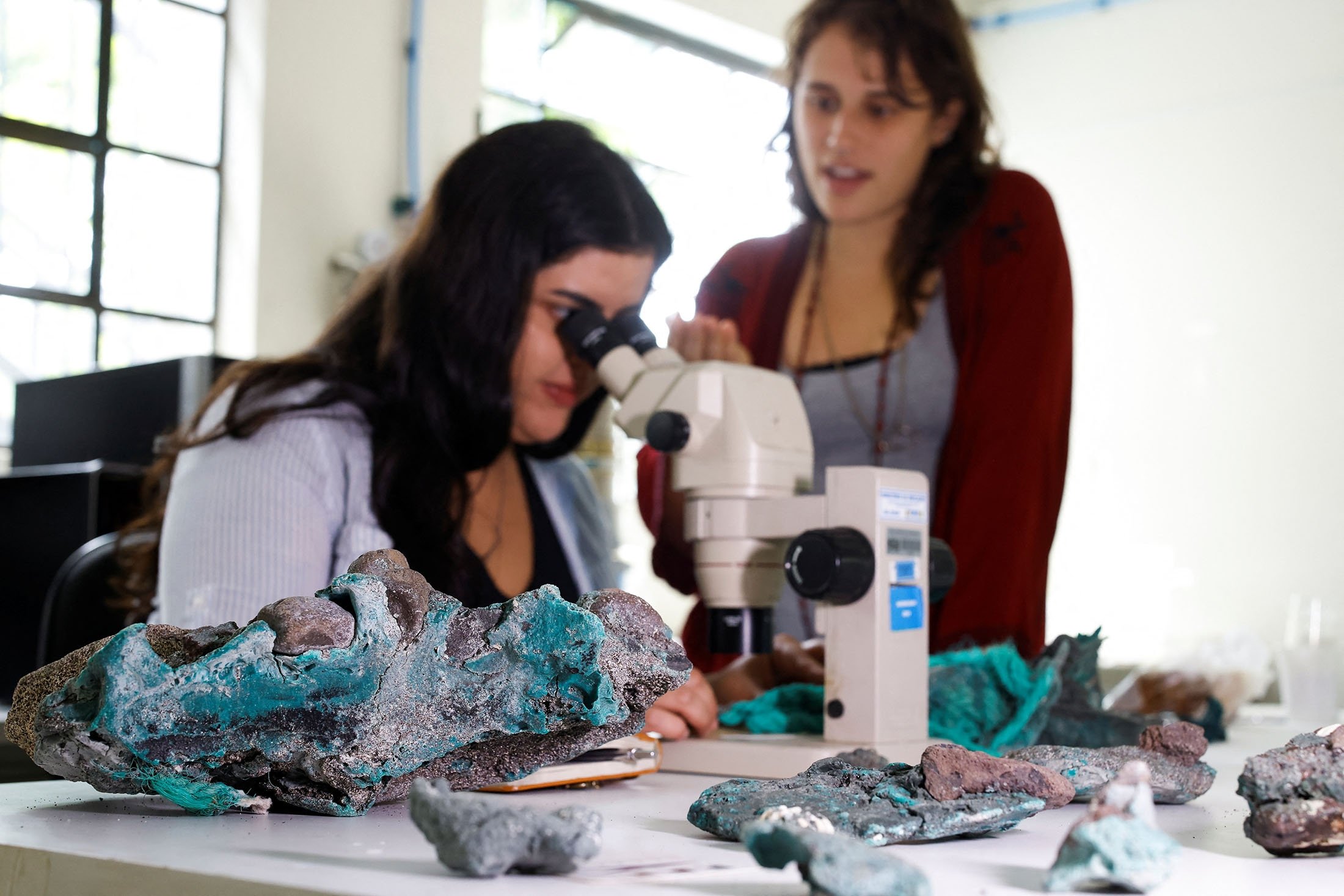
Researcher Fernanda Avelar Santos looks through a microscope at
Researcher Fernanda Avelar Santos holds
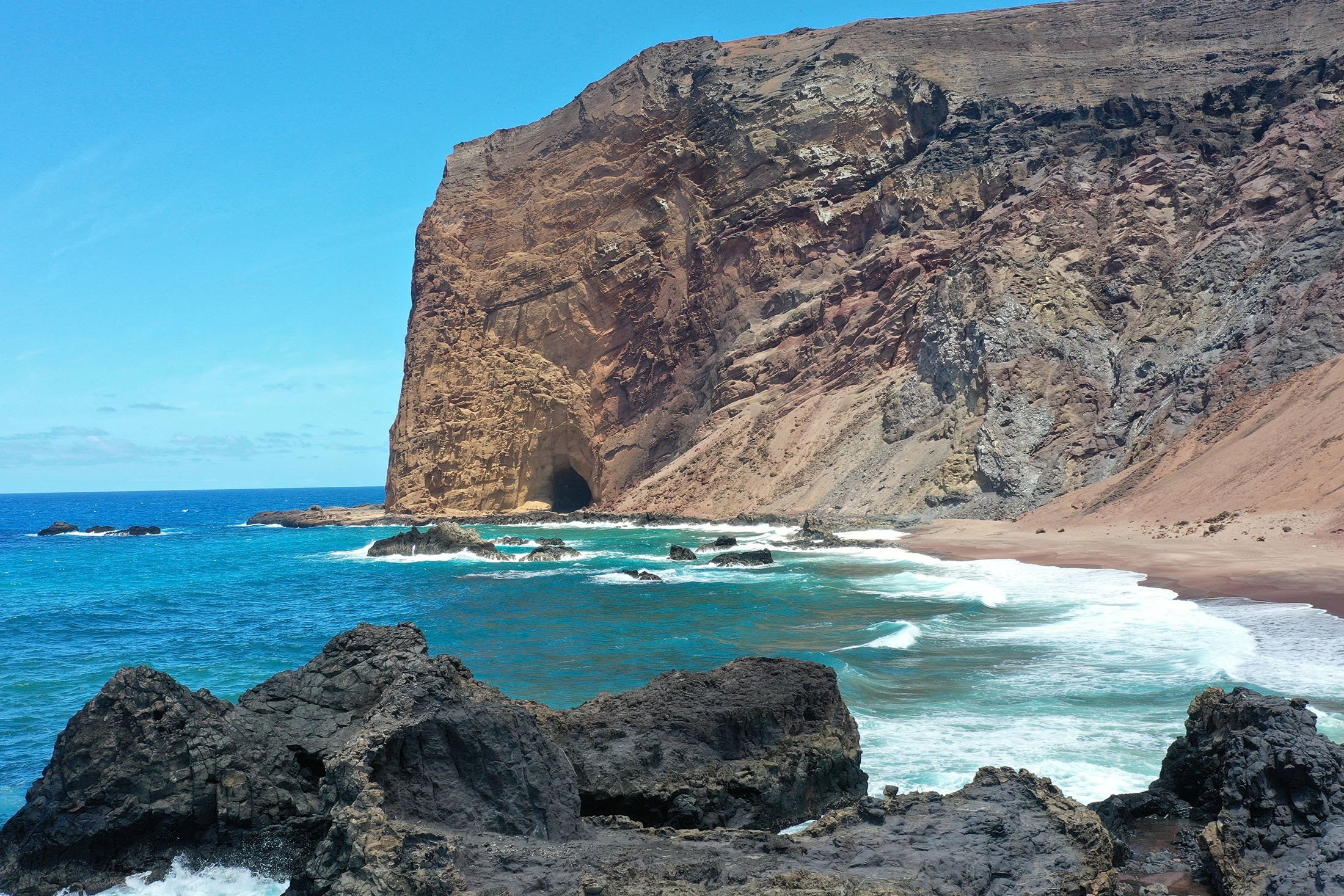
Trindade Island in Espirito Santo state, Brazil, Oct. 15, 2022. (Reuters Photo)

Trindade Island is one of the world's most important conservation spots for green turtles, or Chelonia mydas, with thousands arriving each year to lay their eggs. The only human inhabitants on Trindade are members of the Brazilian navy, which maintains a base on the island and protects the nesting turtles.

"The place where we found these samples (of plastic) is a permanently preserved area in Brazil, near the place green turtles lay their eggs," Santos said.

The discovery stirs questions about humans' legacy on the earth, says Santos.

"We talk so much about the Anthropocene, and this is it," Santos said, referring to a proposed geological epoch defined by humans' impact on the planet's geology and ecosystems.

"The pollution, the garbage in the sea and the plastic dumped incorrectly in the oceans is becoming geological material ... preserved in the earth's geological records."


  • shortlink copied
  • Last Update: Mar 20, 2023 3:07 pm
    KEYWORDS
    environment pollution plastic waste geology brazil
    The Daily Sabah Newsletter
    Keep up to date with what’s happening in Turkey, it’s region and the world.
    You can unsubscribe at any time. By signing up you are agreeing to our Terms of Use and Privacy Policy. This site is protected by reCAPTCHA and the Google Privacy Policy and Terms of Service apply.
    No Image
    Racing ferrets, fire and Ukraine: Weekly top photos
    PHOTOGALLERY
    • POLITICS
    • Diplomacy
    • Legislation
    • War On Terror
    • EU Affairs
    • News Analysis
    • TÜRKİYE
    • Istanbul
    • Education
    • Investigations
    • Minorities
    • Diaspora
    • World
    • Mid-East
    • Europe
    • Americas
    • Asia Pacific
    • Africa
    • Syrian Crisis
    • İslamophobia
    • Business
    • Automotive
    • Economy
    • Energy
    • Finance
    • Tourism
    • Tech
    • Defense
    • Transportation
    • News Analysis
    • Lifestyle
    • Health
    • Environment
    • Travel
    • Food
    • Fashion
    • Science
    • Religion
    • History
    • Feature
    • Expat Corner
    • Arts
    • Cinema
    • Music
    • Events
    • Portrait
    • Performing Arts
    • Reviews
    • Sports
    • Football
    • Basketball
    • Motorsports
    • Tennis
    • Opinion
    • Columns
    • Op-Ed
    • Reader's Corner
    • Editorial
    • Photo gallery
    • DS TV
    • Jobs
    • privacy
    • about us
    • contact us
    • RSS
    © Turkuvaz Haberleşme ve Yayıncılık 2021