Daily Sabah logo

Politics
Diplomacy Legislation War On Terror EU Affairs Elections News Analysis
TÜRKİYE
Istanbul Education Investigations Minorities Expat Corner Diaspora
World
Mid-East Europe Americas Asia Pacific Africa Syrian Crisis Islamophobia
Business
Automotive Economy Energy Finance Tourism Tech Defense Transportation News Analysis
Lifestyle
Health Environment Travel Food Fashion Science Religion History Feature Expat Corner
Arts
Cinema Music Events Portrait Reviews Performing Arts
Sports
Football Basketball Motorsports Tennis
Opinion
Columns Op-Ed Reader's Corner Editorial
PHOTO GALLERY
JOBS ABOUT US RSS PRIVACY CONTACT US
© Turkuvaz Haberleşme ve Yayıncılık 2025

Daily Sabah - Latest & Breaking News from Turkey | Istanbul

  • Politics
    • Diplomacy
    • Legislation
    • War On Terror
    • EU Affairs
    • Elections
    • News Analysis
  • TÜRKİYE
    • Istanbul
    • Education
    • Investigations
    • Minorities
    • Expat Corner
    • Diaspora
  • World
    • Mid-East
    • Europe
    • Americas
    • Asia Pacific
    • Africa
    • Syrian Crisis
    • Islamophobia
  • Business
    • Automotive
    • Economy
    • Energy
    • Finance
    • Tourism
    • Tech
    • Defense
    • Transportation
    • News Analysis
  • Lifestyle
    • Health
    • Environment
    • Travel
    • Food
    • Fashion
    • Science
    • Religion
    • History
    • Feature
    • Expat Corner
  • Arts
    • Cinema
    • Music
    • Events
    • Portrait
    • Reviews
    • Performing Arts
  • Sports
    • Football
    • Basketball
    • Motorsports
    • Tennis
  • Gallery
  • Opinion
    • Columns
    • Op-Ed
    • Reader's Corner
    • Editorial
  • TV
  • Life
  • Health
  • Environment
  • Travel
  • Food
  • Fashion
  • Science
  • Religion
  • History
  • Feature
  • Expat Corner

No swinging: Australian scientist tracks funnel-web spider

by Reuters

SYDNEY Mar 02, 2022 - 2:24 pm GMT+3
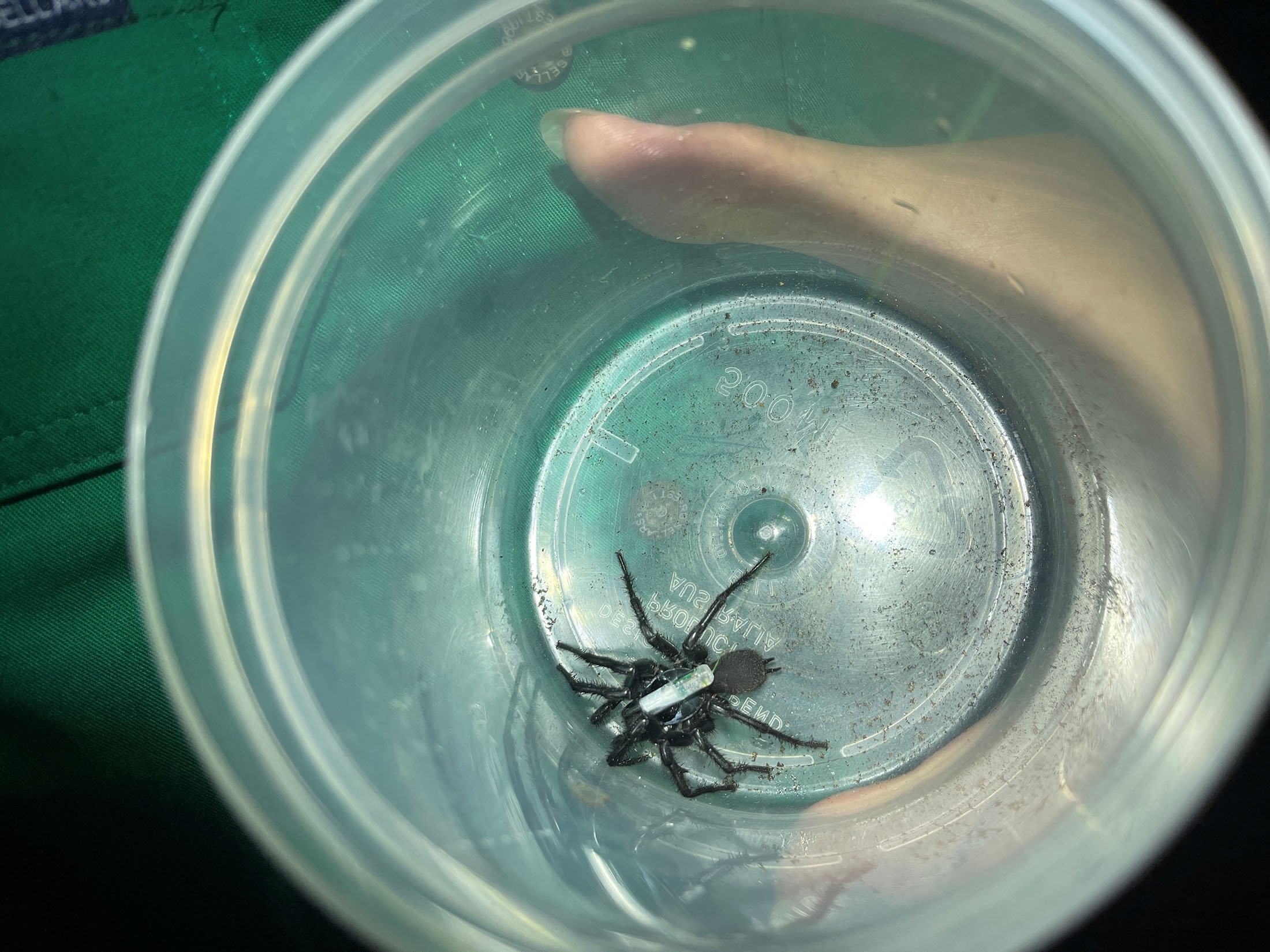
A male Sydney funnel-web spider with a telemetry tracker attached waits in a container to be released back into the bushland by Caitlin Creak, Sydney, Australia, Feb. 18, 2022. (Reuters Photo)
by Reuters Mar 02, 2022 2:24 pm

How far can a mature male spider travel at night? If he swings from skyscraper to skyscraper he could travel the entirety of New York City for sure, but Australian scientists are not looking at Spider-Men from Brooklyn, but rather at some Sydney funnel-web spiders which are carrying special cargo: a telemetry tracker to study their movements and whether they are affected by the environment and weather.

Caitlin Creak, a PhD candidate at the School of Biological, Earth and Environmental Sciences of the University of New South Wales, has been tracking the male Sydney funnel-web, one of the world's deadliest spiders, for two summers. The nocturnal arachnid lives within around 100 kilometers (62 miles) of Australia's largest city, and is mostly active between November and April.

Having grown up in Australia's bushland, the 27-year-old is no stranger to spiders, but her love for them grew after she learned about them during her biology degree, and interacted with the creatures she thinks are wonderful.
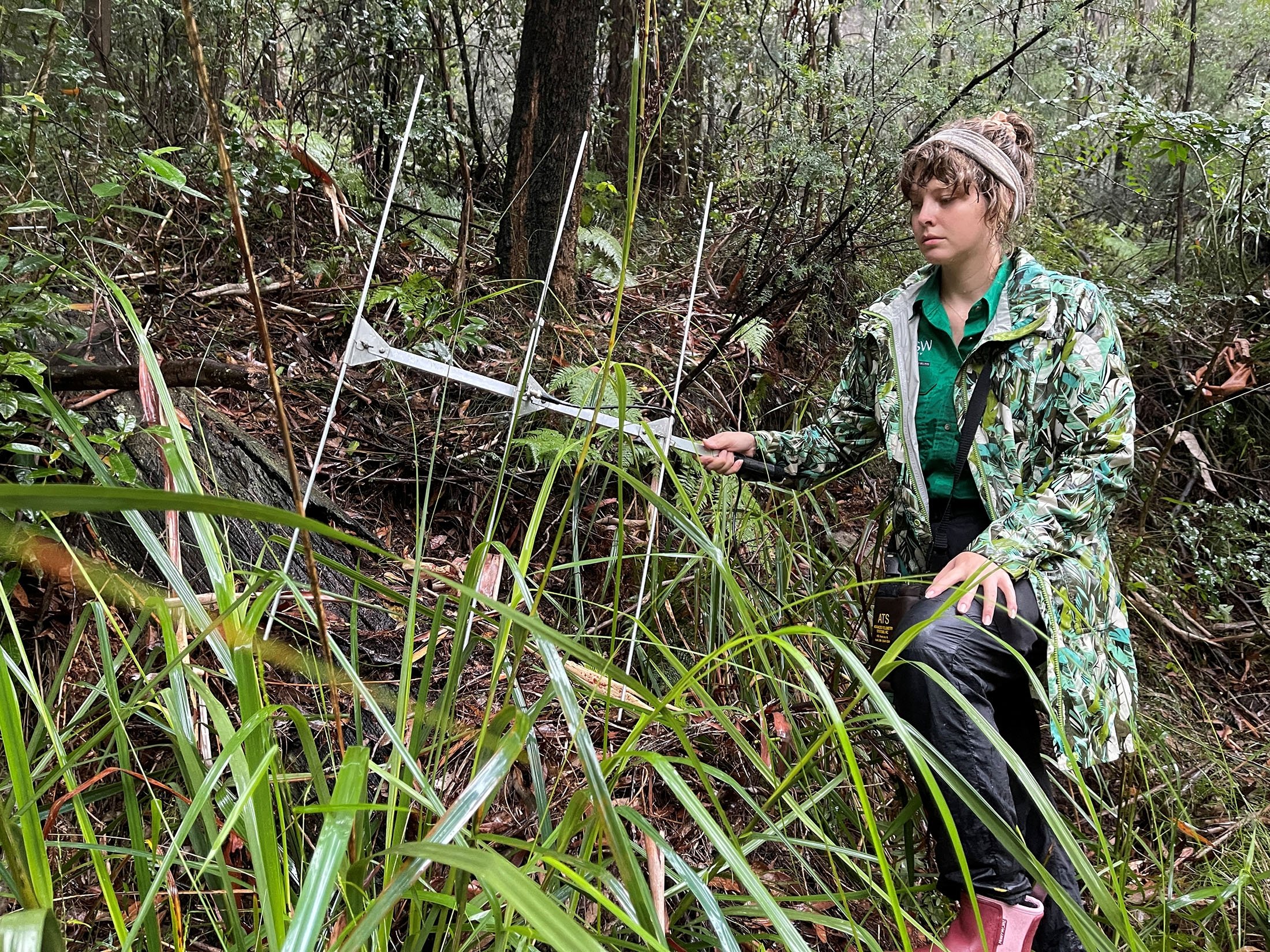
Caitlin Creak, holds an antenna as she searches for a male Sydney funnel-web spider with a telemetry tracker attached, in Sydney, Australia, Feb. 22, 2022. (Reuters Photo)

Most studies on the Sydney funnel-web spider are about its venom and taxonomy, but Creak's study focuses on its behavior and ecology.

"The Sydney funnel-web has a human-lethal venom, which is just a bit of an evolutionary coincidence, as we suspect at this stage," she said. "That's kind of all we know about them to be honest. We don't actually really know anything else in terms of their behavior, their biology or their ecology."

To be able to attach the tracker, the spider must first be knocked out with carbon dioxide, a standard practice for sedating invertebrates, Creak said.

As the spider dozes for a couple of minutes on a wet sponge that keeps it hydrated, Creak places a second sponge around its head to safely glue the small tracking device, slightly bigger than a grain of rice, to its fused head and thorax, called the cephalothorax.
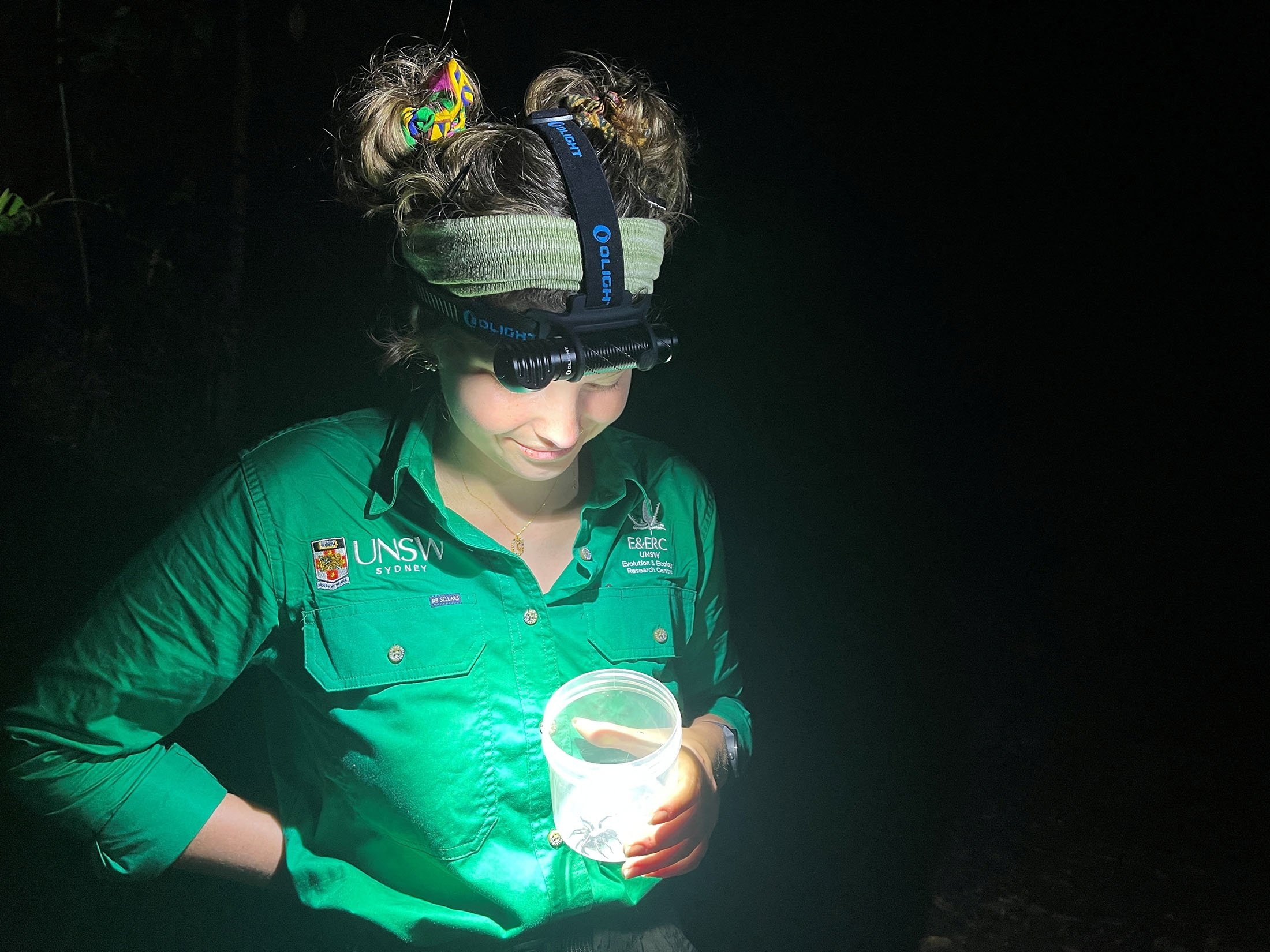
Caitlin Creak, holds a male Sydney funnel-web spider with a telemetry tracker attached, in a container, in Sydney, Australia, Feb. 18, 2022. (Reuters Photo)

Creak is extremely cautious when handling the spider, never touching them with her hands. Instead, she uses 30 centimeters (11.81 inches) long forceps and when awake, the spider is kept in a thick plastic container.

Weather permitting, Creak tracks the spider daily for as long as the trackers stay functional. They can sometimes become dislodged, and the tiny batteries last about a month.

"In the morning, I'll come back, and I'll be able to see how far he's gone overnight," said Creak. "Once they're used to having a tracker on, they're off. They can go, God, anywhere between a meter to 60 meters (196 feet) in a night, that I've recorded."
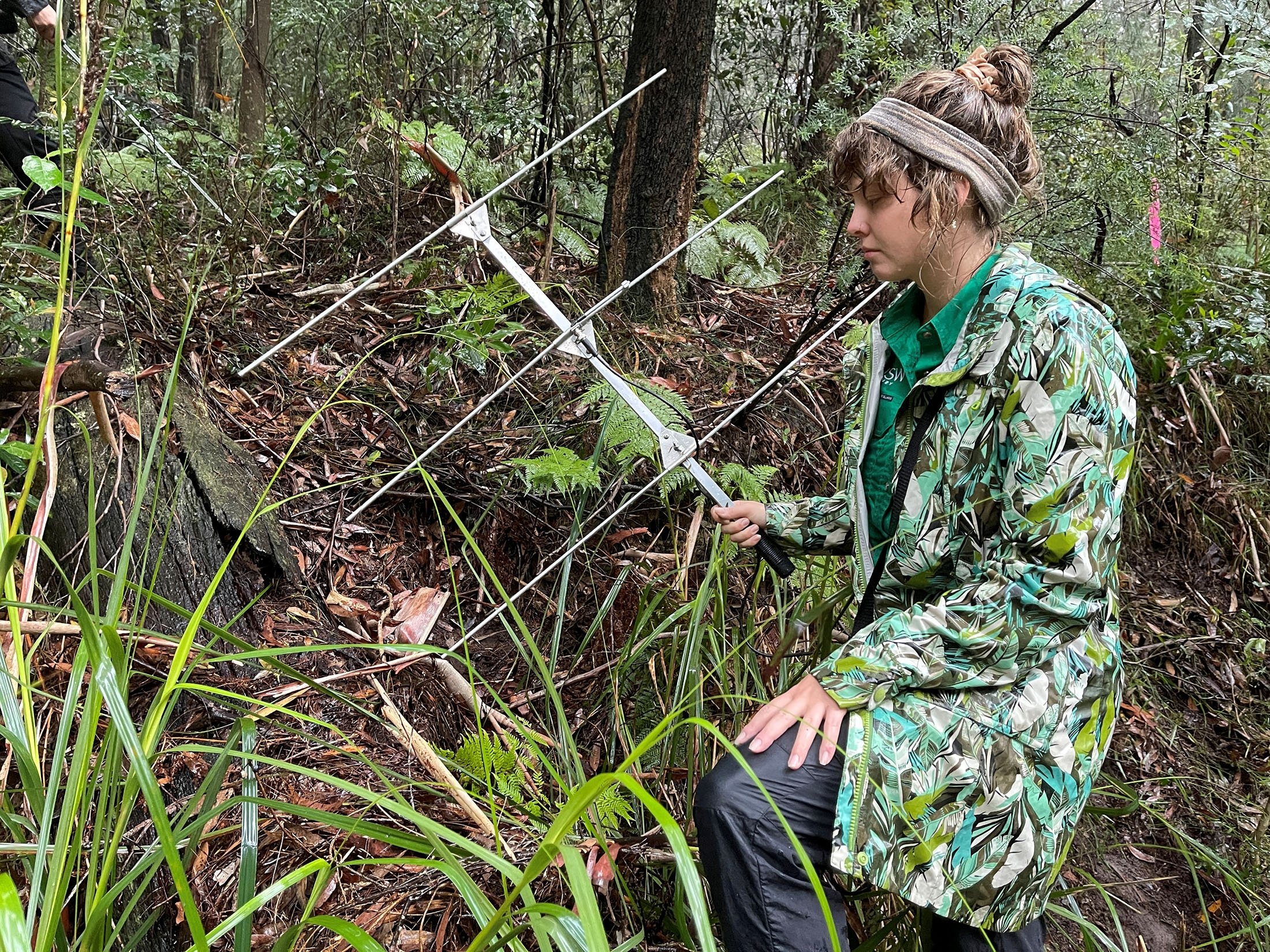
Caitlin Creak, holds an antenna as she searches for a male Sydney funnel-web spider with a telemetry tracker attached, in Sydney, Australia, Feb. 22, 2022. (Reuters Photo)

It is no easy task to track the arachnids. With a receiver and antenna, Creak must tread carefully over vegetation, logs and leaf litter. The telemetry tracker on the spider sends beeps to the receiver as Creaks gets close.

Australia has many species of funnel-webs but only the male Sydney funnel-web is responsible for human deaths. Only 13 deaths have been recorded but more than 30 people are bitten by the spider each year, according to the Australian Museum.

"We're with them all the time, we might as well try and coexist and to do that, we need to know more about them," Creak said of spiders during a recent tracking expedition.


  • shortlink copied
  • Last Update: Mar 02, 2022 4:26 pm
    KEYWORDS
    spiders australia biology science funnel-web spiders
    The Daily Sabah Newsletter
    Keep up to date with what’s happening in Turkey, it’s region and the world.
    You can unsubscribe at any time. By signing up you are agreeing to our Terms of Use and Privacy Policy. This site is protected by reCAPTCHA and the Google Privacy Policy and Terms of Service apply.
    Rescuers hunt for survivors after cyclone hits Indonesia
    PHOTOGALLERY
    • POLITICS
    • Diplomacy
    • Legislation
    • War On Terror
    • EU Affairs
    • News Analysis
    • TÜRKİYE
    • Istanbul
    • Education
    • Investigations
    • Minorities
    • Diaspora
    • World
    • Mid-East
    • Europe
    • Americas
    • Asia Pacific
    • Africa
    • Syrian Crisis
    • İslamophobia
    • Business
    • Automotive
    • Economy
    • Energy
    • Finance
    • Tourism
    • Tech
    • Defense
    • Transportation
    • News Analysis
    • Lifestyle
    • Health
    • Environment
    • Travel
    • Food
    • Fashion
    • Science
    • Religion
    • History
    • Feature
    • Expat Corner
    • Arts
    • Cinema
    • Music
    • Events
    • Portrait
    • Performing Arts
    • Reviews
    • Sports
    • Football
    • Basketball
    • Motorsports
    • Tennis
    • Opinion
    • Columns
    • Op-Ed
    • Reader's Corner
    • Editorial
    • Photo gallery
    • DS TV
    • Jobs
    • privacy
    • about us
    • contact us
    • RSS
    © Turkuvaz Haberleşme ve Yayıncılık 2021