Daily Sabah logo

Politics
Diplomacy Legislation War On Terror EU Affairs Elections News Analysis
TÜRKİYE
Istanbul Education Investigations Minorities Expat Corner Diaspora
World
Mid-East Europe Americas Asia Pacific Africa Syrian Crisis Islamophobia
Business
Automotive Economy Energy Finance Tourism Tech Defense Transportation News Analysis
Lifestyle
Health Environment Travel Food Fashion Science Religion History Feature Expat Corner
Arts
Cinema Music Events Portrait Reviews Performing Arts
Sports
Football Basketball Motorsports Tennis
Opinion
Columns Op-Ed Reader's Corner Editorial
PHOTO GALLERY
JOBS ABOUT US RSS PRIVACY CONTACT US
© Turkuvaz Haberleşme ve Yayıncılık 2025

Daily Sabah - Latest & Breaking News from Turkey | Istanbul

  • Politics
    • Diplomacy
    • Legislation
    • War On Terror
    • EU Affairs
    • Elections
    • News Analysis
  • TÜRKİYE
    • Istanbul
    • Education
    • Investigations
    • Minorities
    • Expat Corner
    • Diaspora
  • World
    • Mid-East
    • Europe
    • Americas
    • Asia Pacific
    • Africa
    • Syrian Crisis
    • Islamophobia
  • Business
    • Automotive
    • Economy
    • Energy
    • Finance
    • Tourism
    • Tech
    • Defense
    • Transportation
    • News Analysis
  • Lifestyle
    • Health
    • Environment
    • Travel
    • Food
    • Fashion
    • Science
    • Religion
    • History
    • Feature
    • Expat Corner
  • Arts
    • Cinema
    • Music
    • Events
    • Portrait
    • Reviews
    • Performing Arts
  • Sports
    • Football
    • Basketball
    • Motorsports
    • Tennis
  • Gallery
  • Opinion
    • Columns
    • Op-Ed
    • Reader's Corner
    • Editorial
  • TV
  • Life
  • Health
  • Environment
  • Travel
  • Food
  • Fashion
  • Science
  • Religion
  • History
  • Feature
  • Expat Corner

Scientists reveal giant galactic explosion, its impact

by Deutsche Presse-Agentur - dpa

SYDNEY, Australia Apr 22, 2024 - 9:06 am GMT+3
Edited By Buse Keskin
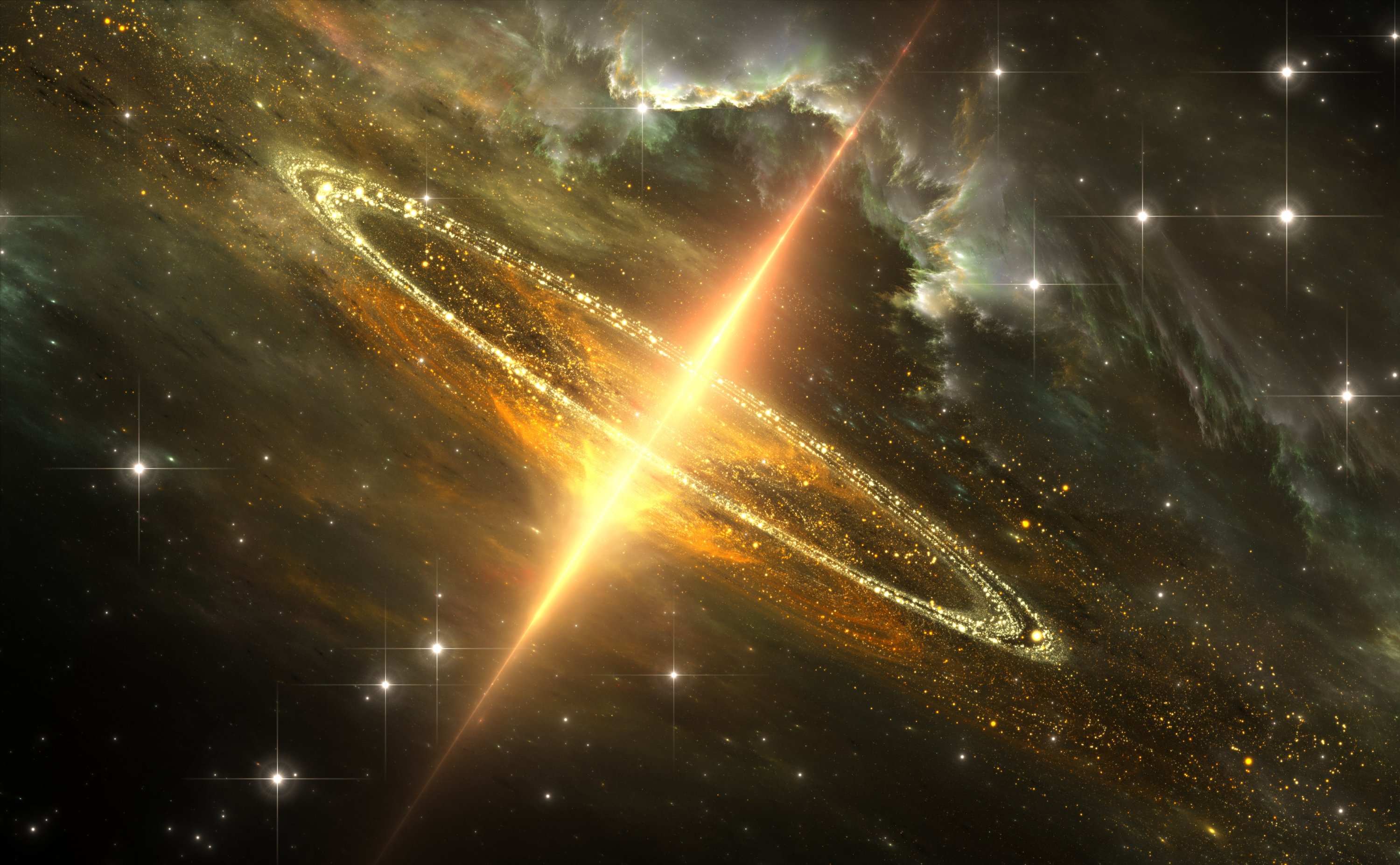
Astronomers studied galaxy NGC 4383, in the nearby Virgo cluster, and captured a gas outflow so large it would take 20,000 years for light to travel from one side to the other. (Shutterstock Photo)
by Deutsche Presse-Agentur - dpa Apr 22, 2024 9:06 am
Edited By Buse Keskin

Scientists have generated the inaugural high-resolution depiction of a colossal galactic explosion, offering valuable insights into the chemical pollution within intergalactic space.

Astronomers studied galaxy NGC 4383, in the nearby Virgo cluster, and captured a gas outflow so large it would take 20,000 years for light to travel from one side to the other.

The discovery was published in the journal Monthly Notices of the Royal Astronomical Society on Monday.

Lead author Adam Watts, from the University of Western Australia node at the International Centre for Radio Astronomy Research (ICRAR), said the gas outflow was the result of powerful stellar explosions in the central regions of the galaxy.

The mass of gas ejected is equivalent to more than 50 million suns.

"Very little is known about the physics of outflows and their properties because outflows are very hard to detect," Watts said.

"The ejected gas is quite rich in heavy elements giving us a unique view of the complex process of mixing between hydrogen and metals in the outflowing gas."

In this case, researchers detected oxygen, nitrogen, sulfur and many other chemical elements.

Gas outflows regulate how fast and for how long galaxies can keep forming stars. The ejected gas can pollute the space between stars within a galaxy, and between galaxies, forever.

A high-resolution map was created with data from the MAUVE survey, co-led by ICRAR researchers Barbara Catinella and Luca Cortese.

MAUVE is a large program on the European Southern Observatory's Very Large Telescope in northern Chile.

"We designed MAUVE to investigate how physical processes such as gas outflows help stop star formation in galaxies," Catinella said.

"NGC 4383 was our first target, as we suspected something very interesting was happening, but the data exceeded all our expectations.

"We hope that in the future, MAUVE observations reveal the importance of gas outflows in the local Universe with exquisite detail."


  • shortlink copied
  • Last Update: Apr 22, 2024 11:53 am
    KEYWORDS
    galactic explosion
    The Daily Sabah Newsletter
    Keep up to date with what’s happening in Turkey, it’s region and the world.
    You can unsubscribe at any time. By signing up you are agreeing to our Terms of Use and Privacy Policy. This site is protected by reCAPTCHA and the Google Privacy Policy and Terms of Service apply.
    No Image
    In photos: Protests across US over post-election uncertainty
    PHOTOGALLERY
    • POLITICS
    • Diplomacy
    • Legislation
    • War On Terror
    • EU Affairs
    • News Analysis
    • TÜRKİYE
    • Istanbul
    • Education
    • Investigations
    • Minorities
    • Diaspora
    • World
    • Mid-East
    • Europe
    • Americas
    • Asia Pacific
    • Africa
    • Syrian Crisis
    • İslamophobia
    • Business
    • Automotive
    • Economy
    • Energy
    • Finance
    • Tourism
    • Tech
    • Defense
    • Transportation
    • News Analysis
    • Lifestyle
    • Health
    • Environment
    • Travel
    • Food
    • Fashion
    • Science
    • Religion
    • History
    • Feature
    • Expat Corner
    • Arts
    • Cinema
    • Music
    • Events
    • Portrait
    • Performing Arts
    • Reviews
    • Sports
    • Football
    • Basketball
    • Motorsports
    • Tennis
    • Opinion
    • Columns
    • Op-Ed
    • Reader's Corner
    • Editorial
    • Photo gallery
    • DS TV
    • Jobs
    • privacy
    • about us
    • contact us
    • RSS
    © Turkuvaz Haberleşme ve Yayıncılık 2021