Daily Sabah logo

Politics
Diplomacy Legislation War On Terror EU Affairs Elections News Analysis
TÜRKİYE
Istanbul Education Investigations Minorities Expat Corner Diaspora
World
Mid-East Europe Americas Asia Pacific Africa Syrian Crisis Islamophobia
Business
Automotive Economy Energy Finance Tourism Tech Defense Transportation News Analysis
Lifestyle
Health Environment Travel Food Fashion Science Religion History Feature Expat Corner
Arts
Cinema Music Events Portrait Reviews Performing Arts
Sports
Football Basketball Motorsports Tennis
Opinion
Columns Op-Ed Reader's Corner Editorial
PHOTO GALLERY
JOBS ABOUT US RSS PRIVACY CONTACT US
© Turkuvaz Haberleşme ve Yayıncılık 2025

Daily Sabah - Latest & Breaking News from Turkey | Istanbul

  • Politics
    • Diplomacy
    • Legislation
    • War On Terror
    • EU Affairs
    • Elections
    • News Analysis
  • TÜRKİYE
    • Istanbul
    • Education
    • Investigations
    • Minorities
    • Expat Corner
    • Diaspora
  • World
    • Mid-East
    • Europe
    • Americas
    • Asia Pacific
    • Africa
    • Syrian Crisis
    • Islamophobia
  • Business
    • Automotive
    • Economy
    • Energy
    • Finance
    • Tourism
    • Tech
    • Defense
    • Transportation
    • News Analysis
  • Lifestyle
    • Health
    • Environment
    • Travel
    • Food
    • Fashion
    • Science
    • Religion
    • History
    • Feature
    • Expat Corner
  • Arts
    • Cinema
    • Music
    • Events
    • Portrait
    • Reviews
    • Performing Arts
  • Sports
    • Football
    • Basketball
    • Motorsports
    • Tennis
  • Gallery
  • Opinion
    • Columns
    • Op-Ed
    • Reader's Corner
    • Editorial
  • TV
  • Life
  • Health
  • Environment
  • Travel
  • Food
  • Fashion
  • Science
  • Religion
  • History
  • Feature
  • Expat Corner

Subsurface ocean on Jupiter's icy moon Europa 'could be habitable'

by REUTERS

WASHINGTON Jun 25, 2020 - 11:50 am GMT+3
Edited By Yasemin Nicola Sakay
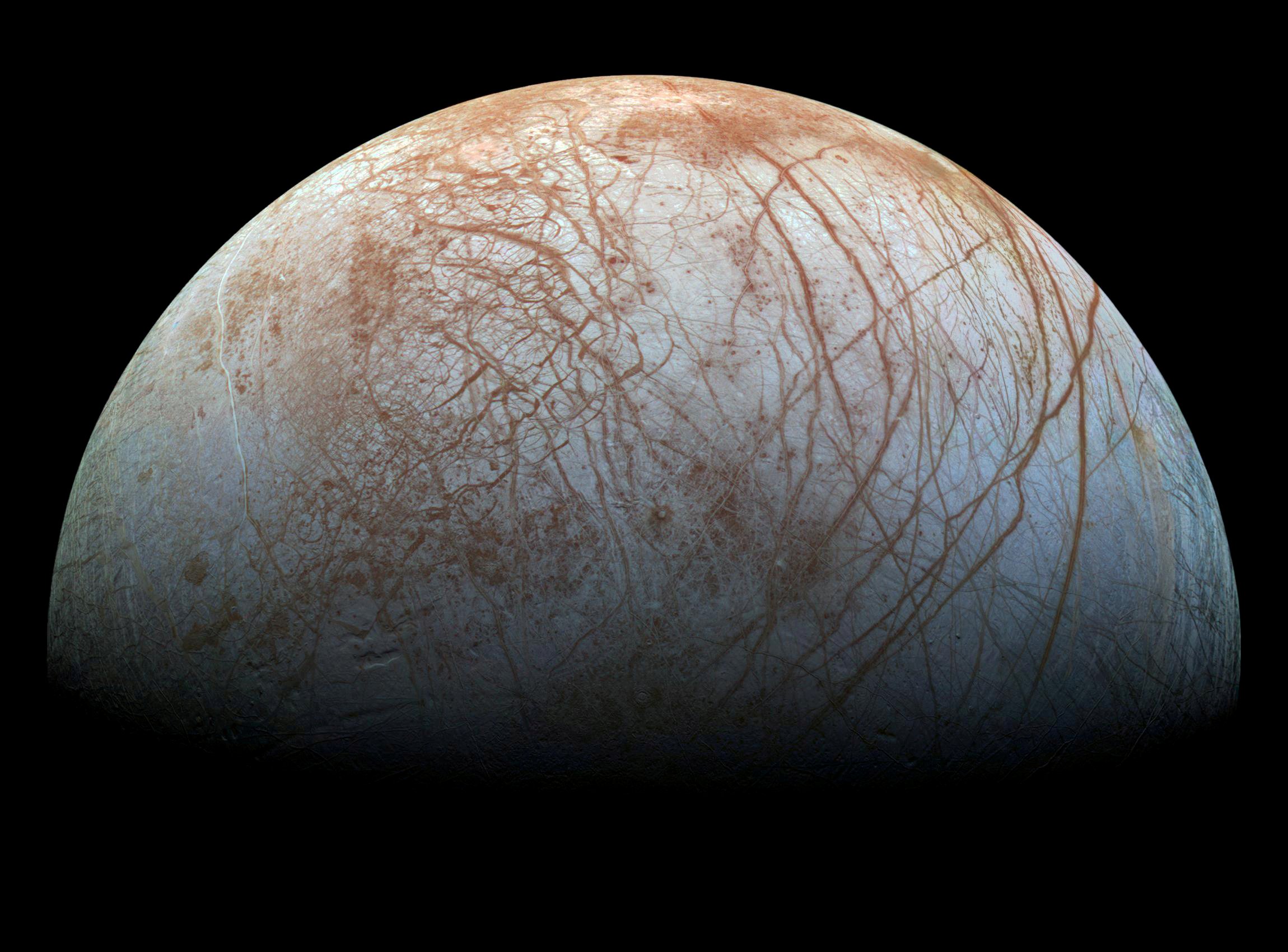
A view of Jupiter's moon Europa created from images taken by NASA's Galileo spacecraft in the late 1990s, obtained by Reuters, May 14, 2018. (NASA / JPL-Caltech / SETI Institute / Handout via Reuters)
by REUTERS Jun 25, 2020 11:50 am
Edited By Yasemin Nicola Sakay

Scientists have figured out how the subsurface ocean on Jupiter's moon Europa may have formed and determined that this vast expanse of water may have been able to support microbial life in the past.

Europa, with an ocean hidden beneath a thick shell of ice, long has been viewed as a potential habitat for extraterrestrial life in our solar system, alongside other candidates such as Mars and Saturn's moon Enceladus. A new study presented on Wednesday at a geoscience conference underscores its potential.

Europa's ocean may have formed after water-rich minerals ejected their water thanks to heating caused by the decay of radioactive elements in its interior early in its history, the researchers found.

The effect of tides caused by Europa's gravitational interactions with Jupiter – the solar system's largest planet – and two other large Jovian moons, Io and Ganymede, also may have played a role.

"We think Europa's ocean may have been habitable early when it formed because our models show that the ocean's composition may have been only mildly acidic, containing carbon dioxide and some sulfate salts," said planetary scientist Mohit Melwani Daswani of NASA's Jet Propulsion Laboratory, the study's leader.

"The availability of liquid water is the first step to habitability. In addition, chemical exchange between the ocean and the rocky interior may have been significant in the past so potential life may have been able to use chemical energy to survive," Daswani said.

Daswani said microbes akin to certain Earth bacteria that use carbon dioxide for energy could have survived using ingredients available in Europa's early ocean.

Europa is slightly smaller than Earth's moon. Europa's ocean, perhaps 40 to 100 miles (65 to 160 km) deep, may contain double the water of Earth's oceans.

The study evaluated whether Europa was previously habitable and did not examine its present habitability, a question the researchers are now exploring.

"A word of caution," Daswani said. "If a place is habitable, it does not mean that it is actually inhabited, just that the conditions could allow for the survival of some extremely hardy forms of life that we know of on Earth."


  • shortlink copied
  • KEYWORDS
    space science planets jupiter europa solar system
    The Daily Sabah Newsletter
    Keep up to date with what’s happening in Turkey, it’s region and the world.
    You can unsubscribe at any time. By signing up you are agreeing to our Terms of Use and Privacy Policy. This site is protected by reCAPTCHA and the Google Privacy Policy and Terms of Service apply.
    No Image
    Strong solar storms paint skies with vibrant colors
    PHOTOGALLERY
    • POLITICS
    • Diplomacy
    • Legislation
    • War On Terror
    • EU Affairs
    • News Analysis
    • TÜRKİYE
    • Istanbul
    • Education
    • Investigations
    • Minorities
    • Diaspora
    • World
    • Mid-East
    • Europe
    • Americas
    • Asia Pacific
    • Africa
    • Syrian Crisis
    • İslamophobia
    • Business
    • Automotive
    • Economy
    • Energy
    • Finance
    • Tourism
    • Tech
    • Defense
    • Transportation
    • News Analysis
    • Lifestyle
    • Health
    • Environment
    • Travel
    • Food
    • Fashion
    • Science
    • Religion
    • History
    • Feature
    • Expat Corner
    • Arts
    • Cinema
    • Music
    • Events
    • Portrait
    • Performing Arts
    • Reviews
    • Sports
    • Football
    • Basketball
    • Motorsports
    • Tennis
    • Opinion
    • Columns
    • Op-Ed
    • Reader's Corner
    • Editorial
    • Photo gallery
    • DS TV
    • Jobs
    • privacy
    • about us
    • contact us
    • RSS
    © Turkuvaz Haberleşme ve Yayıncılık 2021