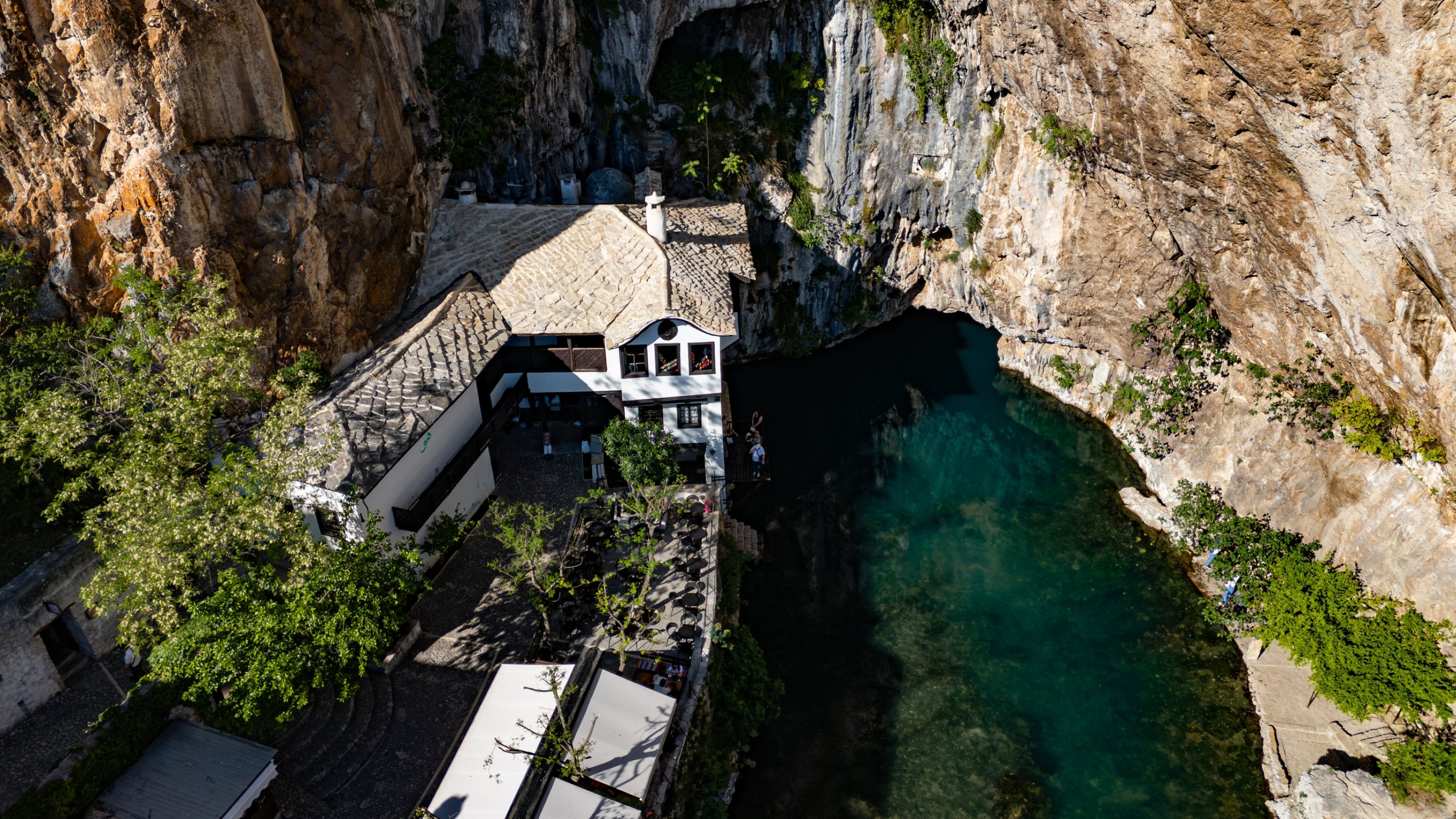
The Blagaj Tekke, near Mostar in Bosnia-Herzegovina, stands at the base of steep cliffs rising as high as 200 meters (655 feet), forming one of the most recognizable cultural and spiritual landmarks in the Balkans.
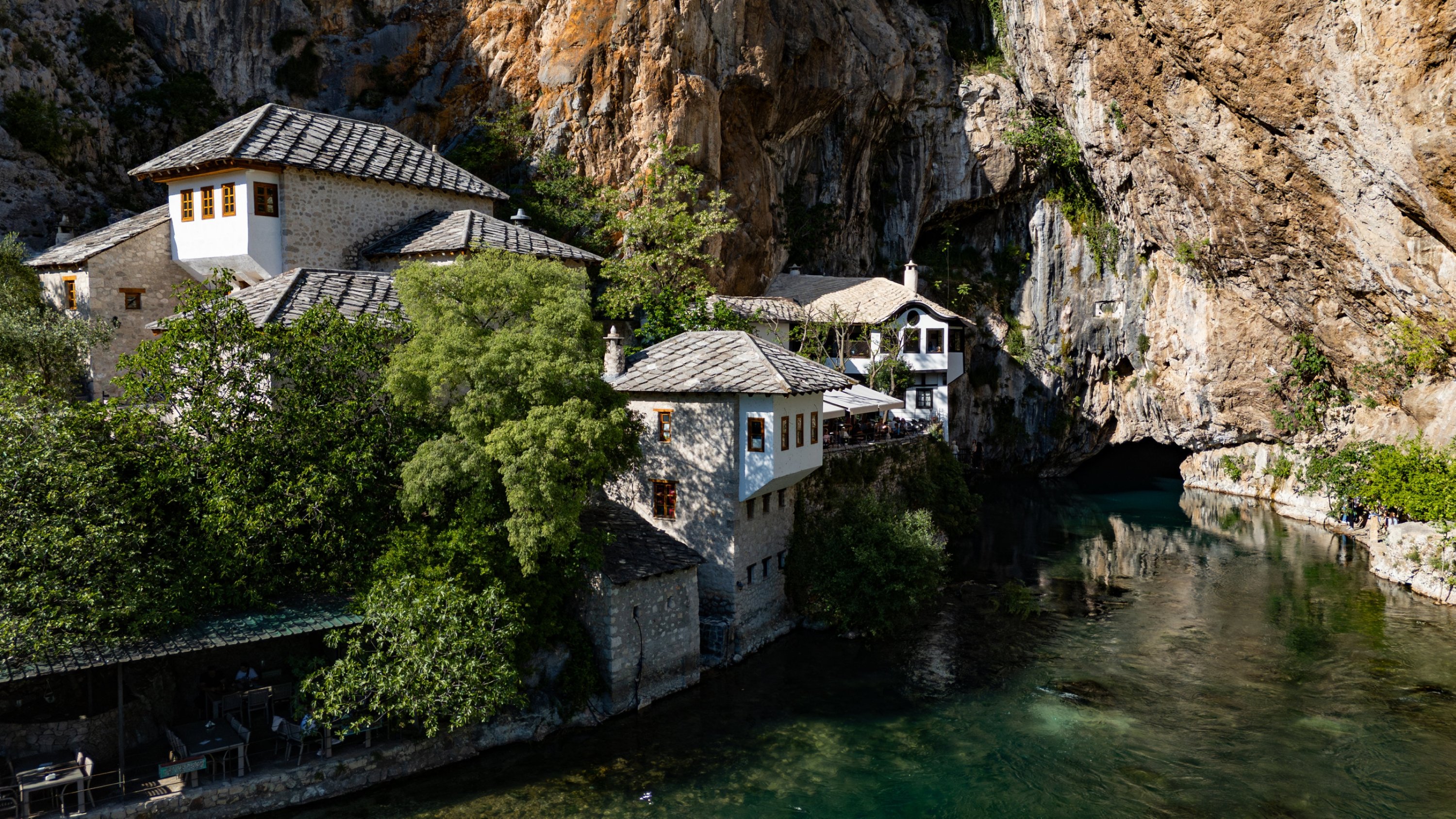
Situated about 15 kilometers (9 miles) from Mostar in the village of Blagaj, the historic Dervish lodge overlooks the source of the Buna River, where turquoise waters emerge dramatically from a karst spring beneath towering rock formations. Visitors often describe the setting as exceptionally peaceful, shaped by the sound of rushing water and the surrounding natural landscape.
Also known as the “Alperenler Tekke,” the site is regarded as both a historic monument and an important symbol of Sufi tradition that spread from Anatolia into the Balkans during the Ottoman period.
Historians believe the lodge was established about 600 years ago by dervishes who arrived from Anatolia. Its location at the river’s source and beneath the cliffs has long contributed to its reputation as a place of reflection and retreat.
Inside the complex is a tomb associated with Sarı Saltuk, one of the most mysterious figures in Balkan folklore. The tomb is marked with a green turban, a traditional symbol used in the region to honor revered religious figures.
Sarı Saltuk is believed to have been a disciple of Haji Bektash Veli and one of the early dervishes sent from Anatolia to the Balkans in the 13th century. According to legend, he requested that multiple coffins be buried in different locations to conceal his true resting place. As a result, several sites across the Balkans are associated with him, with Blagaj considered one of the most significant.
Historical records show that tekkes played a key role in the spread of Islam in the Balkans during the Ottoman period, often serving as rest stops for travelers as well as religious centers. Scholars also note that dervishes were present in the region before the expansion of Ottoman administrative and military structures.
The Blagaj Tekke, built around six centuries ago as a two-story structure, reflects classical Ottoman architecture with whitewashed walls, wooden details and wide eaves. Its prayer hall is noted for its distinctive Turkish Baroque-style elements, considered one of the most unique examples of its kind in Bosnia-Herzegovina.
The complex also includes a historic bathhouse featuring an underfloor heating system and star-shaped openings in its dome that allow natural light into the interior.
The earliest known written reference to the tekke appears in the travel writings of Ottoman explorer Evliya Çelebi, who described it as an important center of learning and spiritual life in the Ottoman world.
The surrounding area of Blagaj has preserved much of its medieval and Ottoman-era heritage, making it one of the region’s most historically layered settlements.
In 2007, the cultural landscape of Blagaj and its surroundings was added to the tentative list of UNESCO World Heritage Sites.
Nearby stands a historic mosque built during the reign of Suleiman the Magnificent, considered one of the oldest domed structures in the region.
Today, the Blagaj Tekke remains one of Bosnia-Herzegovina’s most visited destinations, attracting hundreds of thousands of visitors each year with its combination of spiritual heritage, Ottoman architecture and the dramatic natural setting of the Buna River spring.